

Are There Preservatives Hiding In Costco's Rotisserie Chicken?
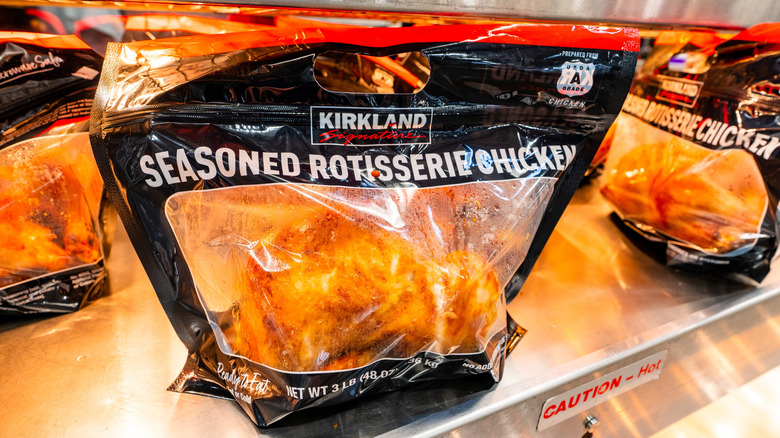
Rotisserie chicken is one of the best prepared foods you can buy at Costco – and not just because its price tag has consistently stayed at $4.99 for nearly two decades, despite inflation. The chicken can be turned into a variety of different meals, making it an affordable and convenient Costco staple. But as popularity rises, perhaps so does scrutiny. The chicken has previously landed in hot waters over questions of quality and animal welfare, and in early 2026, the wholesaler was sued by its customers over the preservatives hiding in the chicken.
There's more to Costco's rotisserie chicken than initially meets the eye. The meat is coated in seasoning, which the ingredients label identifies as salt, sodium phosphate, modified food starch, potato dextrin, carrageenan, sugar, dextrose, and spice extractives. Sodium phosphate is a preservative commonly used in the food industry to extend the shelf life of meat products and improve their texture. It's also one of the ingredients in Sam's Club's rotisserie chicken. Another preservative found in Costco's chicken is carrageenan, which improves the texture, appearance, and taste of food products, as well as their shelf life.
Per the Seattle Times, Costco defends its use of these preservatives, stating, "We use carrageenan and sodium phosphate to support moisture retention, texture, and product consistency during cooking. Both ingredients are approved by food safety authorities."
Costco used to advertise its rotisserie chicken as being free of preservatives

The packaging on Costco's Kirkland Signature Seasoned Rotisserie Chicken used to claim there were no preservatives in the meat, alongside zero MSG, gluten, artificial flavors and colors, hormones, or steroids. One quick glance at the ingredients label, however, proved the first claim to be incorrect. The bold (and contradictory) statement was the reason why a class-action lawsuit was filed against Costco for false advertising. The wholesaler responded by swiftly removing the "no preservatives" claim from its packaging.
Not disclosing that there are preservatives in a food product can have negative health effects for certain groups of people. Added sodium phosphate, which is different from the natural phosphate found in foods, can worsen the condition of anyone with kidney disease, as well as those with severe intestinal issues, heart conditions, or an allergy to the additive. For the general population, though, sodium phosphate is approved by the FDA as a safe additive — and in smaller amounts it can also be consumed safely by the more vulnerable groups mentioned earlier. The same goes for carrageenan, which some claim can cause digestive damage, but this hasn't yet been definitively proven, and the FDA continues to classify it as safe.