

Grocery Vs Liquor Store: The Biggest Differences In Alcohol Selection
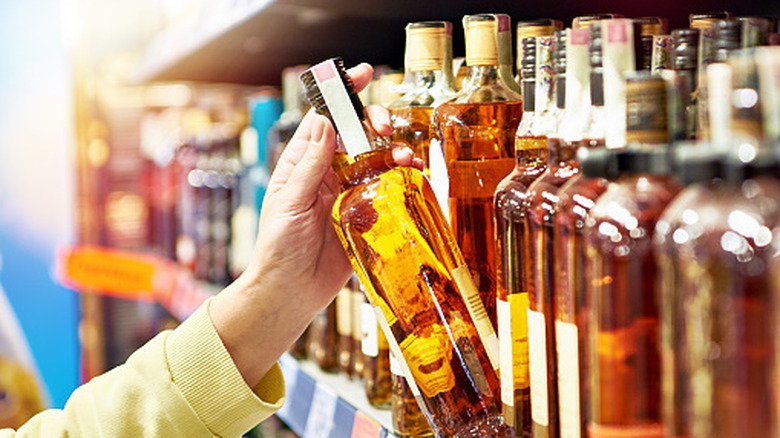
We've all been there: You're at the grocery store when you remember you need to buy a bottle of wine to bring to a friend's house for dinner, so you peruse the wine section and grab something in your price range that looks decent (but honestly, you probably just liked the label). While buying alcohol in the same place that you buy groceries is extremely convenient and is great then the stakes are low, it may not be the ideal place for all of your alcohol purchases. We spoke with Curtis McMillan, the creative director of talent and beverage at The Down Low Cocktail Club in Woburn, Massachusetts, about the most significant differences between alcohol selection at a grocery and liquor store.
When it comes to the main difference between the two types of stores, McMillan tells us that "grocery stores typically carry what we'd call 'well' spirits in the restaurant world — your standard vodka, gin, tequila, and bourbon." These well spirits are typically "reliable, recognizable brands, but the selection is usually broad rather than deep, with limited variety within each category." While the grocery store's selection of alcohol may be convenient, it can lack variety and quality. "If you're looking to explore different proofs, unique mash bills, craft producers, or niche imports," McMillan adds, "the liquor store is where you'll find that range and specialization." So, if you're looking for something special or unique, a liquor store is always your best bet.
In some states, a liquor store may be the only option
There are some instances where you should head straight to the liquor store, especially for the most affordable wine shopping. But in some cases, depending on what state you're in, the grocery store may not even be an option to purchase beer, wine, or liquor. "This has less to do with grocery store versus liquor store, and more to do with availability by state," explains McMillan, "although liquor stores typically carry a wider range of specialized products."
In California, for example, that's something folks will have to worry about. However, when traveling to states like Utah, which has much more regulation around alcohol, picking up a random bottle of wine or a pack of beer proves to be a much larger endeavor than simply snagging one at the grocery store. Likewise, the Southern favorite grocery store Publix keeps its liquor in completely separate stores.
"In some states," warns McMillan, "access to niche spirits is simply more limited than in others, so you have to learn to work with what's available." When it comes to stocking your bar cart with a wide variety of alcohols and liqueurs to make cocktails, this can present a bit of a challenge, but McMillan notes there are workarounds for that. "If you can't find a specific rum or bourbon, a quick search can usually point you toward a solid substitution with a similar proof and flavor profile," he advises.