

15 Tequilas Smooth Enough To Drink Straight, According To Experts
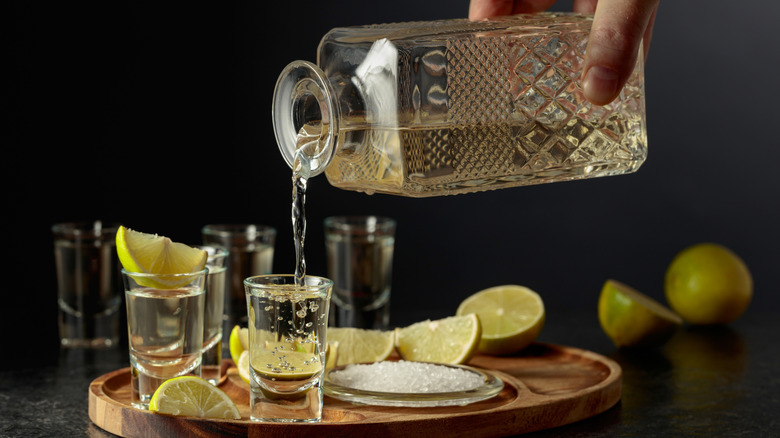
As tequila drinkers, there are several bottles we constantly reach for. Those well-known labels we're sure are the absolute best tequilas for the perfect margarita. But every so often, a margarita just won't do. Sometimes, we want a top-rated tequila that's better all on its own. No mixers, no salt, just the spirit in all its delicious glory.
It's during these moments that we reach for something different that deserves to be shown off and not hidden by extra ingredients. It probably doesn't even need that rim of salt to which we've become accustomed. Something smooth enough to sip straight, like an old bottle of scotch or your favorite Cognac.
Don't believe tequila falls into the sip and savor category? Well, we spoke to several spirit industry experts who disagree. In fact, they gave us 15 different brands they believe are well worth sipping. Some are aged in bourbon or wine barrels, while other tequilas are made using only three ingredients to ensure that agave flavor really shines. And they're not all top shelf, either. Several are easily accessible if you're just looking to get your feet wet. Read on to see which brands made the list.
Arette Clásico Blanco
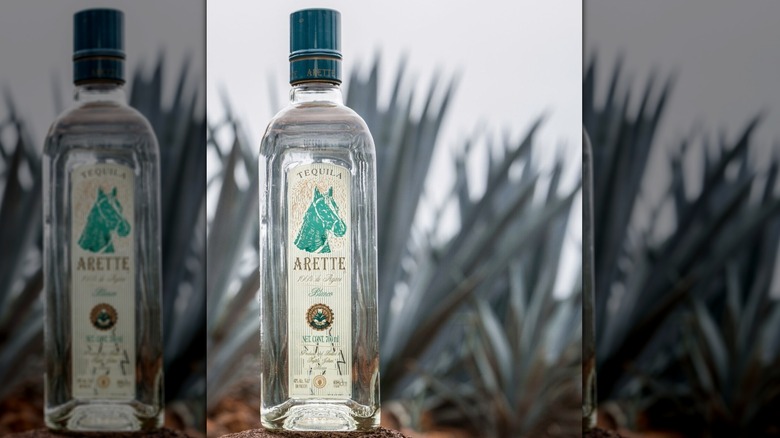
Even though Arette is relatively new to the tequila scene, only making its debut in 1986, master distillers Eduardo and Jaime Orendain come from a long line of tequila makers — five generations to be exact. In keeping with the family business and eager to get back to their roots, the brothers chose to distill their spirit at the historic El Llano distillery, founded in 1900. It's in this historic location that the brothers create a spirit not only perfect for beginners, but one that professional bartender Saeed "Hawk" House believes is "a good, sipping tequila if you just wanted to sip on something nice."
Taylor Samuels, the owner of Las Almas Rotas, a bar that focuses on smaller, boutique brands, agrees, telling us that this bottle is the bar's well tequila and has been since it opened nine years ago. "It has one of the best ROIs [return on investment] for a consumer," explains Samuels. "Absolutely something you can sip neat while also standing up to sugar and juice in a cocktail." House describes the flavor as having "more black pepper, more earthy notes, more of that cooked agave, [and] more citrus in this one," adding "some good, old, classic Arette. I can't go wrong with it."
Cascahuín Blanco
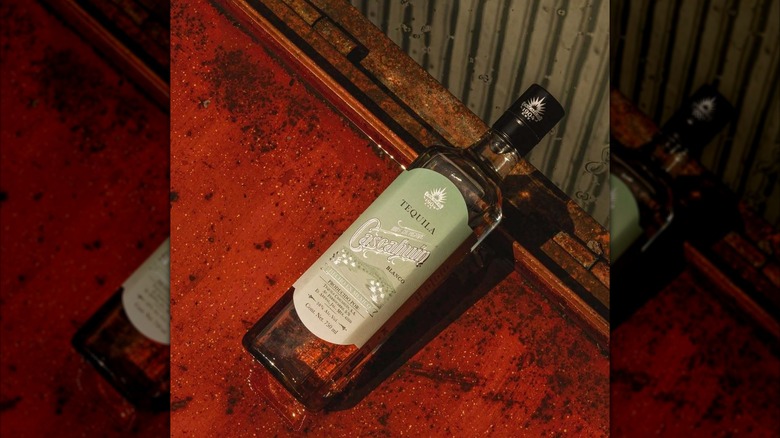
Another tequila from a long line of distillers, Cascahuín started its journey in a little tavern in El Arenal in 1904. Now, three generations and several expressions later, Cascahuín is a brand two different experts hold in high regard, especially the blanco. "Cascahuín Blanco presents all of the quintessential flavors of a tequila made in the shadow of the Tequila volcano," explains The Spirits Authority director of education and agave expert, Misty Kalkofen. "Cooked agave, earth, minerals, and herbaceousness." That herbaceousness is thanks to the volcano she mentioned. The soil imbues the agave with a minerality that these two experts say comes through in the final spirit.
Don't worry if you're unfamiliar with Cascahuín Blanco, as Saeed "Hawk" House feels "like it's an underrated blanco." But just because you don't know it, doesn't mean you should write it off. "For [the] price point, it's still good," he declares. "It's very vegetal, minty, herbal, a lot like fresh cut grass. Obviously, you get that from agave, but there's some minerality in it too, so it's really, really good."
Volans Tequila Blanco
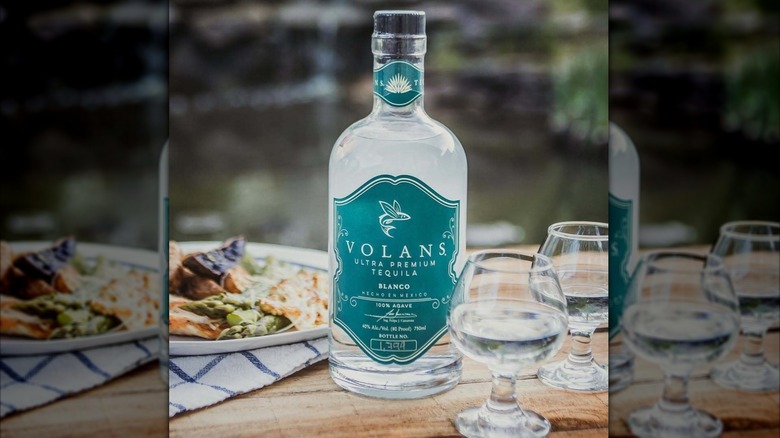
It all started with a 2014 trip to Guadalajara and one question: How would Chad Allen like to create his own tequila and serve it to his guests at his Three Rivers Ranch in Idaho? Chad's father-in-law asked that question, and immediately the answer was "Yes." Now, 13 years later, Volans is a tequila that Misty Kalkofen truly admires. While Allen, his wife, Cristina, and Felipe Camarena started their tequila journey with an extra añejo, it's the blanco that the agave expert believes is a great choice for sipping.
Produced at the El Pandillo Distillery by Camarena, Volans is unique because Camarena doesn't use a single water source to create the spirit. He uses three: Water from a well 450 feet below ground, natural spring water, and rainwater gathered from the distillery's roof. The rainwater is then stored in a 50,000-gallon cistern so that Camarena and his team can use it year-round, even when there hasn't been any rain for months.
That rainwater is why Kalkofen appreciates this tequila. "The rainwater offers a softness that balances the mineralogy of the well and spring water, making it an elegant tequila for sipping," she says.
Lalo
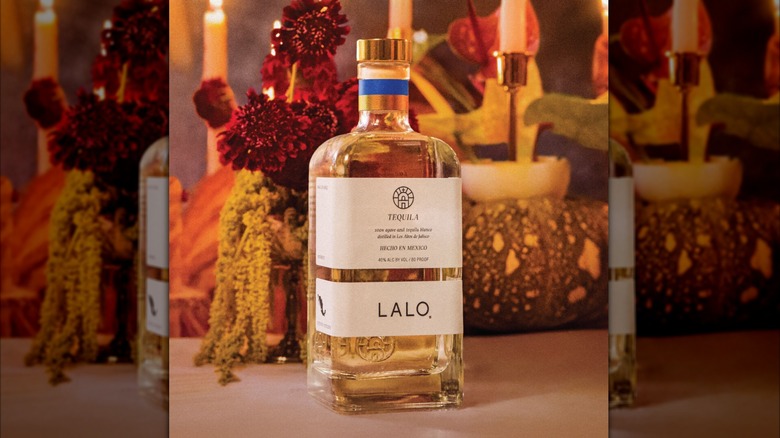
Only appearing on the market in 2017, Lalo Tequila is one of the younger tequilas on our list. It's also the only brand listed without a reposado or extra añejo. That's right, Eduardo "Lalo" González and David "R" Carballido chose to focus solely on the blanco because they wanted to create the purest tequila they could. A crystal-clear tequila made with only three ingredients: deep well water, Champagne yeast, and fully matured agave.
"I love this tequila," proclaims Dennis Day, assistant general manager at The Commodore. "It's great for a shot and a beer after work. The way it is made leads to it being an amazing sipping tequila as well. They leave a little extra agave leaf on the pina, which leaves a wonderful vegetal note on the palate."
Coming from a well-established tequila family (González's grandfather just happens to be Don Julio González), González and Carballido wanted to show off their heritage, so the bottle is an homage to Mexico. The blue-and-gold neck represents the flag of Jalisco, and the name itself is a nickname for both Eduardo and his father.
G4 Madera Blanco
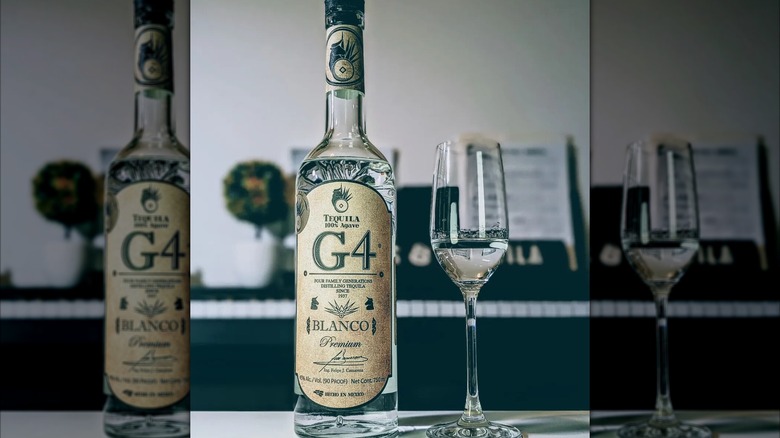
Most blanco tequilas are typically aged in French or American white oak barrels for two to eight weeks. But G4 doesn't do that. Instead, all of G4's tequilas are double-distilled in custom-built copper pot stills. But what makes the limited-edition De Madera Blanco different is that it's the first time Felipe Camarena, the man behind the brand, has used wood fermentation. That wood, combined with the deep well water he uses for this expression, results in a unique tequila that Saeed "Hawk" House says is "delicious."
Coming in between $55 and $79, this is a more high-end blanco, but one that House believes is well worth the extra money, thanks to those wooden barrels. "You get that natural sweetness from this cask for sure," he says as he smells the bottle. "I think that's why this one's going to be different compared to the Cascahuín and the Arette. Using the madera adds a little bit of extra characteristics that you typically wouldn't find in any other blancos," the bartender explains. "It's just a really good blanco to sip on."
Santanera Tahona Blanco
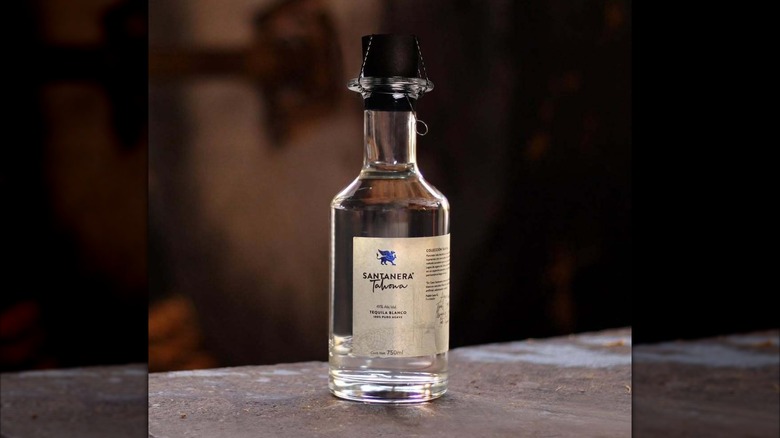
"Santanera is one of those tequilas that feels both modern and deeply rooted in tradition," says David Hernandez, bar director at the Waldorf Astoria Los Cabos Pedregal. We're not surprised he feels this way, considering creator Pablo Lara grew up in the tequila industry and created Santanera specifically to get back to the spirit's roots.
So, Lara focuses on the agave plant, which is why he doesn't refer to Santanera as a tequila brand but rather an agave brand. Lara explores how the terroir in each location instills the agave with a slightly different flavor. It's for this reason that Lara never mixes agaves. Each barrel is created from the plants in one location.
What sets the Tahona apart from Santanera's other tequilas is that it's the only one that uses a tahona, a volcanic stone mill, to press the matured agave. This method of extraction creates a tequila that Hernandez says "has a slightly creamy texture and beautiful depth. The aroma leans into fresh agave, light florals, and citrus, with a soft earthy undertone. On the palate, it's smooth and layered — sweet agave upfront, followed by minerality and a clean, lingering finish. What I appreciate most," Hernandez continues, "is how refined it feels without being manipulated. It's expressive and extremely enjoyable to sip slowly."
Arette Artesenal Suave Blanco
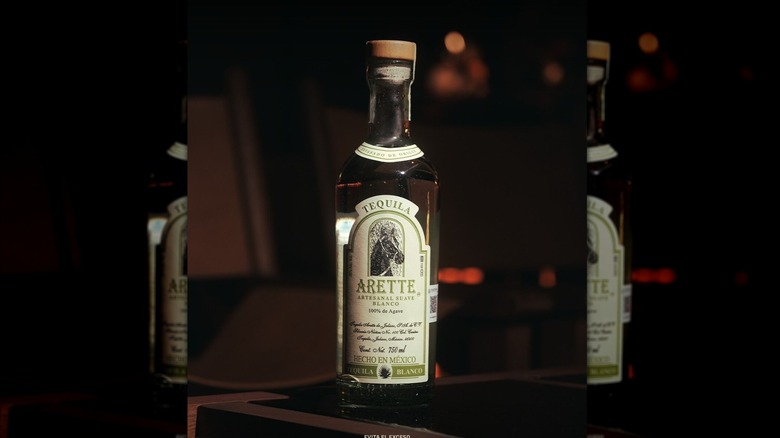
The Arette Clásico wasn't the only Arette to make this list. While Taylor Samuels, owner of Las Almas Rotas, appreciates the whole Arette line, David Hernandez points specifically to the Artesanal Suave Blanco when patrons want to sip a tequila neat. "It's elegant and easy on the palate without losing character," he says.
While all the tequilas in the Arette line are distilled at the historic El Llano distillery, El Llano isn't Arette's only link to history. The Orendain brothers chose to name their tequila after a historic Mexican hero as well: Arete, the Mexican horse who won gold in equestrian jumping at the 1948 Olympics in London.
Hernandez describes the flavor of the Artesanal Suave Blanco as "bright cooked agave, light citrus, soft herbal notes, and a gentle white pepper finish," adding that "the texture is silky and rounded. It's approachable and balanced, exactly what many people mean when they say they want something smooth."
Tequila Corralejo Reposado
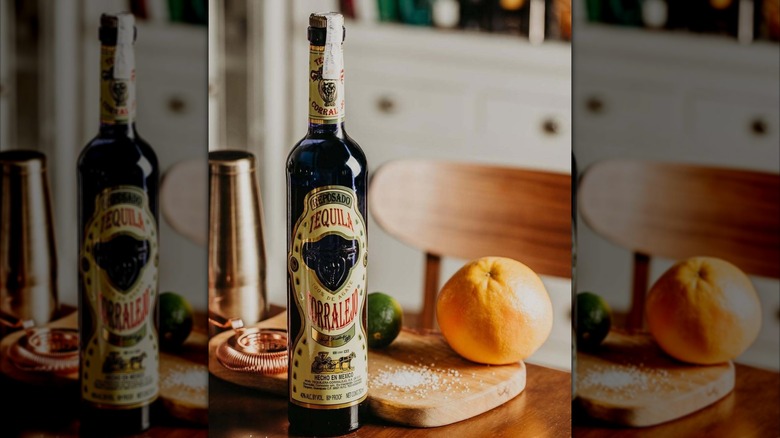
Blancos aren't the only tequilas worth sipping. Several experts recommended reposados as well. In fact, Sam Scarlett, the beverage and hospitality director at The Wine Kitchen, tells us that his recent favorite is Corralejo Reposado, a sipping tequila we've featured before. Relatively affordable, ranging from $25 to $42, this tequila isn't produced in Jalisco like so many others. Instead, it's grown, distilled, and bottled in Guanajuato, at the 271-year-old Hacienda Corralejo estate. One of only a handful of estates outside Jalisco that can officially produce tequila.
Sold in a stunning blue bottle, Scarlett believes it's "an approachable yet flavorful reposado that
bridges value and quality. Aged in a combination of American, French, and Mexican oak," the beverage director adds that "it delivers inviting notes of honeyed agave, toasted coconut, baking spice, and soft vanilla. It strikes the perfect balance of quality, complexity, and accessibility."
Tequila Ocho Reposado
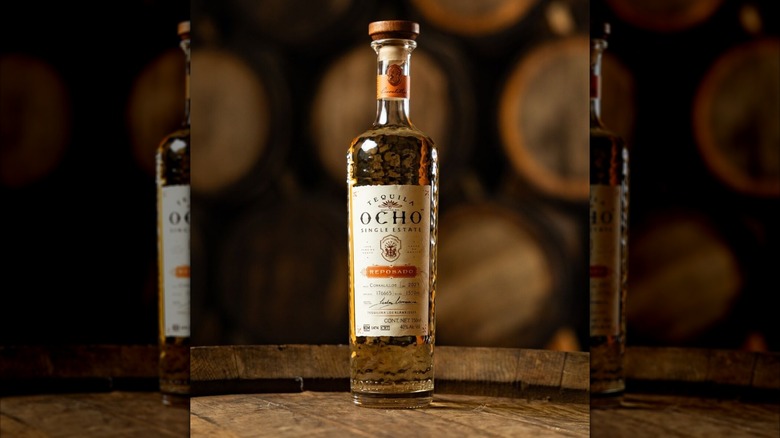
Eight (ocho in Spanish) isn't just a random number that co-founders Carlos Camarena and Tomas Estes thought would be a cool name for their tequila. That number actually has a lot of meaning for them. The company was founded in 2008. Camarena is the eighth of nine children. They let the blue agaves grow for eight years before harvesting them. Once the mature agaves reach the distillery, it only takes eight days to turn the plants into blanco tequila. As for the reposado, Camarena and Estes stick with the eight theme, aging the tequila for eight weeks and eight days.
Those eight weeks may seem short, but to be considered a reposado, tequila only has to be aged for a minimum of two months (or eight weeks). "The result is an elegant, agave-driven spirit with notes of citrus peel, minerality, light creaminess, and subtle spice," says Sam Scarlett. "It's perfect for anyone who wants just the lightest kiss of oak but still an exceptional, smooth, high-quality sipper." And if you'd prefer a cocktail, Scarlett believes it also makes a terrific margarita.
Siete Leguas Reposado
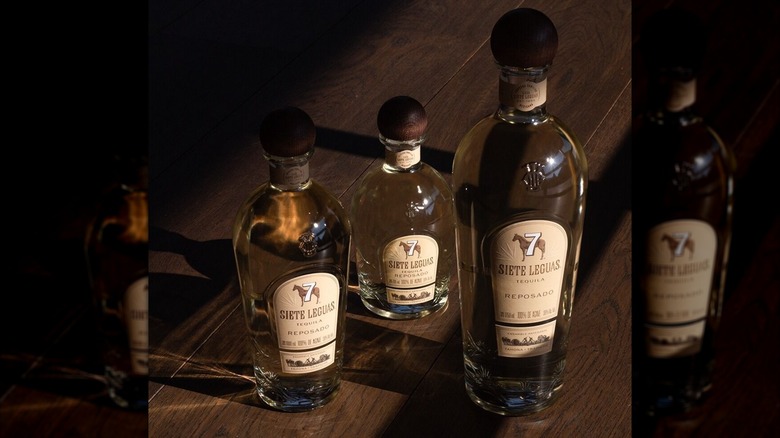
"My favorite is Siete Leguas Reposado. You can't go wrong with that one," declares Saeed "Hawk" House. But he wasn't the only bartender to rave about this reposado. Sam Scarlett recommended it as well, telling us that it's "an excellent traditional sipping choice for anyone prioritizing core tequila character."
This is another tequila named after a famous horse, belonging to Mexican revolutionary Pancho Villa. He gave the mare that name because she had such endurance and speed that she could supposedly travel seven leagues in just one day. Made from agaves that are harvested after seven years and then crushed using both a tahona and a steel mill, the juice is fermented and aged for eight months in ex-bourbon barrels.
Both House and Scarlett believe those eight months produce flavors of citrus, black pepper, and plenty of minerality and earthiness. "This is what tequilas should taste like," asserts House. "It's not overly sweet, it's not overbearing, it's just a good, clean, delicious reposado." In fact, the bartender is such a big fan that he says he always keeps a bottle at home. "It's a good, versatile, all-around reposado in my opinion, and I feel like anybody who wants to taste a really good reposado should start with that."
Clase Azul Reposado

You can't miss a bottle of Clase Azul Reposado. The white ceramic bottle with a beautiful blue design definitely stands out on a shelf. The iconic bottle came to Arturo Lomeli while he was studying ceramics and tequila making. It's also how the tequila got its name. See, azul means blue in Spanish, like the blue design on the bottle, which represents the blue agave Clase uses to create its tequila.
There are several different spirits under the Clase Azul moniker, but it's the original expression, the reposado, that Salvador Enriquez, bartender at State Fare Bar & Kitchen, says is his choice for sipping straight. "Clase Azul Reposado is about balance and elegance," he attests. "Rested in oak barrels, it develops soft notes of honey, baking spice, and dried fruit while still preserving the natural agave character. What makes it so sippable is the round, creamy mouthfeel and the long, gentle finish," he notes. "It is luxurious without being overpowering, a tequila you want to take your time with."
Mijenta Reposado
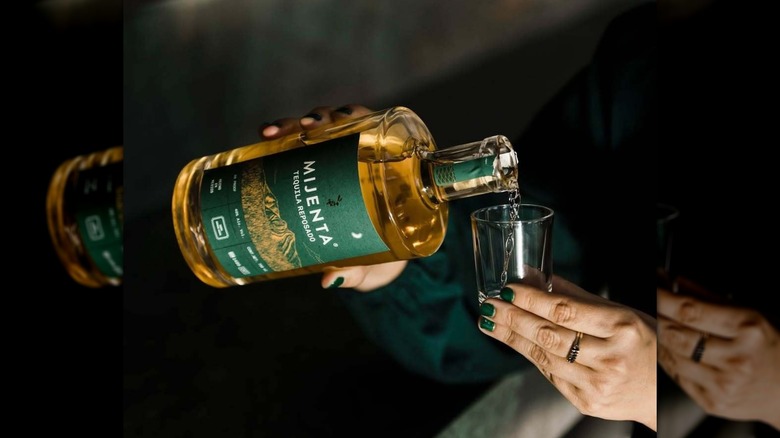
Whenever Zak Lindahl, beverage director at The National, recommends agave spirits for drinking straight, he focuses on traditional production that produces an additive-free product. Mijenta checks all those boxes. The tequila uses only matured blue agave, water, and a wild yeast that's hand-picked by Ana María Romero Mena, Mijenta's maestra tequilera.
Unlike other reposados, Mijenta's aren't aged for a set amount of time. Instead, they're aged for anywhere from six to eight months because Mena and her team believe that when the tequila is ready, they'll know it. That sliding timeline creates a flavor that Lindahl describes as "bright cooked agave, citrus oil, white pepper, and a clean mineral edge," noting that "Texture, balance, and clear agave character are what make a spirit truly sippable." He continues, "The mouthfeel is soft and natural, not artificially rounded. Very polished for the price point." A price point that ranges from $50 to $80.
Wild Common Reposado
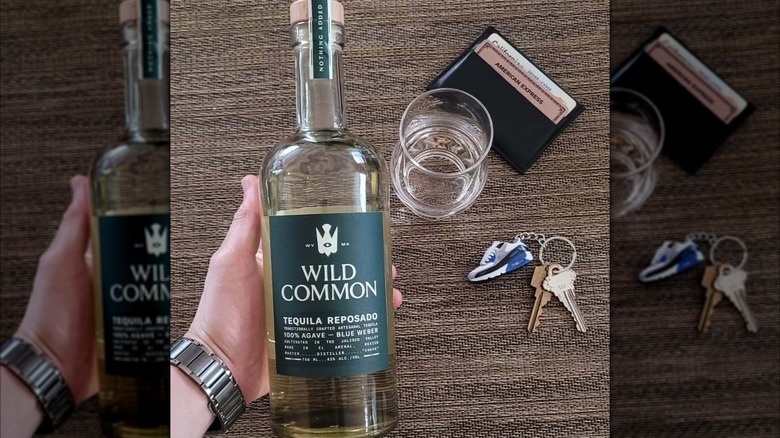
One meeting was all it took for co-creator Andy Bardon to decide to go into the tequila business. While on a photography assignment for National Geographic, Bardon met the Rosales family, who run the Cascahuin distillery, a distillery that's been creating tequila since 1904. Wild Common may be a lot younger than the distillery's namesake, only coming to market in 2021, but that doesn't mean master distiller Don Salvador Rosales Torres doesn't take the same amount of care to create the brand as he does his other tequilas.
The Blue Weber agaves used to create the spirit are hand-harvested, slow-roasted, distilled, and bottled on-site. In fact, all six of Wild Common's spirits are created with the same care and attention. Even though Taylor Samuels insists everything Cascahuin produces "is excellent," it's the Wild Common Reposado that he especially loves, thanks to its notes of black pepper, butterscotch, and minerality.
Tapatio 110
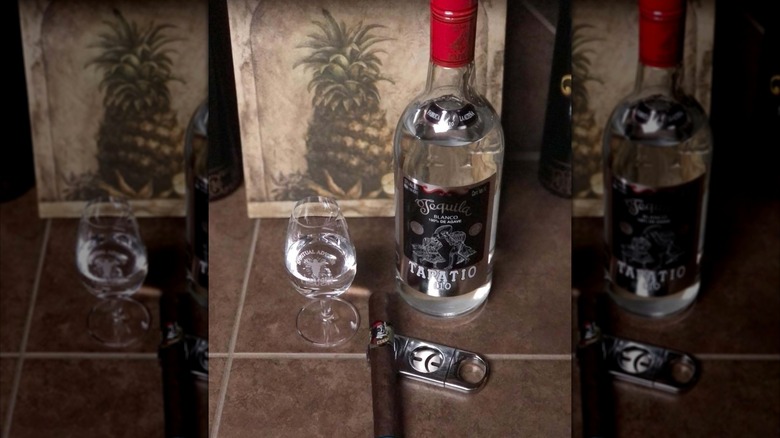
No, we're not talking about a super spicy twist on the well-known hot sauce. Believe it or not, there's a high-quality tequila out there with the same name. While there's no spice in this spirit, both Misty Kalkofen and Taylor Samuels say the whole line has plenty of flavor.
What makes the 110 stand out is that it's an overproof tequila, which means it's bottled at 110 proof or 55% alcohol by volume. Now, the reason that number is noteworthy is that 55% ABV is the highest ABV a tequila is allowed to go under the Norma Oficial Mexicana (NOM) (Official Mexican Standard) and still be considered tequila.
Both Kalkofen and Samuels agree that the higher proof really allows the agave to stand out. "I personally love the overproof," declares Samuels. "At 110 proof, the agave flavor notes really shine through, making it an excellent sipper for a consumer that is looking for that full, true flavor of what an agave spirit can be." Kalkofen concurs, saying, "This is the perfect tequila for lovers of high-proof spirits offering robust notes of cooked agave, bright citrus, and black pepper."
Fuenteseca 7 Year
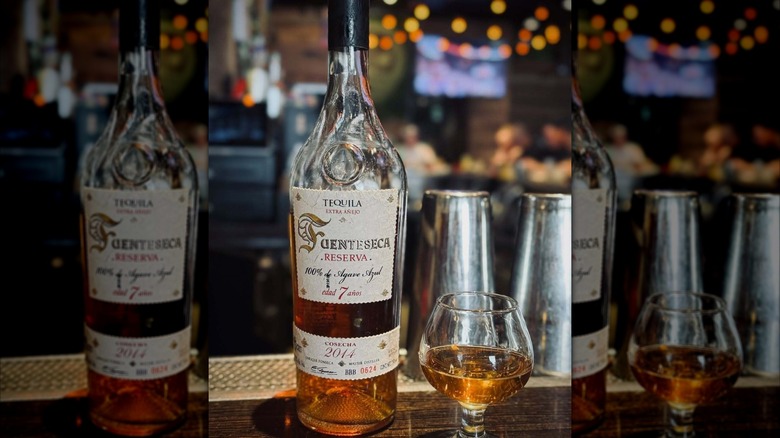
"This may be some of the best juice called tequila in the world," declares Dennis Day. With a statement like that, it's no surprise that this spirit clocks in at about $270 a bottle. But Day believes it's well worth the money. "Any of their aged expressions (7,11,15,18) are out-of-this-world delicious. They almost drink like an amazing Cognac."
That's pretty impressive considering Enrique Fonseca, the man behind Fuenteseca, never saw himself as a tequila distiller. He studied art and architecture, but grew up helping his father plant and harvest blue agave. Then one year, Fonseca ended up with tons of plants and no buyers. He didn't want the plants to go bad, so he taught himself how to make tequila and discovered that wood and time were the most important elements in creating this spirit.
The 7 Year is aged in two different barrels: white American oak used for California red wines and dark French oak. "For any brave soul to go all in on one of these, watch them close their eyes, then smile from ear to ear after their first sip," Day explains. "Grab a cigar, kick off your shoes, and take your time, friends."