

The 6 Best Moka Pots, According To Reviews

We may receive a commission on purchases made from links.
Looking to get into moka pot brewing? Rich, concentrated cups of coffee await those interested in acquiring a moka pot — and with the right machine, you'll find it incredibly easy to brew authentic Italian coffees every day. The moka pot was born in Italy in the 1930s, as a simple way to give people the ability to make cafe-quality coffee from the comfort of their own homes. Since then, a few superior moka pot models have stood the test of time, becoming the gold standard according to those who use them.
We looked at social media, online storefront reviews, and moka pot comparisons to round up six pots that customers think are the best of the best. Each pot on this list has amassed thousands of positive reviews across a variety of websites. We also aimed to provide a range of different moka pots for you to consider. Some are stainless steel, others are aluminum; some are more expensive, others are budget-friendly.
Before you set your heart on a moka pot from this list, it's important to note that they can come in many different sizes. While a moka pot brews coffee, not espresso, the pot is measured in how many espresso cups it can brew at once. A one-cup moka pot, for example, should net you at least 60 ml of coffee. All of the models included in this roundup have at least two different sizes available, with most offering a wide range of sizes. However, some are more limited than others in the amount of coffee they can produce.
Bialetti Moka Express
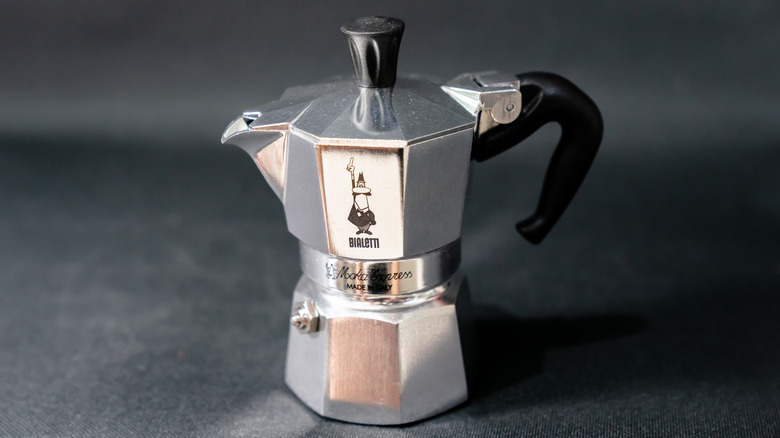
The Bialetti Moka Express is arguably the best moka pot on the market. Drop by any coffee forum or moka pot guide, and you're bound to find rave reviews about the Express. The model has been around since 1933, and it's still made exclusively in Italy to this day. It has an aluminum body and a thermoplastic handle. This durable moka pot brews a smooth and strong cup of coffee; because it's made of aluminum, it heats up evenly and delivers consistent results every time.
The price of an Express moka pot starts at around $37 for a one-cup moka pot, and can go up to around $105 for an 18-cup pot. As far as moka pots go, the Bialetti is an affordable option. Most people opt for a three-cup or six-cup moka pot; if you pick this size, you can expect to spend around $40 to $50 for an Express. Those who have purchased an Express say that it can last for decades, so it's well worth the cash.
The main downside of the Express is that since it's made of aluminum, it doesn't work with induction stovetops. If you own an induction cooktop and still want to try the Express, you can order Bialetti's induction plate adapter; this stainless steel plate slides underneath your moka pot, allowing you to cook with it on an induction stove. However, this add-on will force you to shell out a little extra for your Bialetti, as the adapter retails for $30.
Alessi Pulcina
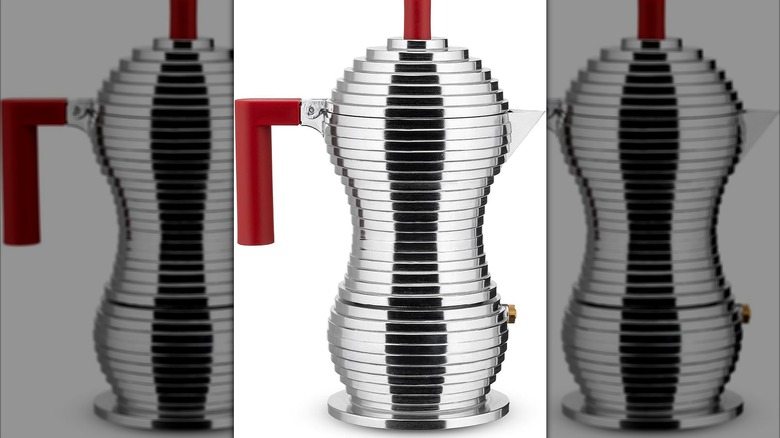
The Alessi Pulcina is an expensive moka pot, but it's also a striking one. The layered aluminum body comes with a bright red or black handle and knob — a midcentury modern look that's become iconic within the moka pot community. Alessi, the brand behind the Pulcina, was actually created by the grandson of Alfonso Bialetti — clearly, good coffee runs in the family. Reviewers say that the Pulcina effortlessly produces a cup of rich, strong coffee without any bitterness. Many customers claim that the Pulcina produces their favorite cup of moka pot coffee.
The main downside of the Pulcina is its price tag. A three-cup pot will run you $175 (the six-cup option costs $200), but those who have tried this moka pot say that it's worth the cash. Reviewers say that it's very durable, so you may very well buy the Pulcina for life. "That thing is nearly indestructible," said one commenter in a Reddit thread discussing the machine. "Had it at least since I was a child, so 30+ years."
There is a version of this aluminum moka pot that comes with a stainless steel base — so you get all the heating benefits of an aluminum body, but with the ability to use the Pulcina on an induction cooktop. The induction stovetop Pulcina is even more expensive than its base model, however. It costs $200 for a three-cup pot, or $250 for a six-cup pot.
Bialetti New Venus
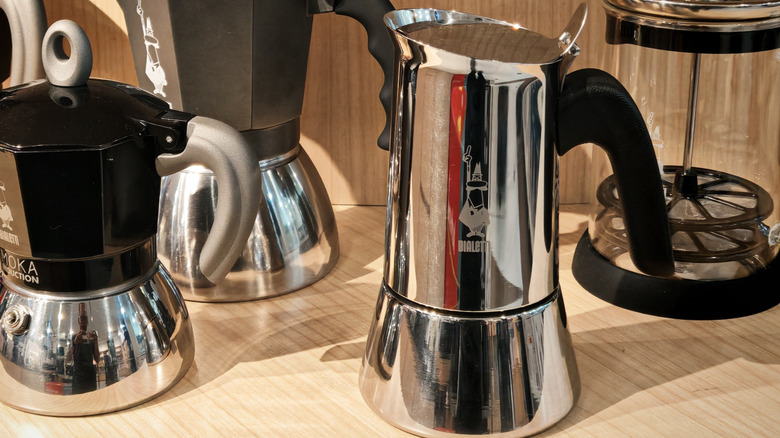
The Bialetti Express may be hard to beat, but many moka pot fanatics are more than willing to go to bat for the New Venus. Unlike the Express, the New Venus pot is made from stainless steel. The metal you prefer is a matter of personal taste; aluminum tends to be cheaper, heats faster, and conducts heat more evenly. Stainless steel will be more expensive and heat more slowly, but it is generally easy to clean and can be used on induction stovetops without any add-ons. Some coffee drinkers swear they only enjoy coffee brewed from one or the other, while others say they love both. If you feel that a stainless steel moka pot is in your future, then the New Venus is a very solid choice.
Reviewers say that this moka pot is stylish and easy to use. As with the other pots on this list, it's highly consistent; you can count on receiving the same perfectly-brewed cup of moka pot coffee every morning once you have your routine dialed in. Because the New Venus is made of stainless steel, it's a whole lot harder to burn or stain — you can even chuck the whole thing in the dishwasher if you're so inclined. If you do clean it by hand, however, several reviewers have stated that you should look out for sharp edges in the pot's funnel; apparently, they're harsh enough to cut skin. A six-cup retails for around $60, while a four-cup is around $55. These are the only two options the New Venus offers.
Alessi 9090
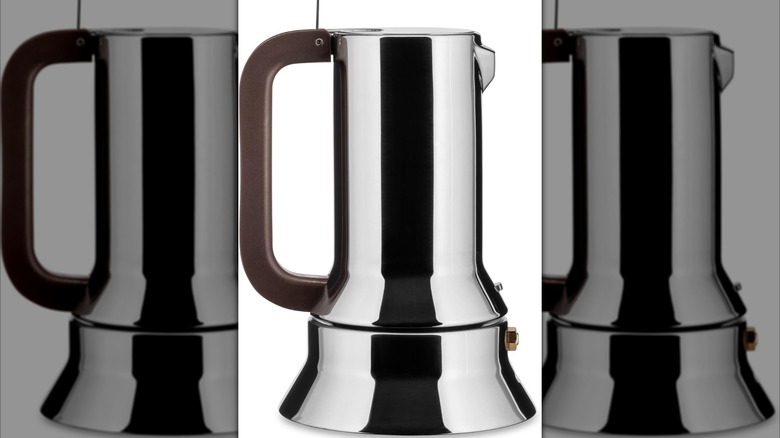
The Alessi 9090 is undeniably a luxury pick, as far as moka pots go. This pot can retail for up to a whopping $650 for a 10-cup pot; your average three-cup pot will still run you $400. While you may think there's no function this machine can provide that's worth such a hefty price tag, many coffee brewers say that the 9090 is undeniably the best of the best. According to Alessi, the unique shape of the pot takes on more heat at once, helping it brew quickly despite being made of stainless steel. For convenience, the lever-locked lid can be opened with one hand, so you can control the pot as you pour. The pot comes with an anti-drip spout and a metal handle.
The design of the 9090 is so famous that even the MoMA has one. This model began production in 1979, and reviewers say it lasts such a long time that you can still find usable vintage 9090s floating around today. The 9090's price wouldn't be worth it if it weren't durable; thankfully, the stainless steel construction may outlast even its aluminum counterparts. The quality of the 9090 is also very noticeable, according to Alessi customers, who say the moka pot has a more stable build than most other pots on the market.
Grosche Milano Moka Pot
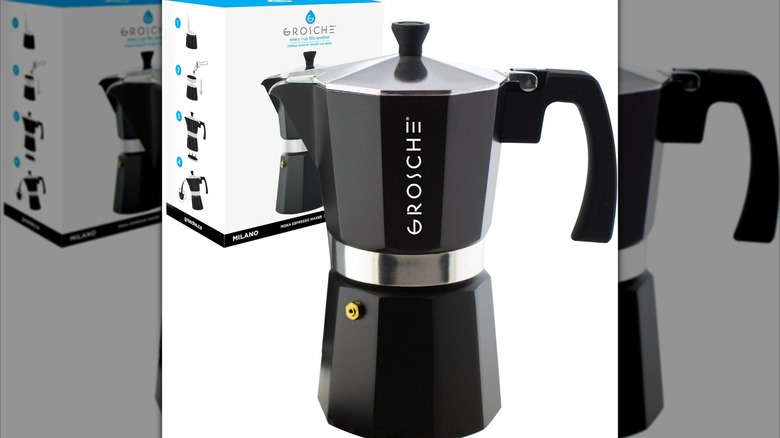
The Grosche Milano is one of the least expensive moka pot models on this list. The three-cup pot can be found retailing for $37. If you want the induction version of this particular moka pot, then it costs $60, making it a relatively affordable induction cooktop option. Sizes range from one cup to 12 cups, which means the pot starts at just $15. The regular Milano moka pots are made of aluminum, while the induction versions are made of stainless steel. In terms of style, the Milano is available in a wide range of colors, though specialty colors can raise the price of the pot.
Reviews for the Milano moka pot are generally positive, with reviewers saying the pot is lightweight and easy to handle. Despite the low price, customers appreciate the quality taste of the coffee. A few people have mentioned that the pot isn't quite as durable as they had hoped, however. Reviews are mixed on this front, although it is possible you won't get the same durability as the more expensive options on this list. Regardless, it's a good entry point to moka pot coffee, especially if you want an inexpensive option to play around with while you figure out what you're doing.
Bialetti Brikka
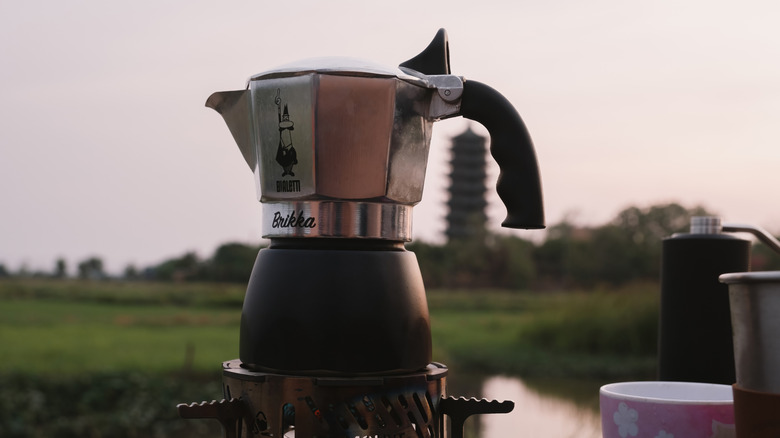
The Bialetti Brikka is a special moka pot option that's meant for those who want to achieve a rich, thick crema with each cup of coffee they brew. Available in either a two-cup or four-cup model, the Brikka retails for around $80 and $90, respectively. Bialetti says that the Brikka was inspired by the Express model, though it differs by having a dual-valve setup that creates the crema on top of your coffee. The valve pressurizes your coffee inside the pot, so that when it releases, it creates a thick froth (much like the perfect crema from a Nespresso Vertuo).
The Brikka is made from aluminum. Like the Express model, you'll need to use Bialetti's induction adapter plate if you want to use the Brikka with your induction stovetop. You should also know that many brewers who use the Brikka pot say it takes a little longer to get used to (partially because of its unique sizing). As long as you don't mind playing around with your brewing style to dial in the perfect cup of coffee, you'll likely love the Brikka just as much as you would the Express — some even argue that they prefer it to any other Bialetti pot.
Methodology
While the coffee community is known for arguing over the best tools, machines, and blends for the perfect cup of coffee, most moka pot owners are surprisingly quick to agree on the best ones. We looked for the pots that were mentioned over and over again online — every item on this list has thousands of positive reviews across multiple online shopping platforms. We also examined coffee forums, test kitchens, and social media reviews to get users' honest opinions about their experiences.
With each model we selected, we assessed the overall price of the pot, how long it lasts, its materials, and the taste of the brew, according to reviewers. Not every machine needs to nail all of these marks perfectly — a more expensive machine is acceptable as long as reviewers say it's worth it, and a less durable machine is fine as long as it isn't expensive — but we wanted to be confident that every machine produces delicious-tasting coffee without much hassle. In the end, we wound up with six moka pots that received consistently positive reviews across most categories from a majority of their users.