

What The Percentage On A Chocolate Actually Means
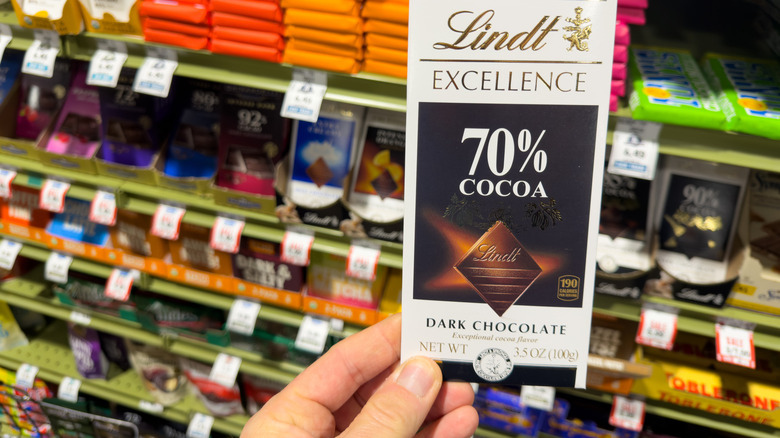
When shopping for the best chocolate brands, you might look for labels like milk, dark, and white, but the percentage numbers printed on some bars can be confusing and even intimidating. Understanding what they mean actually isn't too complicated, and will help you better select and appreciate bars, bonbons, and baking chocolate. Tasting Table spoke to Nicole Patel, founder of Delysia Chocolatier, to get the scoop on this mysterious yet vital aspect of chocolate-making and buying.
Whether you're looking at bars labeled as 50%, 70%, or 90%, "the percentage refers to the total cacao content in the chocolate, including cocoa solids and cocoa butter," Patel explained. "For example, a 70% chocolate bar means that 70% of the bar comes from cacao components, while the remaining 30% is usually sugar." Cocoa butter is the fat found in cacao beans, while cocoa solids are all the "dry" parts of the bean that are not fat. With a strong, bitter, aromatic taste, solids supply that essential "chocolatey" flavor, while the butter creates the creamy, rich, and smooth-melting texture of good-quality chocolate.
How does the amount of cacao (which is different from cocoa) influence the character of chocolate? As Patel told us, "In general, a higher percentage means more intense chocolate flavor and less sweetness, while a lower percentage means a sweeter, creamier bar." The expert chocolatier gave us more tips on how to discover which cacao percentages you enjoy the most, and what the number really means in terms of chocolate quality.
An expert explains how cacao percentage impacts chocolate
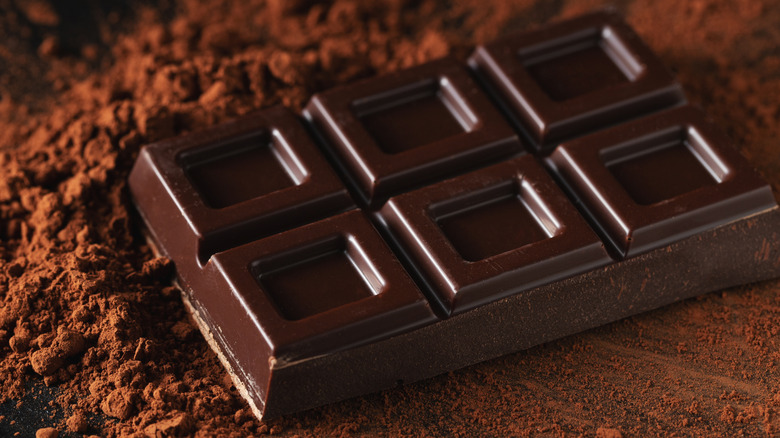
You probably already know if you like milk, dark, or white chocolate, but these varieties can all come with varying cacao percentages. Nicole Patel provided guidelines to make your shopping experience less overwhelming. For the strongest taste, "higher cacao percentages are ideal," she said. "Dark chocolates with higher cacao percentages (70% and above) often boast intense, robust, and occasionally bitter flavors."
"If you want sweeter chocolate, look for lower percentages or milk chocolate," Patel said. She recommends bars below 50%. The non-cacao parts of these bars may contain sugar, emulsifiers, and flavorings, plus dairy in the case of milk chocolate. These ingredients not only make chocolate less bitter and intense — they make it less brittle, too. The more cacao a chocolate bar contains, the harder, denser, and snappier it is; the more sugar and other ingredients, the softer and more prone to melting.
For the perfect middle ground, Patel said that "medium cacao percentages (50-69%) strike a harmonious balance between sweetness and bitterness." While you now have an idea of what cacao percentages you may enjoy, keep in mind the difference between baking and snacking chocolate. Baking chocolate is typically high in cacao and low in sugar, so the taste comes through in your dishes and doesn't make them overly sweet. Even if you wouldn't like to snack on a 100% dark chocolate, don't fuss around when a recipe calls for it. Crucially, Patel also notes that cacao percentages don't always reflect quality.
Cacao percentages are useful, but don't determine chocolate quality
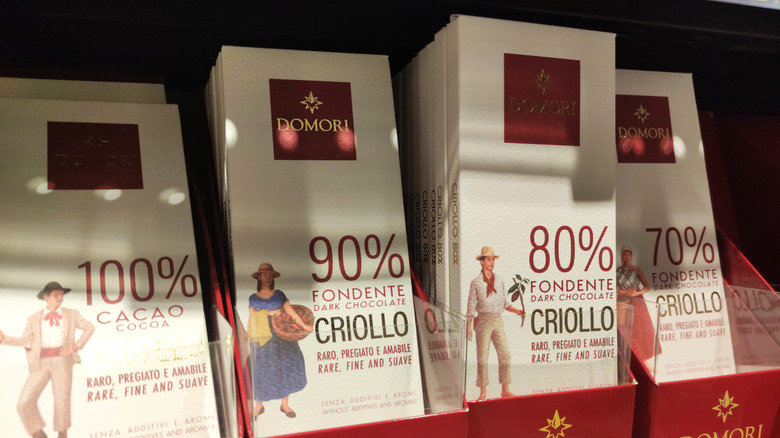
In the hunt for high-quality chocolate, you do want a decent cacao percentage in your bars. In fact, the FDA says that products don't count as chocolate if they lack chocolate liquor, the base of chocolate made by grinding cacao beans. But relying solely on percentages is a chocolate-buying mistake. Nicole Patel explained that the number "doesn't indicate quality on its own; it reflects cocoa content and flavor intensity, not how well the chocolate is made or how smooth it will taste."
Factors that influence the quality of chocolate include the type of beans and how they're grown, quality control for the beans, the roasting, conching, and tempering process, and the amount of additives in the bar. This is why it's possible to have a lower-percentage bar that's smooth and flavorful and a higher-percentage bar with a texture and taste that falls flat. If a brand makes an effort to print percentages on its bars, that may mean it wants to communicate quality to consumers, but it's wise to look past fancy labels and examine what goes into a product.
To effectively determine chocolate quality, closely examine the ingredients — the shorter the list, the better. Look for terms like "cacao," "cacao beans," and "chocolate liquor," and pass up on bars that only contain cocoa powder. Not paying attention to the origin is another mistake. Bars made with cacao from a specific place have more unique, complex flavors to appreciate.