

Is Your Air Fryer Toxic?
We may receive a commission on purchases made from links.
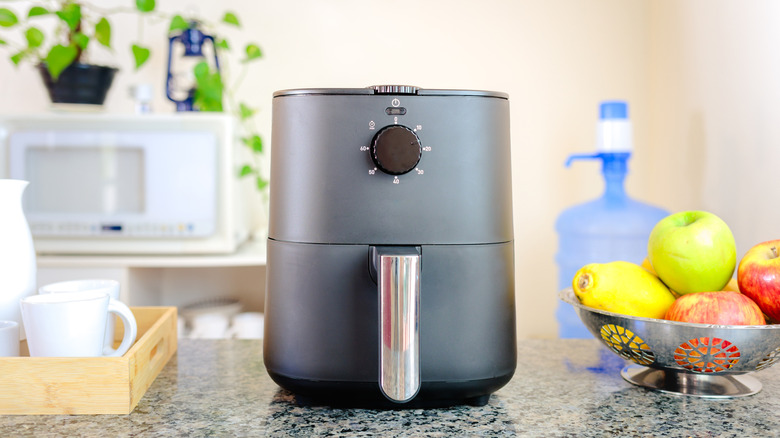
For so many of us, air fryers have become a kitchen essential. But recently, a concern has been popping up among fans of this nifty piece of appliance, and people are wondering whether their air fryers are poisoning them. The culprit? PFAS, or per- and polyfluoroalkyl substances. PFAS are a group of chemicals that can be found in many kinds of kitchen appliances. Most near-and-dear to us is PTFE or polytetrafluoroethylene, better known by the brand name Teflon. It's been used for years in everything from non-stick pans to waffle irons and, yes, even air fryers.
Both Teflon and PFAS break down over time. But it's not something like one, two, or even 10 years — they may take as much as 1,000 years to naturally degrade. That's why they've been given the unflattering, but deserved, nickname of "forever chemicals." Not to mention evaluations like those from the World Health Organization in 2023, which have linked PFAS exposure to cancer and the 2021 study published in the journal of Environmental Toxicology and Chemistry linking it to thyroid disease, elevated cholesterol, and liver damage.
Teflon hasn't been outright banned because it remains stable at low temperatures, making it safe to cook with — that is, so long as you keep the temperature of your air fryer below 500 degrees Fahrenheit, which is where it'll start breaking down and release toxic fumes. Oh, and don't scratch it, either, or it'll season your food with a smattering of "forever flakes."
What to consider when buying an air fryer
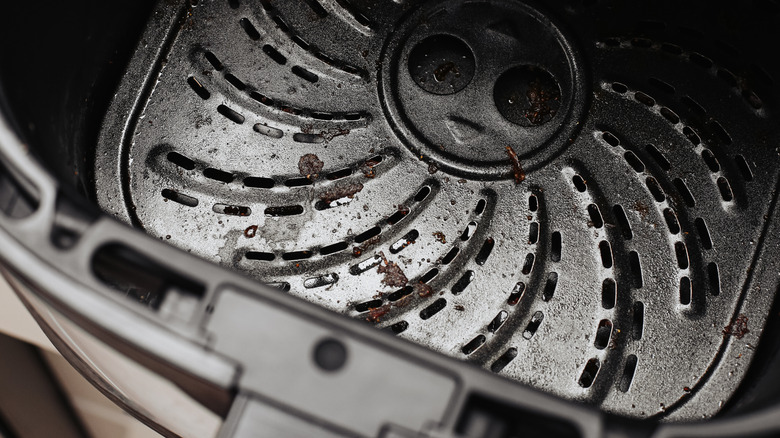
If you just read your air fryer's manual and found out that it does have a Teflon coating, don't panic. Most air fryers don't get hotter than 450 degrees Fahrenheit — still a fair distance from Teflon's danger zone. But if you're concerned enough that you can't look at your air fryer the same way, there are options. The least dramatic would be to get an air fryer with a ceramic coating, an example being the Cosori 9-in-1 TurboBlaze air fryer 6 quart. The only downside is it can scratch easily and may be slightly more expensive.
Outside of ceramic, you can also get something like the Nutrichef 5.8 quart air fryer, which has a glass frying basket. Toaster ovens can also be a good alternative, as some models have an air-fry mode. With a design similar to a microwave, your food is placed on a metal wire rack rather than a Teflon-coated basket, so there's no risk as far as chemicals are concerned. Nevertheless, while you're browsing for a new air fryer, you should read the label carefully and make sure that whatever your purchase says "PFAS-free" instead of "PFOA-free."
Remember, PFAS is a group of chemicals. PFOA is only one — so the odds are good that there are some just-as-harmful chemicals hiding in there. One such chemical is GenX, which was commonly referred to as a "safer" alternative to Teflon, but has been found to also be toxic. Check the brand's website, read reviews, and ask questions — if you can't, it's probably best to find something else. A more expensive air fryer isn't always the better choice, but a good one is one you can use for years without worrying about what's actually in it.