

Why Doesn't Texas Roadhouse Offer Locations In Major Cities?
If you're someone who loves a good deal on dinner, Texas Roadhouse is always on your radar. But if you live in a big city, you may have noticed that you'll have to travel pretty far to get there. While the restaurant industry as a whole has struggled recently, Texas Roadhouse has been a standout that has continued to expand rapidly. With now over 700 locations (up from 470 only a decade ago), nearly every state (sorry Hawaii) boasts a Texas Roadhouse. Nevertheless, for millions of Americans living in the urban cores of New York, Chicago, Los Angeles, Miami, Dallas, Seattle, or Washington, D.C., there aren't any locations within the city limits. Why is that?
Well, unfortunately for city dwellers, part of what makes Texas Roadhouse's steaks so affordable is the company's commitment to keeping costs down in any way it can — and a big part of that is real estate. Both rent and labor are more expensive in desirable urban areas, which would mean Texas Roadhouse would have to charge higher prices in those areas. Instead of compromising its business model to chase more customers, the chain instead made the strategic decision to focus on smaller secondary markets in the suburbs or mid-sized urban areas where real estate costs are lower. It has only doubled down on that focus in recent years, as, instead of finally expanding into big cities, it has started targeting even smaller markets with less than 60,000 residents.
Keeping real estate costs low is a big part of how Texas Roadhouse stays affordable
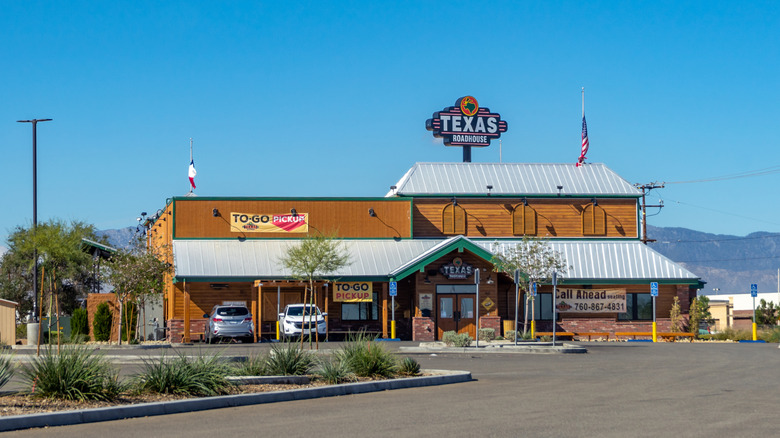
It's this kind of business thinking that is often invisible to customers, but location selection is a huge part of Texas Roadhouse's business, even beyond its current aversion to big cities. Another factor that helps the chain lower real estate costs is that the restaurants aren't open for lunch on weekdays. Beyond saving money on labor, fewer operating hours also means Texas Roadhouse doesn't need to spend money to open stores in the kind of high-traffic locations that make lunch service viable.
Texas Roadhouse doesn't take big risks in its real estate selection either, as the company invests significant resources in finding locations that offer a balance of visibility, accessibility, traffic, parking, and competition. The fewer underperforming restaurants Texas Roadhouse has, the less it has to charge you. This selectivity may be great for customers who get access to Texas Roadhouse's steaks in their hometowns, and good for business, but it does unfortunately mean lots of Americans miss out too.
Of course, you never know when a business will start changing its tune. The allure of so many customers is hard to ignore for chains that are looking to constantly grow, but Texas Roadhouse has succeeded in part by ignoring the pitfalls that have taken down other competitors. For the many hungry people of New York, LA, Chicago, Houston, Nashville, Seattle, D.C., and other major population areas, cheap steaks are likely to stay a primarily suburban phenomenon.