

The Lighter Crust Swap That Makes Quiche Extra Crisp
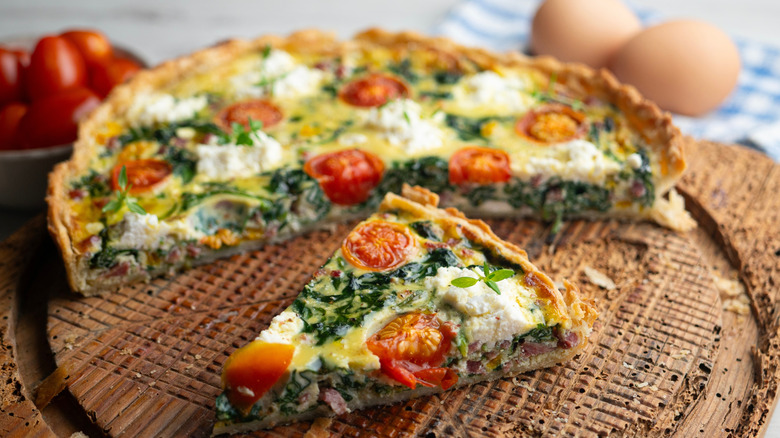
Quiche is a hearty breakfast favorite, and we've got plenty of recipes for your next brunch extravaganza. While most quiches tend to use a pie crust, there are so many pie crust alternatives that'll put new twists on a classic recipe. In an interview with David Davidov, creator of The Cooking Foodie, he told Tasting Table staff, "in my opinion, using phyllo dough instead of traditional shortcrust for quiche changes the whole personality of the dish."
While a buttery, crumbly shortcrust pastry is as decadent as the cheesy, creamy egg center, phyllo dough takes the opposite approach. According to chef Davidov, the paper thin sheets of phyllo dough "becomes light, flaky, and crunchy" when baked, swapping rich, buttery heft for "a lighter quiche with a crispy shell that shatters a little when you cut into it." While there are crustless quiche recipes to rid them of their carbohydrate component, a phyllo crust quiche is the perfect middle ground. It won't add heft, but it'll still give you a satisfyingly buttery taste and crispy, flakey textural contrast to the quiche's dense custard.
Phyllo dough will make a great crust swap many quiche recipes, but you can always start by pairing it with ingredients from its region of origin. To that effect, Davidov told us "I think phyllo works especially well with Mediterranean-style quiches, like spinach and feta, roasted vegetables, herbs, or even goat cheese." Try the phyllo swap on our recipe for spring quiche with greens, goat cheese, and parmesan.
Tips for using phyllo dough in a quiche
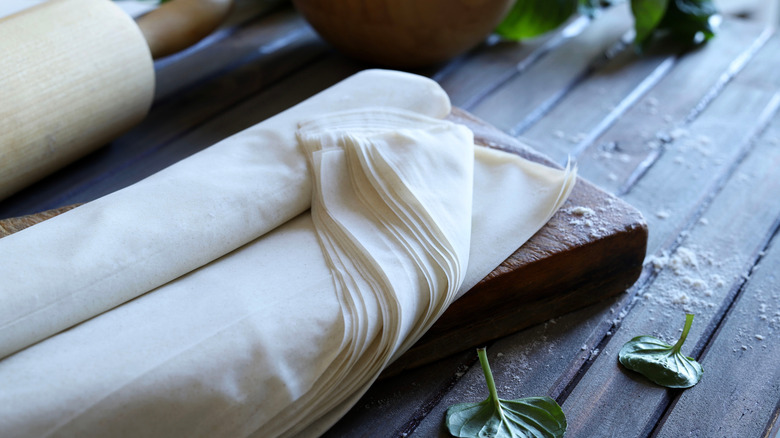
Phyllo dough has a finicky reputation. "Phyllo dries out very quickly, so you need to keep it covered while working with it," says chef Davidov. "You also have to brush each layer lightly with butter or oil so it bakes properly and doesn't taste dry." To ensure optimal crispness, Davidov also advises against overfilling the quiche which can lead to a soggy bottom.
To make a standard 10-inch diameter quiche, use 8, 13 x 17 sheets of phyllo dough. Crumple each sheet up separately to make them more malleable before layering each one on top of the other, spreading butter or oil between each layer. After stacking the sheets into a greased pan, you can add a layer of fillings, followed by a third of the egg mixture, repeating two more times. Then, either fold the phyllo dough that hangs over the side of the pan into a top crust, or tuck the overhang into the perimeter of the pan to create a pizza-like crust. Brush the crust with more butter and bake for 35 to 40 minutes at 350 degrees Fahrenheit.
While light quiche fillings will pair well with the light and flakey phyllo crust, chef Davidov warns us that "it's less ideal for very heavy, creamy, or bacon-loaded quiches because phyllo isn't as sturdy as shortcrust." If you still want a flakey crust for a heavier quiche, we'd recommend swapping a shortcrust for a can of crescent rolls.