

8 Up-And-Coming Distilleries Bourbon Fans Should Know About
The giants of the bourbon world still dominate the shelf space, but there are always those who try to shake up the established order. Doing that with whiskey is difficult for several reasons. Along with the challenges of operating any new business, making good bourbon takes time and expert craftsmanship. It's for this reason that many new "distilleries" aren't distilleries at all (non-distilling producers, blenders, rectifiers). Instead, they source bourbon and then sell it as their own. That's not inherently a bad thing, as some expertly blend whiskey or add extra maturation to create a genuinely impressive bourbon, but there is a clear difference.
That's why, for these 8 distilleries, we want to highlight those who are making their own. Some of them still part-source bourbon due to economic realities, but all of them distill at least some product on-site. I feel that's important for bourbon fans such as myself, as it shows heavy investment and a long-term vision.
I have spent years studying, tasting, and writing about bourbon. That includes vast knowledge about the classics, but also keeping a keen eye on those up-and-comers. This expertise allows me to see which new distilleries have substance and which are trying to hide a generic sourced bourbon behind flashy branding. I care deeply about transparency and credibility. So, you can be assured that once you read this, you'll have a good idea of which distilleries to get excited about.
James E. Pepper Distilling Co.
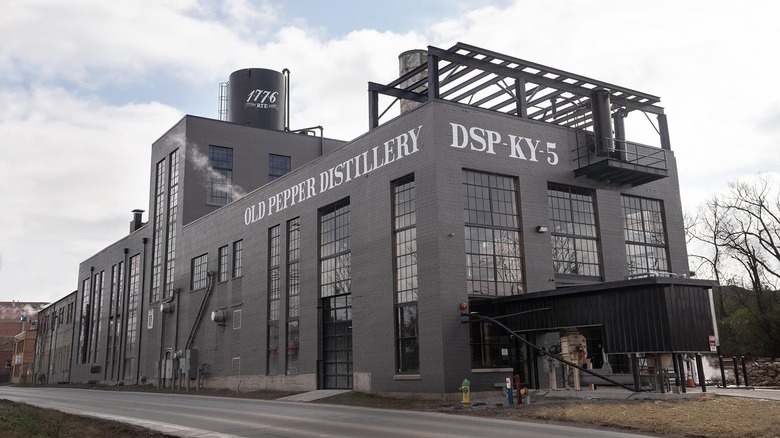
James E. Pepper Distilling is both new and very old. It's new in the sense that the brand first distilled whiskey in 2017, but the distillery itself goes back to 1880. A few brands like to lean on history to give themselves a sense of grandeur, but there is a difference here, as there is genuine authenticity. The original distillery operated all the way until 1967. It was then left derelict for around 50 years, but it was later revived in the same building. What's more, the distillery is now using the same recipe to make its own product.
What impresses me most here is transparency. The brand still partly uses sourced bourbon but is honest about this. Operationally, it makes sense for a distillery to do this as it takes a long time to increase capacity. For reference, James E. Pepper was distilling around 2,000 barrels a year in 2023, compared to the 500,000 Buffalo Trace is now able to produce. This comparison to an industry giant such as Buffalo Trace shows why it's only fair to have a little patience with a relatively new distillery. Bourbon fans should be interested here, as it seems the future is pride in its own product. A common theme with all the distilleries in this list is that it feels the most exciting chapter is yet to come.
Southern Kentucky Distillery
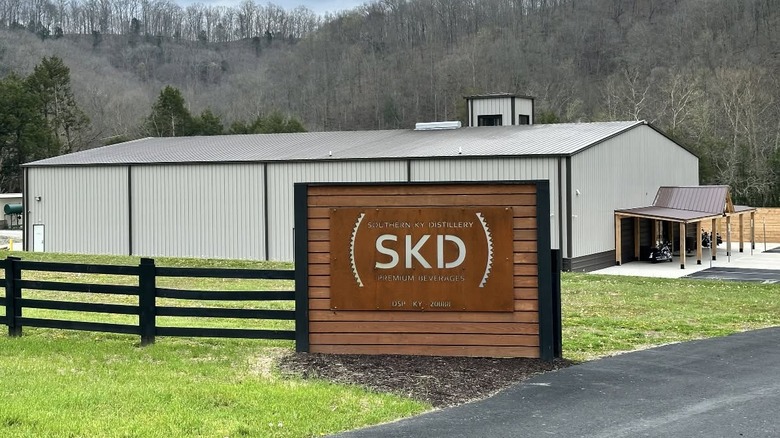
Southern Kentucky Distillery is a multi-liquor distillery, as it doesn't just focus on bourbon. It also makes flavored whiskey, moonshine, and vodka. There is no deep history with this brand, but it is proud of the fact that it makes the first legal liquor in Cumberland County, Kentucky, since prohibition. Founded in 2022, the distillery is seemingly making good progress to put a respectable bourbon on the shelves. In the meantime, its own distilling has been focused on moonshine, and vodka, which don't need time to mature.
Its on-site bourbon, branded Broadhead Bourbon, is due to be released in 2027, and it'll be fascinating to see what it tastes like. At the moment, it is able to produce around 25 barrels a day, which is over 9,000 per year. That's an impressive number for such a young distillery with plans already in place to double that number. Bourbon fans, in the meantime, can enjoy the couple of sourced bourbons it offers, which are Long Ridge High Rye Bourbon and Turby's Cherrywood Bourbon. Genuine bourbon fans care about origin and process, and that makes Southern Kentucky Distillery the real deal. Distilled on-site using locally sourced grain and water, its Broadhead Bourbon should be highly anticipated once it finishes aging.
Whiskey Thief Distilling Co.
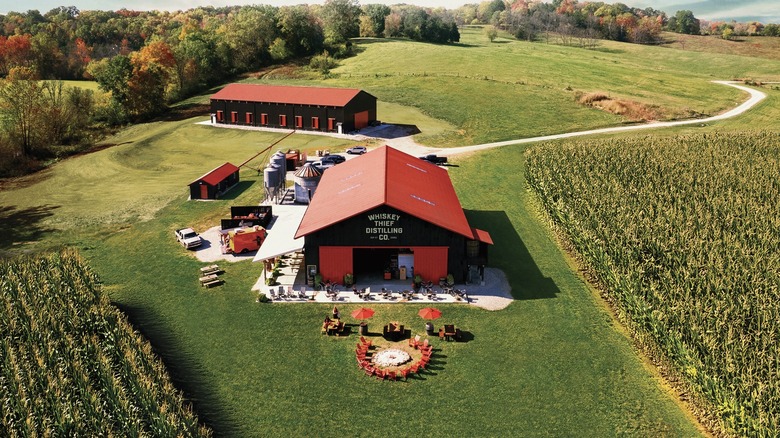
Whiskey Thief Distilling Co. does things a little differently from everyone else here. Instead of focusing on getting their bottles to market, it focuses on providing an authentic whiskey experience. That is at two sites; it has a tasting room in Louisville, which hosts live events and serves food. Along with that, you can visit the distillery in Franklin County. At both destinations, you'll get to enjoy the "whiskey thief" journey. A whiskey thief is a long, straw-like tool that is able to extract whiskey straight from the barrel. Not only did this tool inspire the name, but also the immersion. Whiskey is drawn straight from a barrel into your glass.
This bourbon is made on-site with grain used from the farm it's situated on. Here you can simply go for a tasting event, or buy your own bottle, or even a barrel. It's a truly unique experience and a novel niche in an industry that is always looking to innovate. For those not from Kentucky and looking to sample the whiskey themselves, there are now a few select bottles available to purchase on its website. They do say their plan is to eventually be carried in select retailers. Hopefully, Whiskey Thief can expand to the point where its bottles are more widely available outside of Kentucky and beyond.
Wigle Whiskey
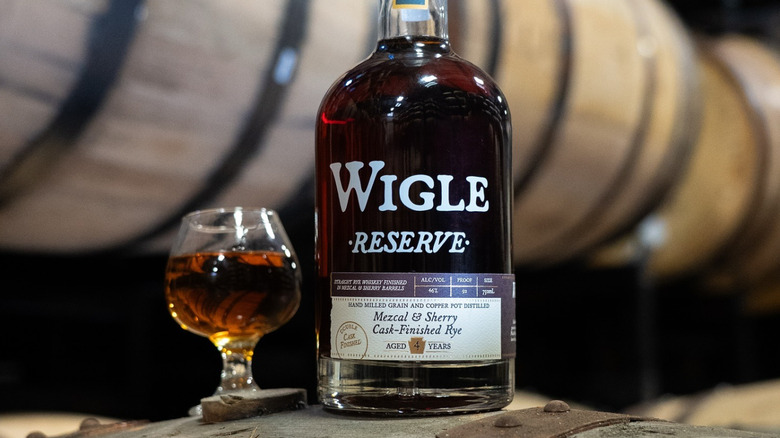
Our first step away from Kentucky comes in the form of Wigle Whiskey. Hailing from Pittsburgh's historic Strip District, it mixes distilling with a unique on-site experience. It was the first distillery in the city to open since prohibition and was named after a whiskey pioneer and Pittsburgh native by the name of Phillip Wigle. It needed to fight against legislation to even open, as craft distilleries weren't able to sell product directly to customers. Once the law was changed, it opened up its doors in 2012.
Without the decades of production and experience to benefit from, many new distilleries look at different angles to get business. With Wigle, that includes a space that doubles as a restaurant, hosting unique tasting sessions and bookings for private events. While those aspects of the business will bring in cash, most bourbon fans will care the most about its grain-to-glass approach. Its whiskeys are all made in-house with local grain to deliver an authentic bourbon. It now boasts quite a wide range of expression that also includes flavored, cinnamon, and rye whiskey, along with gin and vodka. For fans looking to track down producers with true distillation credentials, it's another you can add to your list.
Kings County Distillery
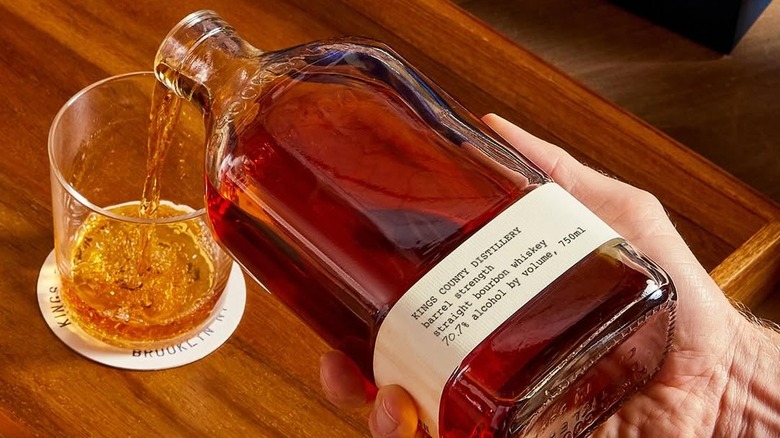
Kentucky is the undisputed king of bourbon, but Kings County Distillery shows that not all new distilleries need to come from the Bluegrass State. Sourcing bourbon makes a lot of sense for distilleries at the start, yet Kings County Distillery wanted to do things the hard way. It has been making its own whiskey in Brooklyn since it started in 2010. That made it the first licensed distillery in New York since prohibition. It started in a small building using small stainless-steel stills but now operates out of the historic Paymaster Building using copper pot stills.
The use of these types of stills is important. Pot stills only allow you to make one run at a time compared to column stills. This can create big and bold flavors with a spirit that is richer in mouthfeel. The disadvantage is that it's slower and less efficient. Again, it took the hard route. It now features a range of interesting expressions. Along with straight bourbon, there is peated bourbon, single malt, and rye whiskey, among others. It's a mixture of distillery practices that make it a pioneering craft whiskey maker away from the heartlands of Kentucky. There are many great bourbon distilleries outside the state, and Kings County Distillery is a worthy addition to that list.
Castle & Key
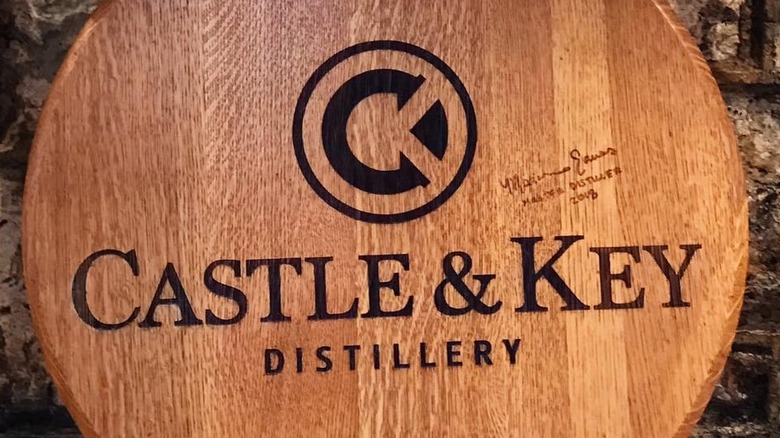
The story here is similar to that of James E. Pepper Distilling Co in that it's situated in a once derelict former distillery. In this case, the building and grounds were built by Colonel Edmund Haynes Taylor Jr. in 1887. The distillery wasn't able to survive prohibition and eventually fell into disrepair. In 2014, the old distillery was purchased, with a full restoration soon underway. The original distillery was built in the shape of a castle to entice guests. There is also a springhouse on the grounds in the shape of a key, hence the name.
It took the distillery 8 years to get to the point where they were able to release a bourbon, which came out in 2022. Also in its roster are rye whiskey, gin, and vodka, along with various whiskey expressions. Castle & Key makes everything it sells with local ingredients. Due to the restoration, it now has a distillery visit that mixes history with modern innovation. You get a glimpse into the restoration, but also some of the old ruins. It's another example here of a new distillery that has done everything with care and craftsmanship in mind. Building up an authentic bourbon brand takes a huge amount of time and patience. Castle & Key has got to the point now where it has both a range of excellent products and plenty of excitement about what's to come.
New Riff Distilling
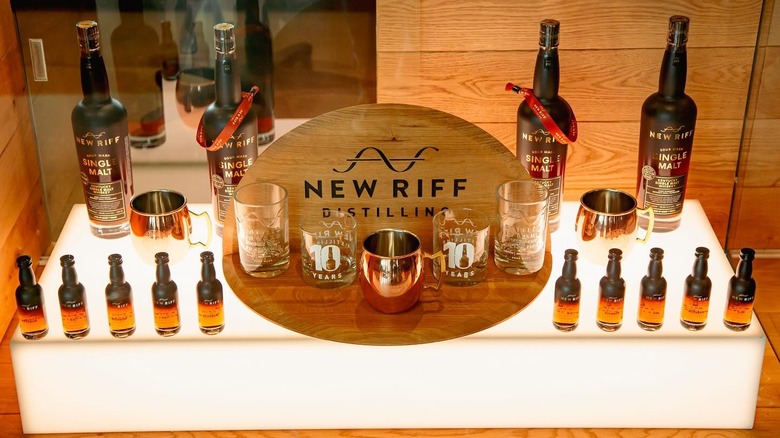
New Riff Distilling is perhaps the most well-known distillery in this list, as it's already making waves as one of the best bourbon brands around. The company was founded in 2014 in Newport, Kentucky, with an immediate focus on authentic whiskey production. It spent the time and energy to build proper on-site distillation infrastructure before releasing its own product. Since then, it has expanded its production from just making bourbon to also creating rye and single malt whiskey.
What makes it exciting for bourbon fans is a commitment to not taking shortcuts. The most basic version of its bourbon is made from sour mash, bottled-in-bond, and made without chill filtration. Among other things, that means it's at least four years old. Despite its relative youth in distillery terms, it has quickly developed a high benchmark of quality. Along with staying true to its core product, the distillery also likes to experiment with the likes of single malt, wheated, and uniquely finished whiskey. The family-owned distillery ticks all the right boxes and now runs a sleek operation that makes it feel like it has been running for decades.
Wenzel Distillery
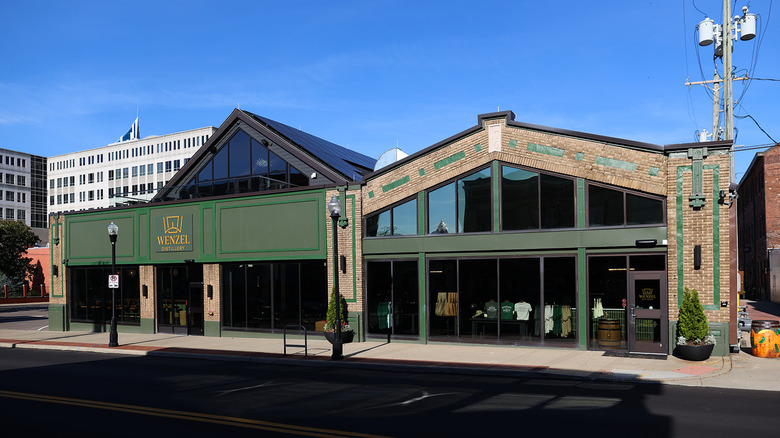
The final distillery on this list is the small craft distillery of Wenzel. The distillery was only founded in 2022, so it would be unfair to expect much in the way of on-site production volume, but it seems to be on the right path. Again, what I appreciate here is the transparency. The distillery even offers a blending experience where guests can create their own blends from the various whiskeys it sources. Located in Covington, Kentucky, it's situated in a beautiful urban building.
It will be interesting to see how the distillery evolves over the course of the next decade as it perfects its process and the whiskey it's making today eventually matures. It completed its expansion in 2025 with a capacity to now produce 700 barrels per year. By now, you'll know that 700 is still not a huge amount, but ramping up production volumes is very much a long-term process. What all these 8 distilleries have in common with me is that I want them to be a success, as it feels as though they are doing things the right way. Wenzel isn't pretending to be something it's not. What started as a wise business plan with blending and hospitality is evolving into genuine craft production.