

14 Yogi Tea Flavors, Ranked
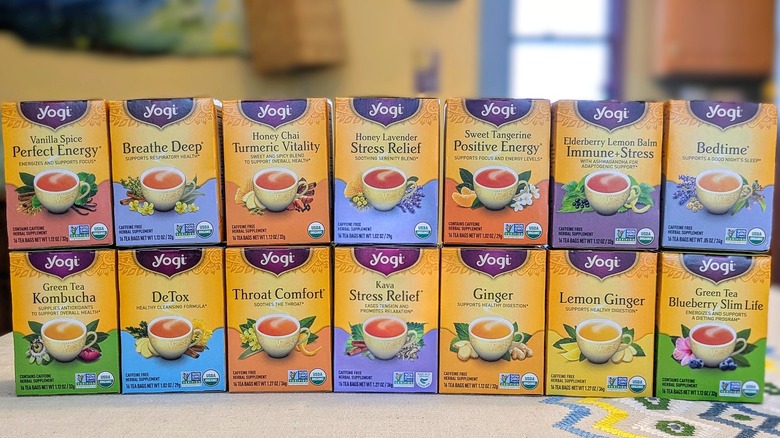
If you're a tea drinker, you've undoubtedly spotted Yogi on the grocery store shelf. Although Yogi Tea's founder was steeped (pun intended) in controversy going back five decades, the company has since distanced itself from its sketchy past to focus on making delicious herbal concoctions for wellness. Yogi landed fairly high on our ranking of tea brands and is generally recognized as an elevated grocery store option compared to bigger, more basic brands. Yogi makes over 40 different varieties cultivated from 140 different plants — it's sure to give Lipton a run for its money.
I'm an avid tea drinker, so I got my hands on 14 different Yogi Tea varieties to try them out and rank them from worst to best. Although the company highlights their medicinal benefits, I'll be focusing solely on their flavors compared to one another. Some of these teas are staples in my pantry, and others are brand new to me, but I'll be ranking them without any personal flavor preference to focus on their taste, quality, and complexity. So put the kettle on, grab your favorite cozy blanket, and let's steep.
14. Throat Comfort
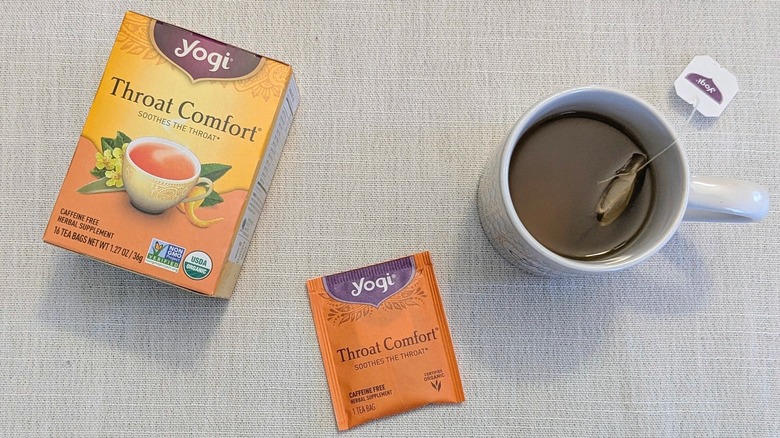
Even those who don't consider themselves tea fans will tear open a bag and put the kettle on when their throat is feeling scratchy. Yogi's Throat Comfort tea is designed for soothing relief from an itchy throat with herbs like licorice root, fennel, slippery elm, ginger root, orange peel, and wild cherry bark.
The blend that makes up Throat Comfort was right up my alley, so I was more excited to try this tea than any of the others. I was hoping for a potent licorice and fennel flavor. However, wild cherry bark is the herb that makes up the majority of this tea, and that was evident before I even went in for my first sip.
Throat Comfort had a potent medicinal smell to it that's eerily similar to cough medicine, and the licorice and fennel got completely masked by the wild cherry bark. It left a sickly sweet, sharp aftertaste behind that was similar to stevia — in fact, I was surprised to see that there wasn't any stevia in this tea's ingredients list. The gnarly aftertaste lingered for hours after sipping, bringing back memories of getting sick as a kid and being forced to drink gross medicine. And triggering bad memories is a bad look for a drink that should be relaxing.
13. Bedtime
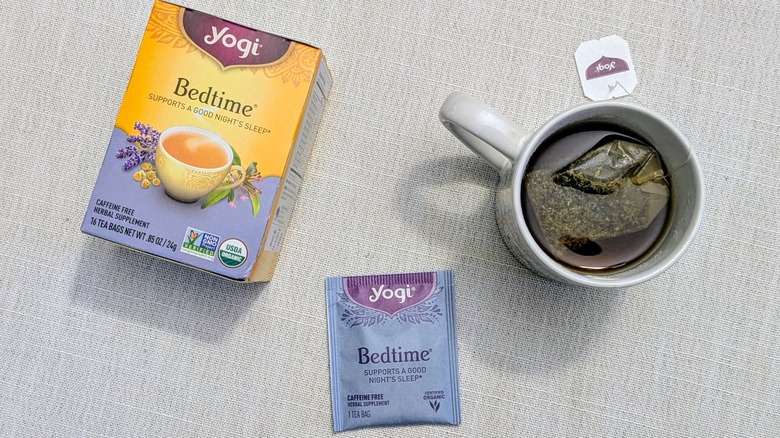
Every tea company needs a quintessential drink for nighttime. Naturally, Yogi's Bedtime tea includes chamomile, but its most plentiful herb is licorice root. It also contains valerian root extract, passionflower extract, lavender, rose, skullcap, spearmint, and cardamom. This is really an amalgamated herbal tea, so I had my hopes set high for it.
I felt like I could smell each individual ingredient, all bouncing off each other to create a flowery, sweet aroma that was both punchy and soothing. But to drink this tea was a different experience altogether. All the herbs tasted muddled, like they combined to form one flat, nondescript, herbal flavor. I was hoping for a smack of licorice and mint, accented by delicate lavender and rose, backed up by sweet orange, but it didn't happen. Chamomile was the most apparent flavor, and it drinks like a solid chamomile tea that's great for making the eyelids heavy — but it could have (and should have) been so much more.
12. Ginger
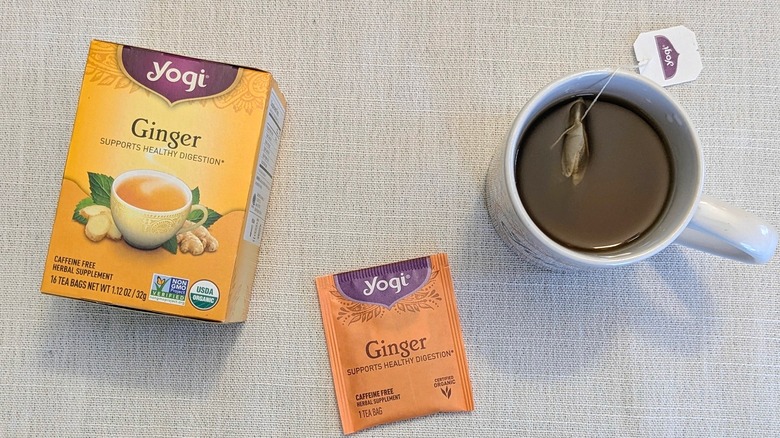
I consider myself a bona fide ginger tea expert. I drink homemade tea made with fresh ginger every day, and have been for years, so I was ready to try Yogi's take on my favorite tea of all time and really dissect all its nuances. In addition to ginger, this drink includes lemongrass, licorice root, peppermint leaf, and black pepper — a quintessential blend, if you ask me.
As you can imagine, this drink is fairly one-note. The ginger aroma and flavor lean far more earthy than sweet, and noticeable hints of black pepper and peppermint add to the earthiness. I would have preferred something spicy or zesty to add complexity to the deep, woodsy flavors — a little more lemongrass or even cayenne would have done the trick. It also needed a sweet element to really bring it to life. All in all, this is a high-quality ginger tea that would make a great digestive aid or palate cleanser, but not a particularly tasty drink sans add-ins.
11. Green Tea Blueberry Slim Life
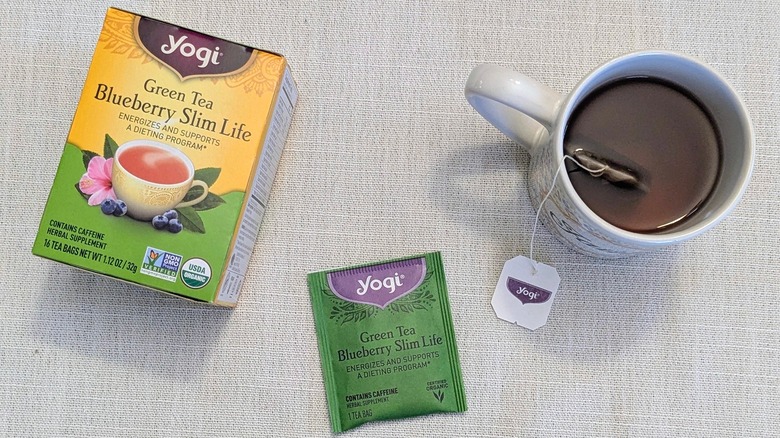
Blueberry is up there with one of my favorite fruity tea flavors. Normally, it's never too sweet or tart — instead, it's comforting and balanced. Yogi combines the berry's excellent qualities with the similar qualities of green tea in Green Tea Blueberry Slim Life. It also contains garcinia cambogia fruit extract (a Southeast Asian fruit), hibiscus flower, bilberry leaf, ginseng root, monk fruit extract, and stevia.
I raised an eyebrow when I saw monk fruit and stevia on the ingredients list. Sometimes, zero-calorie sweeteners can ruin a tea by giving it a sour aftertaste, but that wasn't the case whatsoever in this blueberry green tea. It had a nice fruity sweetness that made the real-fruit blueberry flavor stand out more. Although hibiscus gave it a hint of florals, it would have benefited from some citrus. It had some orange flavor, but zestier lemon would have given it the kick it needed. The green tea flavor was also a bit too mild; it didn't have the iconic grassy taste that it usually has — it was more of a subtle earthiness than the vegetal bitterness that it's known for, which would have paired better with sweet berry.
10. Vanilla Spice Perfect Energy
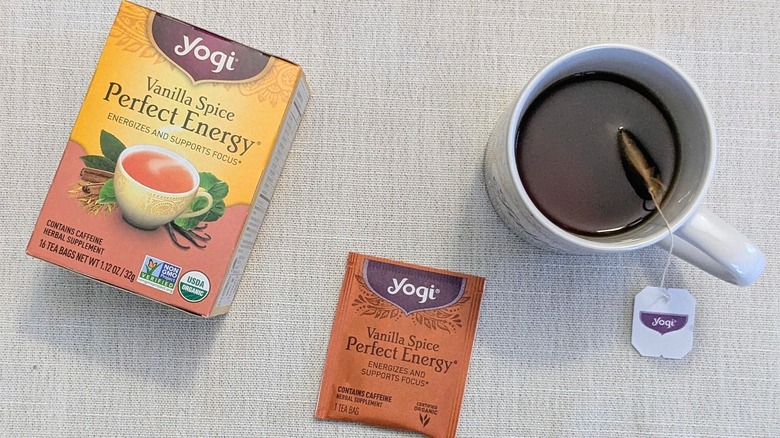
Vanilla Spice Perfect Energy should have been a quintessential spicy-sweet Christmastime tea, but it fell a little short. It contains a green and black tea blend with cinnamon, vanilla, ginger, ashwagandha, and other ingredients. I was surprised by the lack of nutmeg, clove, and allspice, and after trying the tea, I think these winter spices would have taken this tea much further.
An ideal spicy vanilla tea should have it all: a decent amount of honey-like sweetness, a spicy warming quality, and plenty of sweet and earthy winter herbs and spices. Yogi's tea had promise — I like the addition of licorice and ashwagandha in a vanilla tea, and its aroma was complex and spicy. But it tasted a little muddled and bland instead of that sharp punch of vivid flavor I was hoping for. Adding a sweetener and your own clove or nutmeg would help, but on its own, it can't live up to its name. It's a little too, well, vanilla.
9. Detox
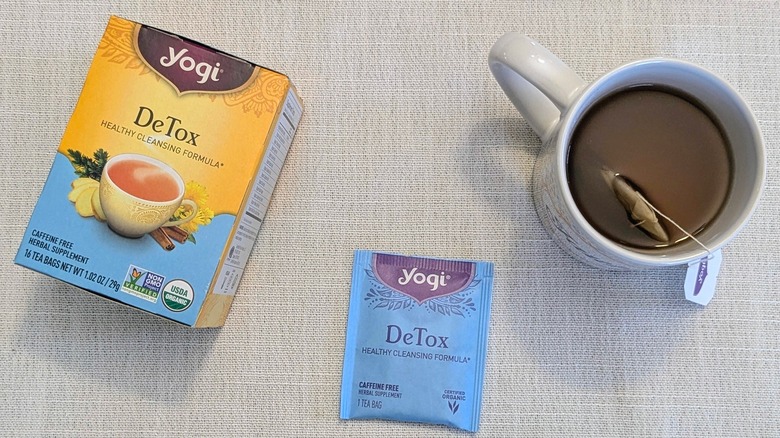
Whether or not they really have the ability to cleanse the body of impurities is up for debate, but a good detox tea can still soothe the stomach and warm the soul. I opt for cleansing teas for their flavor over their use as a supplement; they tend to have a warming, spicy quality and uniquely sweet ingredients. Yogi's Detox tea contains Indian sarsaparilla, cinnamon bark, ginger, licorice, cardamom, dandelion, burdock, black pepper, and clove.
Yogi's Detox tea is a lot more than a digestive aid. It has a woodsy, pine-like aroma with subtle sweetness and spice. The scent is soft and gentle but still plenty complex. The flavor matches the aroma in terms of complexity, with ginger being the dominant flavor and spices in the finish. There's a subtle spiciness from the ginger and black pepper combo, while clove gives it just the right amount of sweetness. It drinks like a calming bedtime tea, but based on its flavorful ingredients, I was anticipating something with a little more punch. Doubling up on tea bags would help — with just one, you have to really search for all the individual flavors.
8. Breathe Deep
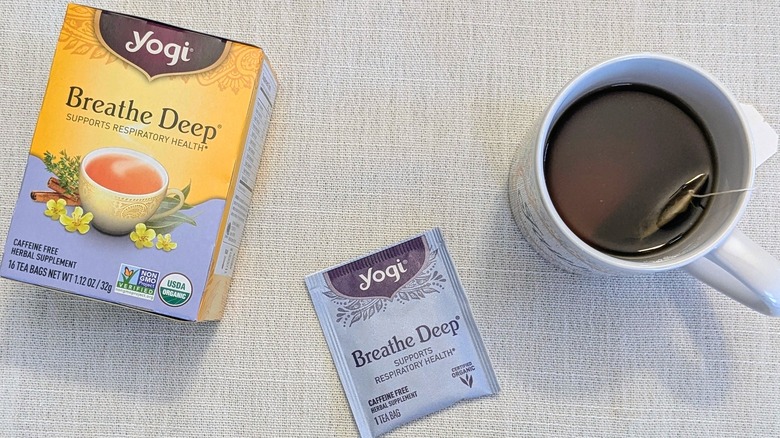
Breathe Deep is part of Yogi's immunity line, with this one for — you guessed it — respiratory wellbeing. It contains a fun, zesty mix of licorice, eucalyptus, ginger, cinnamon, tulsi leaf, thyme, cardamom, peppermint, and mullein.
Considering this is a respiratory health tea, I took a deep inhale before taking a sip to get the full, soothing effect of the flavor and aroma combined. The two match almost perfectly, with thyme coming in at the forefront of both the taste and smell, giving both a bit of mustiness that I enjoyed after trying some fruity teas. The thyme gives it a uniquely savory quality that makes it tasty without any added sugar, while peppermint and chamomile-like mullein added some floral zest. But the aftertaste is where this drink lost me; like Throat Comfort, it has the distinctly sour-sweet flavor of stevia (despite not containing any), but to a lesser extent than the last-place tea.
7. Kava Stress Relief
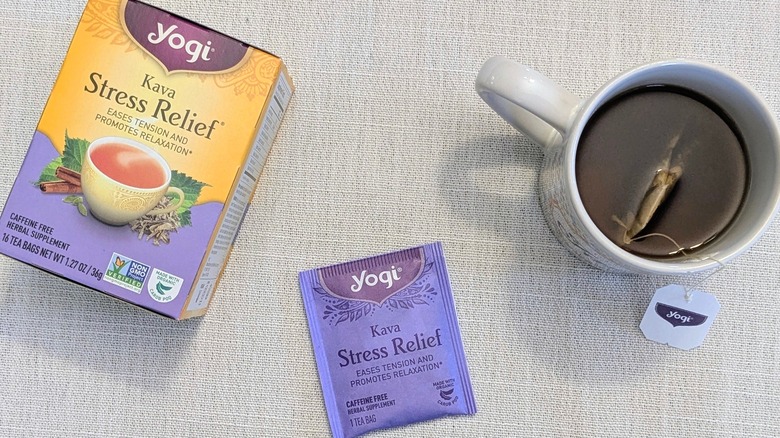
Yogi's Kava Stress Relief is a must-have in my tea collection. I drink it most nights before bed to soak in its calming abilities and distinctly spicy taste. For those out of the loop, kava is a wellness drink made from the root of the piper methysticum plant of the South Pacific Islands. It's known for its use as an alcohol substitute and sleep aid. Yogi's Kava Stress Relief tea is far from pure kava in flavor and composition, with carob pod, Indian sarsaparilla root, cinnamon, ginger, toasted brown rice, vanilla, and the star of the tea — kava extract.
Kava is known for its exceptionally earthy, medicinal taste, and Yogi doesn't attempt to mask that love-it-or-hate-it flavor with additional ingredients. The sweet and spicy herbs play well with deeply earthy kava, making its medicinal flavor more of an enjoyable mouth-coating sensation than a nasty taste to try to cover up. It has a honey-like sweetness that makes every ingredient apparent and bright, making Kava Stress Relief one of the most complex teas on this list.
Although this is among my personal favorite drinks of all time, the pungent ingredients and vividly toasty flavor aren't for everyone. While I somehow enjoy the medicine-like aftertaste, it's one that many tea drinkers would shy away from.
6. Green Tea Kombucha
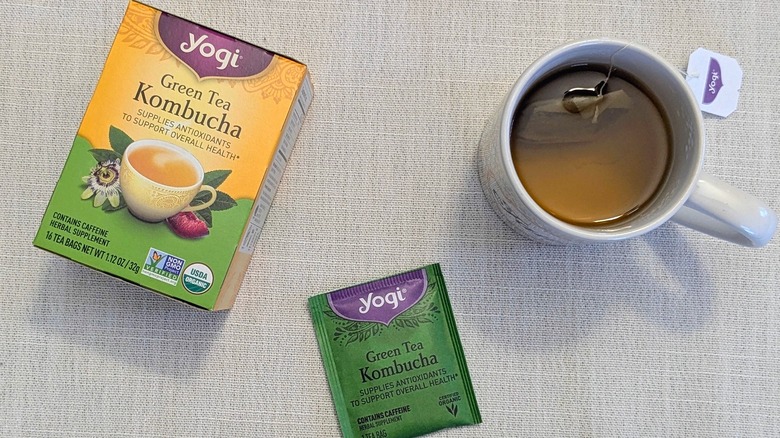
Yogi combines the powerful superfood abilities of green tea with antioxidant-rich kombucha to create a two-in-one drink for gut health. It's designed to be light and fruity, specifically for those who don't prefer the flavor of plain green tea but want to include it in their daily routine. I'm not the biggest fan of green tea as anything other than a palate cleanser, so I was intrigued to know if Yogi could win over my taste buds with this one. Along with dried kombucha and green tea leaves, the drink contains spearmint, passionfruit, plum, and lemongrass.
I figured this would be a sweeter tea than most teas on this list, but I wasn't prepared for the intense fruit punch smell that hit my nose as soon as I tore open the tea bag. My first sip wasn't as sugary-sweet as the aroma implied it would be. Green tea is a quiet flavor in the background, letting plum and passionfruit take over as the main attraction, with a tiny tinge of mint and citrus tartness to make it more complex. This tea would be spectacular over ice on a hot day. However, I was disappointed in the lack of kombucha flavor; I was anticipating some of its trademark vinegary bite, but the bold fruit clouds it out.
5. Honey Chai Turmeric Vitality
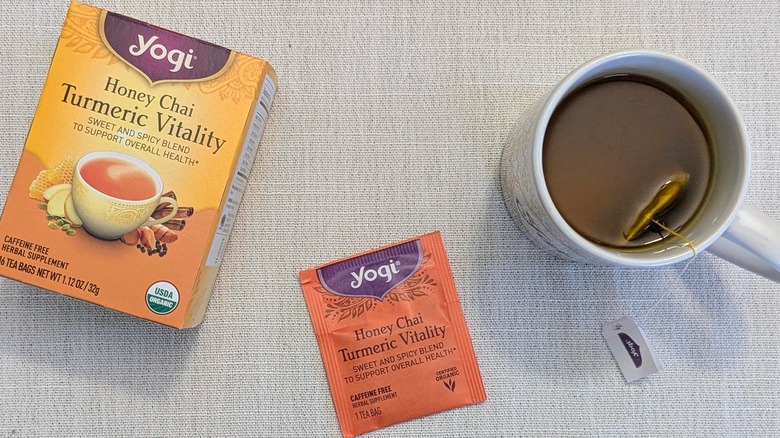
Honey Chai Turmeric Vitality is another Yogi tea that's a frequent flyer in my tea cabinet at home. It does the job of waking up the senses without the use of caffeine. Along with honey and turmeric, it contains ginger, cardamom, stevia, clove, and black pepper.
It's hard to smell anything other than turmeric in this tea. As anyone who uses turmeric will tell you, it's a potent root that tends to overpower whatever it's in if it's not balanced well. The turmeric could be more subtle here — it overshadows the other ingredients a bit more than I'd like. However, black pepper comes through nicely for a bit of earthy spice, while honey and stevia sweeten the tea to perfection. Cardamom and clove are apparent, but I would have liked them to be a bit stronger. Turmeric fans will fall head over heels for this drink, while those who prefer turmeric to fade into the background a bit more might be put off by the intense earthiness.
4. Honey Lavender Stress Relief
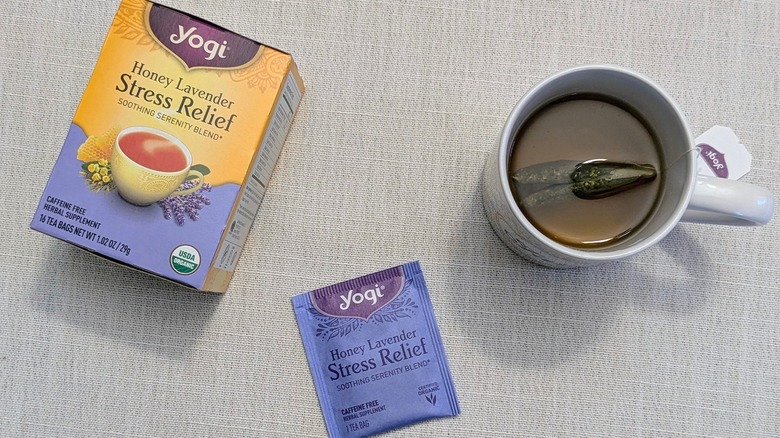
Lavender tea is an underrated bedtime tea option, usually overshadowed by chamomile. I was surprised to see Yogi's Honey Lavender Stress Relief contains rooibos tea as the first ingredient, plus a lengthy list of other ingredients, including peppermint, sage, passionflower, lemon balm, and chamomile.
This is a tea that should be in everyone's tea collection, especially those who have trouble winding down at night. Honey Lavender Stress Relief is like a cozy bubble bath you can drink. Its aroma was subtle and strangely nostalgic to me, with plenty of florals accentuated by a slightly sharp, citrusy smell. Its flavor was similar, with the lavender never too potent, although it's certainly the dominant flavor. My taste buds never felt overwhelmed, except for the flowery taste with just the right amount of honey to balance things out. But it wasn't just the balanced flavors that made the lavender soft and subtle; this tea is very weak, so you'll want to use two tea bags to get the full effect.
3. Sweet Tangerine Positive Energy
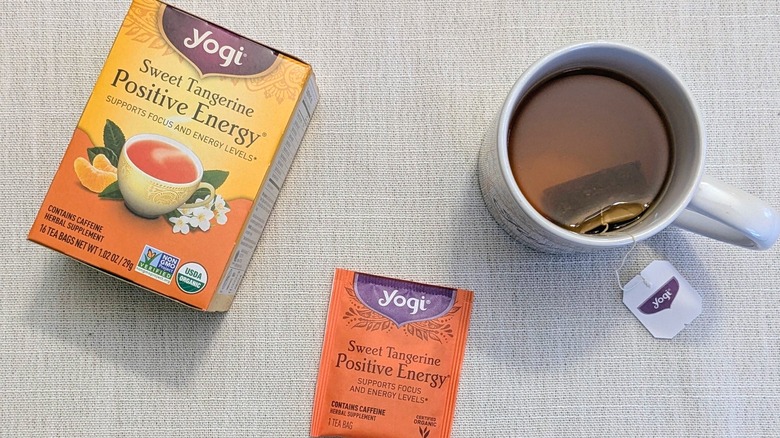
Yogi's Sweet Tangerine Positive Energy is a tea I'm already in love with, so I appreciated the opportunity to stack it up against so many other options from the brand. Along with real tangerine flavor, it contains ingredients like yerba maté, black tea, lemongrass, orange, stevia, jasmine, and ashwagandha.
I might enjoy the aroma of this tea just as much as, or maybe even more than, the flavor. It smells just like a garden-fresh, juicy tangerine, all sweet and minimally tart. There are more nuances detectable in the flavor, with earthy black tea acting as a backdrop for fruit enhanced by sweet stevia. There's none of stevia's infamous aftertaste, and the fruit tastes far from artificial, with the perfect amount of sweetness — no added sugar necessary. Although the tangerine flavor is delicious, it's a little flat. A bit of black pepper, or even cayenne, as an earthy, spicy accent could have really brought it to life.
2. Elderberry Lemon Balm Immune + Stress
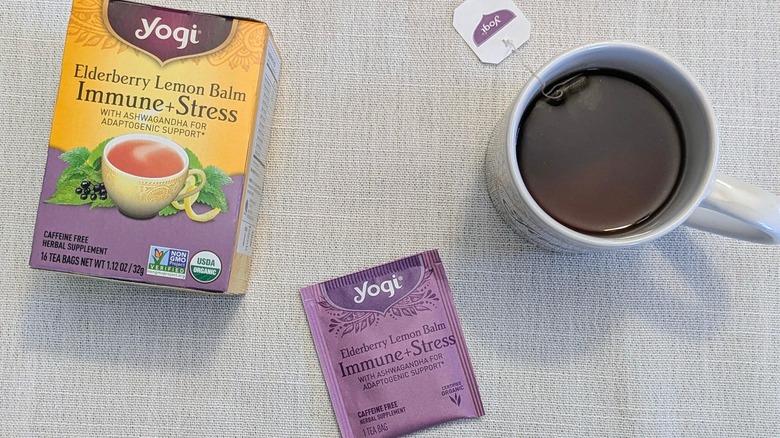
Elderberry is an immune-boosting food colloquially known as a superfood. It's a common herbal tea ingredient, usually paired with citrus. Yogi pairs the superfood with lemon balm in this herbal tea, and it's a match made in heaven. The herbal mix also includes ashwagandha, lemongrass, licorice, ginger, hibiscus, black pepper, and lemon.
I don't tend to lean toward berry-flavored teas, but I think Yogi has converted me to a fruit enthusiast with this brew. Its aroma is tart and sharp, but floral notes prevent the tartness from being overbearing. Elderberry and lemon balm are the stars at the forefront of the flavor, while the accents — ginger, black pepper, licorice, and so on — are putting in a fair share of the work to make this tea complex, bright, and zesty.
It has just the right amount of sweetness to tame the grassiness of lemongrass and a hint of florals from hibiscus to make it incredibly well-rounded. However, it was exceptionally tart, which distracted from some of the subtle nuances in its flavor. The bright tartness would work better over ice with some sweetener than in a hot drink.
1. Lemon Ginger
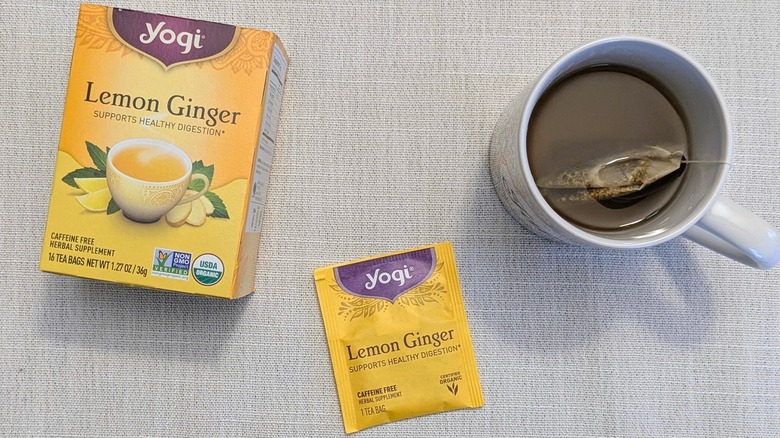
Lemon ginger is like the ultimate all-purpose tea. It's a classic flavor that's excellent as an after-dinner digestive aid or, with some honey, a sweet evening treat. Yogi's take on the iconic flavor includes lemongrass, peppermint, and licorice root.
This is a shining example of a lemon ginger tea. It smells floral, bright, and slightly herbaceous, like the quintessential cup of herbal tea. I appreciate that Yogi includes lemongrass instead of just lemon peel and flavor; the lemongrass adds a slight grassy quality that pairs well with spicy ginger root, and even makes it a little bit spicier than it would be on its own. Peppermint and licorice add to the zestiness and make the drink much more complex than other lemon ginger teas.
Over ice, you can use this tea as a powerhouse base for unbeatable mocktails — all you need is a splash of booze and some sweetener, and you're good to go. Every sip is an explosion of flavor, but at the same time, it's as soothing and relaxing as an herbal tea should be. During the day, at night, over ice, in a mocktail — you name it — this all-purpose tea is hard not to love, earning it the No. 1 spot in this ranking.
Methodology
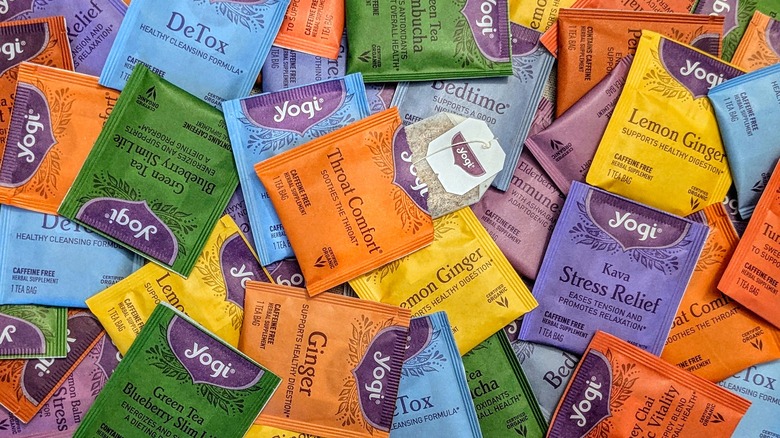
To test each of these Yogi teas and rank them from worst to best, I started by brewing each according to package instructions. I brought water to a boil and steeped each tea bag in about 7 ounces to keep the flavor on the stronger side. I let each one steep for about seven minutes to guarantee that it would extract enough to get a clear idea of its flavor. I took my first sip of each at an optimal temperature (still very hot, but cool enough to take a large sip), didn't add anything to the cups, and used only one tea bag per 7-ounce mug of hot water.
Although Yogi markets itself as a health and wellness company, I didn't rank these teas based on any presumed homeopathic abilities; I judged them solely on their flavor. Those at the top of the list had either an unpleasant taste, not enough complexity, or both. Those toward the bottom of the list were vivid and complex, well-balanced, and contained ingredients that tasted high-quality. I factored aroma into the ranking, albeit to a lesser extent than taste. I was looking for a tea that could do it all; the one that could best be part of a soothing evening ritual as well as a refreshing summer escape.