

8 After-School Snacks Kids Always Ate In The '60s
The 1960s were a magical time for kids. If you grew up then, you got to witness the first human walk on the moon, the invention of the first-ever video game, and the first appearance of Spider-Man in a comic book, all in the same decade. And don't forget all the iconic snacks and beverages. Would you believe that Starburst, Doritos, Pop-Tarts, Eggo Waffles, Cap'N Crunch, Sunny Delight, and TaB soda, all made their debut during the 1960s?
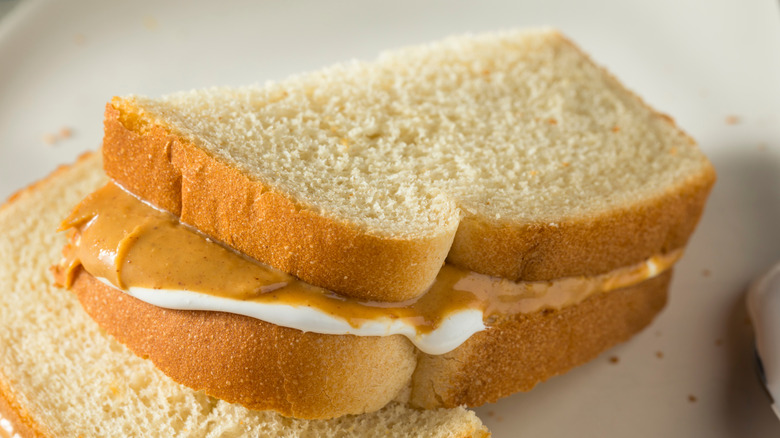
At school, science was all the rage due to the ongoing space race. But after school, kids would chow down creamy mayonnaise sandwiches, bulbous trays of buttery Jiffy Pop popcorn, or Kool-Aid mix straight from the packet, among other foods that Boomers remember eating. As with any period, if you look back, you'll find brands that went on to become household names, and others that got trapped in a time-capsule. Join us on this trip down memory lane as we highlight 8 after-school snacks kids always ate in the '60s.
Fluffernutter sandwich
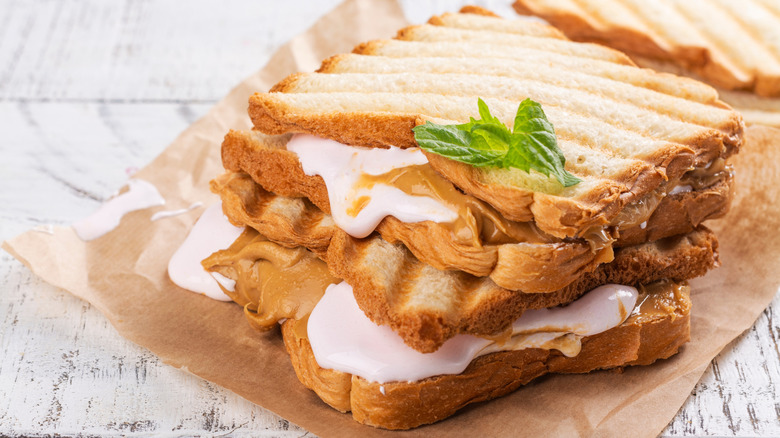
The name Fluffernutter is nearly as wacky as what it's composed of. Interestingly, Emma Curtis, a descendant of Paul Revere — yes, the same one known for saying "The British are coming!" — is credited with stuffing marshmallow creme and peanut butter between two slices of bread. That said, the name fluffernutter came from Allen Durkee and Fred Mower, the founders of the well-known brand Marshmallow Fluff. Since Curtis couldn't claim ownership of the sandwich, and wasn't the only producer of marshmallow creme, the pair took the idea and gave it a marketable name.
Flutternutter was introduced in Massachusetts in 1960, and was such a hit that it went on to become one of the decade's most beloved snacks. Well into the '80s, Durkee and Mower aired kid-friendly commercials with memorable jingles to promote it. And while Massachusetts claims the invention of the fluffernutter sandwich, they're the reason it's a childhood favorite for Americans nationwide.
Lik-m-aid
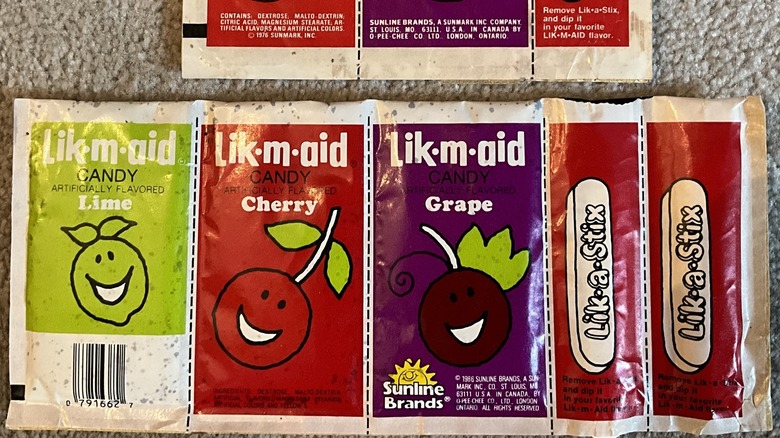
You may have heard of the sugary treat with the edible dipstick named Fun Dip. Long before it was introduced, the flavored sugar powder was sold in single packets under the name of Lik-m-aid, and before that, it was a Kool-Aid-like drink mixture called Fruzola. The latter was produced in Salt Lake City by the Fruzola Company, which was owned by J. Fish Smith, the father of Menlo Smith, who's also known as "The Willy Wonka of St. Louis."
Despite it being a drink mixture, Menlo's father noticed that kids enjoyed Fruzola's unique combination of sweet and tart flavor, and would eat the powder by itself directly from the packet. That inspired him to begin marketing it as a penny candy, and in 1952, when Menlo moved to St. Louis to expand the company, he changed the name to Lik-m-aid, selling packs of 5 for 5 cents with flavors like cherry, orange, grape, and lime. He also promoted it as something that could be sprinkled atop corn flakes, snow cones, cracker snacks, and chewing gum.
From the mid-1950s through the -60s, Lik-m-aid sales exploded, thanks to the promotion from Sunline, Inc. The powder would spawn such popular candies as Pixy Stix, SweeTarts, and Spree. In 1973, Menlo came up with the idea to add the now-iconic Lik-a-Stix dipstick to Lik-m-aid, and Fun Dip was born.
Jiffy Pop
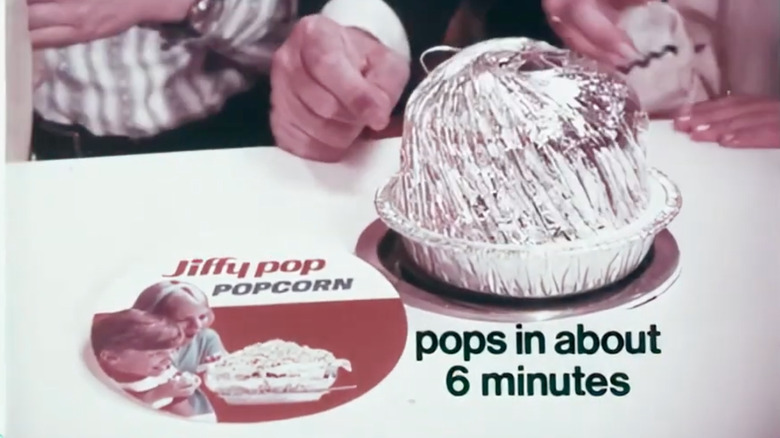
Frederick C. Mennen invented Jiffy Pop, the vintage foil-topped popcorn brand that is "as much fun to make as it is to eat." At least, that was the catchy tagline used to promote it during the 1960s. In one of the era's commercials, kids conjure up a genie from a lamp, who grants their wish by making a tray of "magical" Jiffy Pop appear over a campfire.
The idea of it being magical was a big part of Jiffy Pop's appeal, which is made clear in a follow-up commercial that repeats the campfire gimmick, but with a witch. And even a decade later, in a commercial featuring a party magician. Think about it, if you held an aluminum-covered pan over a stovetop, and watched it balloon into a popcorn-filled mass in minutes, you'd probably think it was magic too.
Quisp Cereal
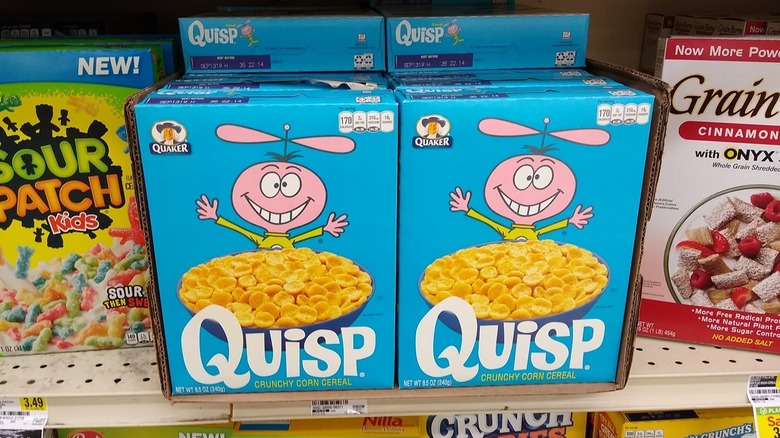
Quaker Oats introduced Quisp cereal in 1965, a corn nugget cereal with a taste similar to Cap'n Crunch. As a nod to its alien mascot, who was also named Quisp, the cereal was shaped like a flying saucer. The Quisp character was created by Jay Ward, the illustrator behind such iconic names as Rocky and Bullwinkle and Dudley Do-Right. In an interesting marketing maneuver, Quaker Oats created a competing cereal called Quake, to coincide with the release of Quisp.
Quake also had a mascot of the same name. The company would play up their rivalry in TV commercials throughout the '60s and '70s, leaving kids to vote for their favorite. Of course, in either case, it'd be a win-win situation for Quaker Oats. You'll notice Jay Ward's classic animation style in the commercials, which were scripted like ongoing adventures. One 1960s commercial has the two mascots coming to the rescue of a young girl beset by a ravenous wolf pack, which led to a debate over which cereal was more effective for the job.
The mascots would typically give a complete rundown of each cereal's ingredients while competing, in this case, over who could save the young girl. The shtick would last until 1972, when the two were pitted against each other for one final duel, with Quisp emerging the victor, and Quake being discontinued.
Danish Go-Rounds
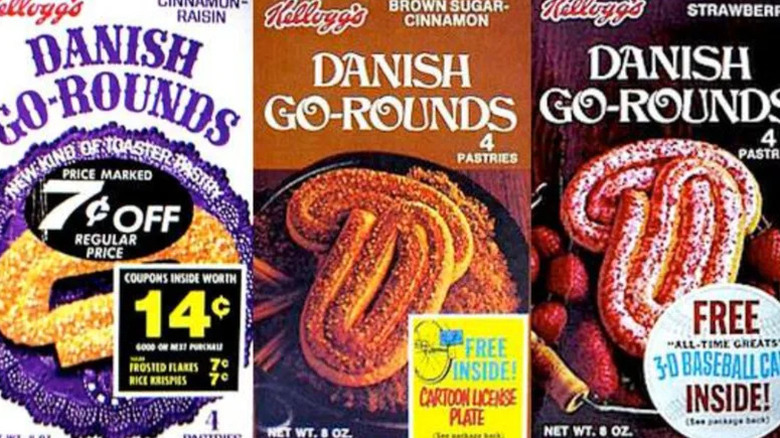
Pop-Tarts weren't the only toasted strudel-style snack released by Kellogg's in the 1960s. To build on its success, the company introduced an adult-friendly version called Danish Go-Rounds. Unlike its rectangle-shaped predecessor, this nostalgic pastry snack was spiral-shaped and featured way more sweet jam filling. They were sold in strawberry, blueberry, cinnamon raisin, brown sugar cinnamon, and honey crunch flavors, and covered in icing and sugary sprinkles.
At the time, Danish pastries were growing popular among Americans, so Kellogg's created the tagline, "Like having a 24-hour bakery right at home" to piggyback on the trend. The company also recommended that they be paired with coffee, and even offered customers 50 cents to try it during their coffee breaks.
Later, Kellogg's began marketing them to kids. However, expanding the demographic couldn't save the snack from disappearing from shelves. Despite its short-lived run, Boomers still have fond memories of eating them as a kid, with many saying they were better than Pop-Tarts.
Kayo Chocolate Flavored Drink
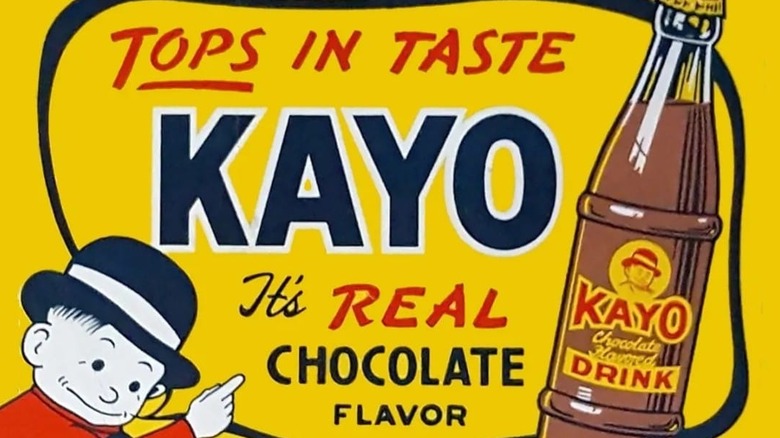
This little-known chocolate soft drink was named after Kayo Mullins, an illustrated character from a popular 1920s comic strip called "Moon Mullins." A Russian immigrant by the name of Aaron D. "Doc" Pashkow, who owned Chocolate Products Co. in Chicago, created it in 1929. Rather than whole milk, Kayo Chocolate Flavored Drink was made with pure chocolate syrup and skim milk, which was a novel approach during a time when skim milk was typically treated as waste. The pure chocolate syrup was also a special formulation of Pashkow's, which he learned while working at a food-flavoring company.
Kayo Chocolate Flavored Drink was sold in bottles and in cans, primarily in Chicago, until its discontinuation in the 1980s. And, it was especially popular among children as an after-school beverage. While it's no longer sold, Chicagoans still remember its rich, chocolatey taste and the indelible mark it left on the city.
Jays Potato Chips
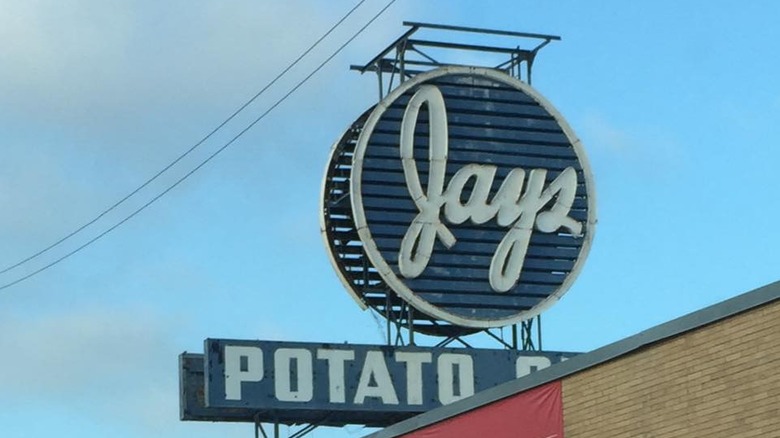
The regional potato chip brand Jays is another after-school favorite. Since hitting the Chicago scene in 1927, Jays has been one of the city's most beloved potato chip brands, and its biggest since the '50s, making it a quintessential part of childhood, including for those who grew up during the '60s. It isn't hard to find someone who recalls the toasted aroma of freshly-made potato chips coming from the original Jays factory on 99th and Cottage Grove. Or, the large advertisements painted on the sides of buildings throughout the city.
What made them so appealing was their thin, crispy consistency, which helped spawn the catchy slogan, "You can't stop eating 'em." Kids would take tours of the factory, where they'd be given a free bag of chips and a Jays-branded pencil. Sometimes, the factory would even give kids penny candy bags of fresh crushed chips smothered with hot sauce. Today, Jays is available in a wide range of flavors and can be found throughout the Midwest.
Fizzies Drink Tablets
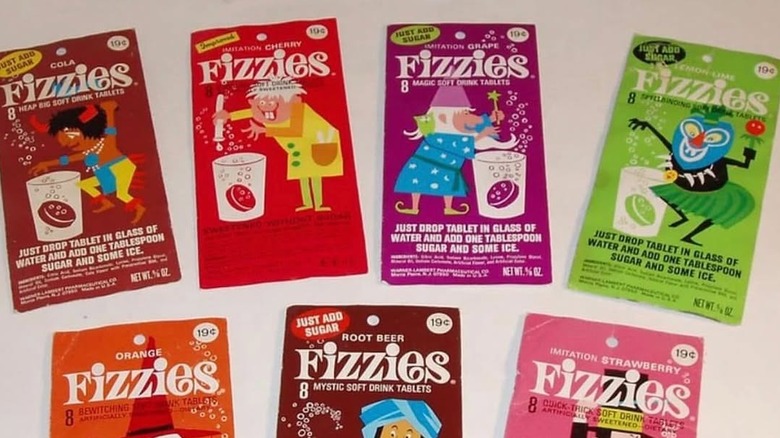
The invention of Fizzies Drink Tablets, a fruit-flavored antacid for mixing with water, is mostly credited to Lem Billings, the former president of the Emerson Drug Company. The Emerson company manufactured an Alka-Seltzer-like product called Bromo-Seltzer, which had a strong salty and bitter taste due to sodium bicarbonate being one of the ingredients. To mask it, fruit flavor was added to the formulation, resulting in the creation of Fizzies Drink Tablets.
Four flavors were made available when it was released in Philadelphia in 1956: orange, cherry, grape, and lemon-lime, though strawberry, root beer, and cola came later. They were an immediate success, particularly among children, who loved watching the water fizzle with bubbles. When Fizzies went nationwide in the 1960s, it began earning 10 million dollars a year. Kid-centric advertisements and a shout out on a well-known children's television show made them even more popular.
Kids would challenge each other to see who could keep a tablet on their tongue the longest, and their mouths would foam over with fruit-flavored bubbles. Another thing adding to their appeal was that they were sugar-free.