

Why These US Foods Are Banned In Europe
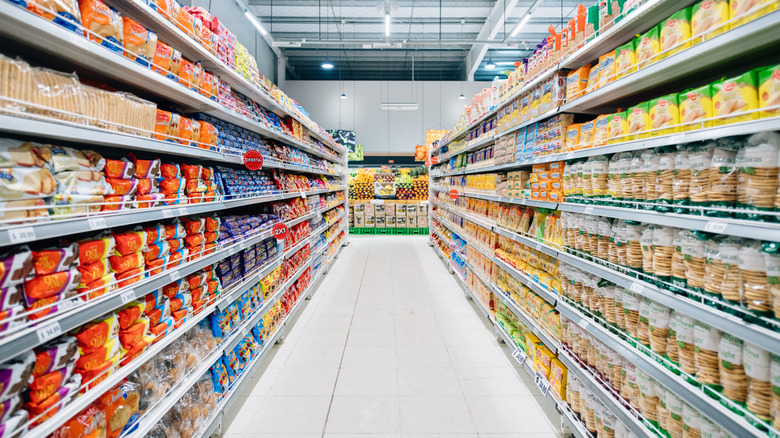
Regardless of where you live or where you're vacationing, traveling overseas is all about embracing some amount of unfamiliarity — from languages, accents, and local customs to what side of the road people drive on. For Americans traveling in Europe, this unfamiliarity can often extend to the supermarket as well, with many of their favorite products missing from the aisles. This is not because these brands aren't seeking world domination. It's because the U.S. and Europe have long had different points of view on regulations when it comes to some questionable food additives in food. This has resulted in a string of American foods being banned either in parts of Europe or across the continent at different points in time.
Europe has a zero-tolerance policy when it comes to preservatives and additives that might have any negative impact on humans. America often sets limits on its presence in food products in place of blanket bans. Gatorade is a brand that has been around for over 50 years and has more than 60% market share in America, but is banned in some European countries. In 2012, the sports drink was banned across Europe due to the presence of brominated vegetable oil and Yellow 5 and 6, additives that add unnatural colors to the bottled beverage. In 2013, they dropped BVO from their formulation, and it's now only banned in Norway and Austria.
While America has been tightening regulations surrounding these chemicals and additives of late, a wide range of U.S. foods remains banned in Europe. Here's what, and why.
Ground Beef because of hormones injected in cattle
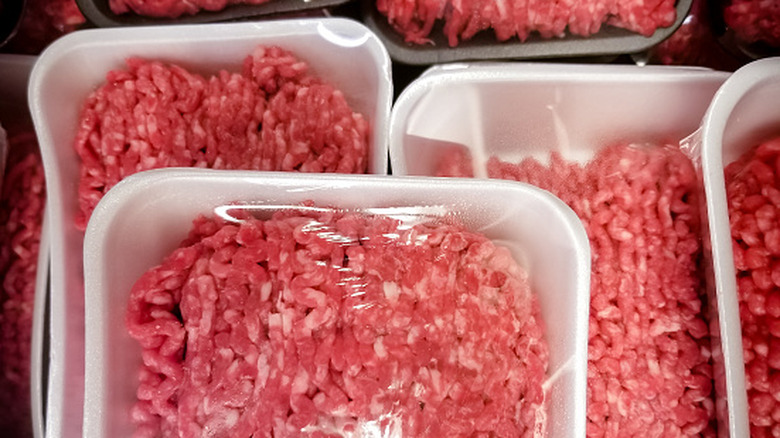
While raw meat isn't exposed to the kind of additives used to improve consistency or shelf-life of processed foods, most American producers use growth hormones in beef production, which is the reason most U.S. ground beef is banned in the E.U. Growth hormones have been banned in the European Union since 1985, amidst concerns that their presence is harmful to humans.
The E.U.'s position is based on a report of the Scientific Committee of Veterinary Medicine about veterinary health published in April 1999. The report states that there's a risk of "developmental, immunological, neurobiological, immunotoxic and carcinogenic effects" from these hormones. Meanwhile, the U.S. Food and Drug Administration has authorized several steroid hormone treatments for use in cattle raised for meat. These included naturally occurring hormones such as estrogen, progesterone, and testosterone, along with lab-made alternatives. These hormones help animals grow faster, improving the efficiency with which feed is turned into muscle.
While neither side has budged from their position, the American stance — that these steroids aren't harmful to humans — did take a hit when the National Toxicology Program's Board of Counsellors placed estrogen on the list of known carcinogens.
Twinkies because of titanium dioxide (or artificial coloring)
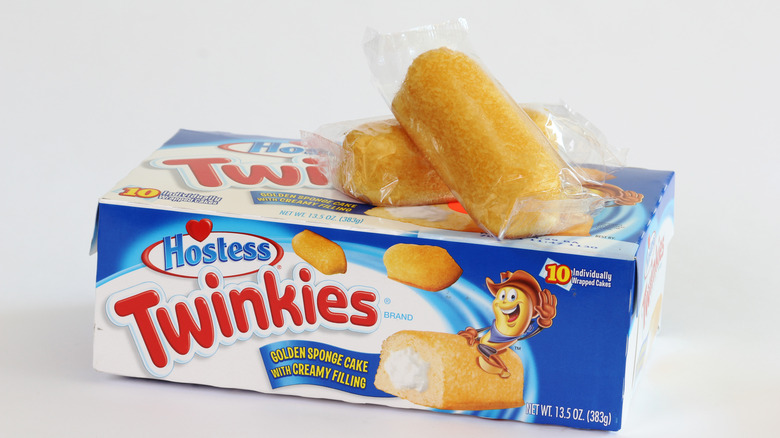
Twinkies are more than just a cream-filled sponge cake. They're literally a part of American pop culture, famously used as a unit to measure psychokinetic energy in the 1984 classic Ghostbusters. As it turns out, they've spent the best part of the last decade haunted not by ghosts but by a debate over the ill-effects of Titanium Dioxide, a coloring ingredient which gives the cream filling in the cake a white, glossy sheen (you won't find too many natural ingredients making up the cream at the centers of the Twinkie, unsurprisingly).
The additive has been under the microscope for almost a decade, when research from Binghamton University in New York found that the presence of titanium dioxide in food could lead to long-term intestinal problems. The Make America Healthy Again report published by the White House in 2025 calls out potential risks of consuming the additive, too, stating that "Titanium Dioxide, widely used in a range of candies and sauces, may cause cellular and DNA Damage."
The White House's report came out three years after the European Union banned the use of Titanium Dioxide. Incidentally, Twinkies weren't the only famous sweet treat hit by this ban. Even Skittles found themselves on the wrong end of the E.U. decision. However, they changed their formulation in 2025, with artificial coloring across the board coming under increased scrutiny. Twinkies, however, continues to list Titanium Dioxide as one of the ingredients in its packaging.
American bread because it has potassium bromate
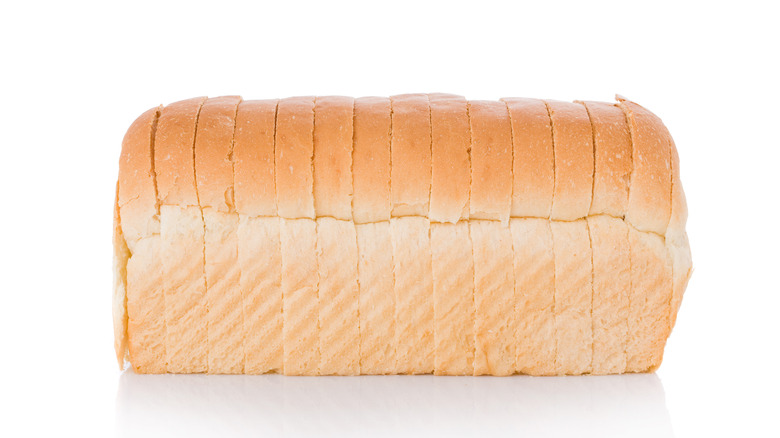
You know that soft, fluffy, almost-airy quality we love about our favorite loaves of bread? Turns out the ingredient that plays a big role in that is something called Potassium Bromate, a possible carcinogen that's been either banned or restricted in several countries. Potassium Bromate is an additive that gives the dough extra elasticity, allowing CO2 to create air pockets within the loaf during the leavening process. It has been used for nearly a century in the bread-making process, and works across different types of bread, improving their texture and increasing volume.
While the overall toxicity of the additive reduces in the baking process, excessive use can leave traces in the final product. Apart from carcinogenic threat, consuming Potassium Bromate can also lead to a whole range of ill effects, from abdominal pain, diarrhea, and vomiting. The list of countries that have banned Potassium Bromate is lengthy. Apart from Europe, the U.K., and Canada, it's also banned in Argentina, Brazil, China, Nigeria, Peru, and Sri Lanka. In 2023, California banned the use of four harmful chemicals in food, including Potassium Bromate. The FDA hasn't banned the additive, simply putting strict limits in place. What this means is that when in Europe, you'll just need to reach out for the baguette instead.
Wheat Thins because of Butylated Hydroxytoluene
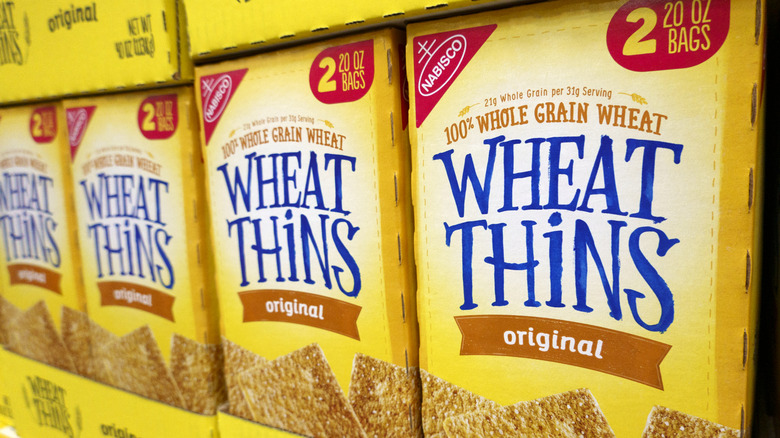
Unlike the other foods on this list, the reason why Wheat Thins are banned in certain European countries has nothing to do with any ingredient in its formulation. It's because of a chemical contained in the packaging material. Butylated Hydroxytoluene (BHT) is an additive used in a wide variety of packaged foods, from potato crisps and salted peanuts to dehydrated mashed potatoes. When it comes to Wheat Thins, it's used in the packaging to preserve freshness. It's also widely used in cosmetic products that are similarly restricted in the United Kingdom.
According to expert opinion presented to the European Union, BHT is safe in very tiny concentrations (for example, 0.001% in mouthwash and up to 0.1% in toothpaste). When added to packaging material, it becomes an "incidental food additive," and according to research published on DavidSuzuki.org, it can "vaporize" into food over time.
Wheat Thins are not alone, of course. Cap'n Crunch and Apple Jacks cereals are other popular snacks with BHT listed on their packaging, so don't go hunting for them in the U.K., Japan, or parts of Europe either.
Coffee Mate because of trans fats
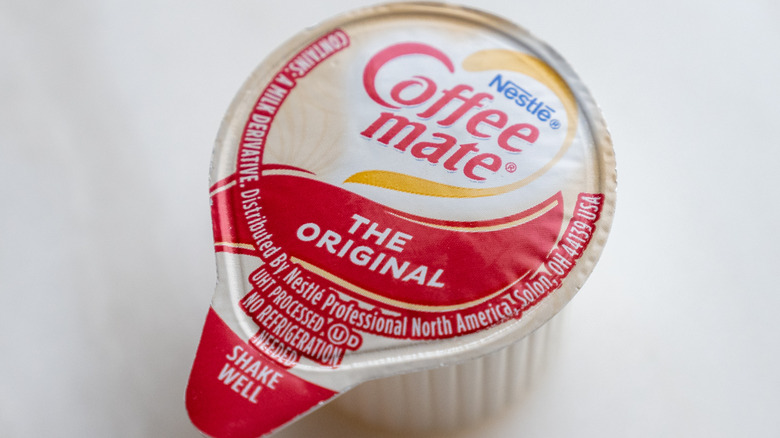
There are many different ways to brew a cup of coffee. And while dumping a pod of Coffee Mate into hot water and stirring in some instant coffee might be frowned upon by those who've discovered the joys of single estate beans and all associated third wave rituals, Coffee Mate's popularity across America cannot be questioned. After all, their sales are projected to reach nearly $30 billion by the end of this decade. Not one pod is going to be sold in Europe, though.
The reason Coffee Mate is banned in so many countries is the presence of trans fats, which are banned or severely restricted in European countries (two grams per 100 grams of fat). Trans Fats are the unhealthiest type of dietary fat. They can clog arteries and increase the risk of heart attacks, and according to the World Health Organization, "more than 278,000 deaths each year globally can be attributed to intake of industrially produced trans fat." As a result, Denmark, Iceland, Norway, and Switzerland, among others, have banned the popular creamer.
The U.S. Food and Drug Administration has taken steps to restrict the use of trans fats in packaged food. First, it banned the use of Partially Hydrogenated Oils, which were the primary source of artificial trans fat in food. Second, it made it mandatory for brands to disclose the presence of Trans Fats as part of the nutritional information on their labels. According to a report on their website, "removing PHOs from processed foods is estimated to be preventing thousands of heart attacks and deaths each year."