

8 Expert-Approved Tips For Pairing Non-Alcoholic Drinks With Italian Food
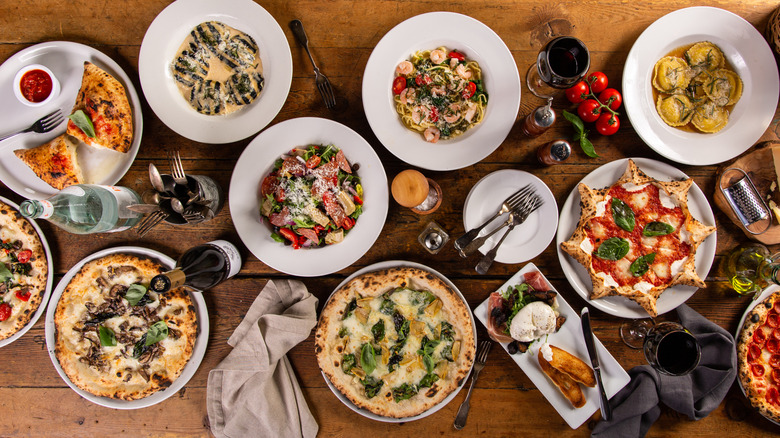
Whether you're dining out at an Italian restaurant or cooking up a storm, there are few things better than sitting down to a meal brimming with the cuisine's flavors. Italian food varies widely depending on the region, but one thread follows through across the country: There's usually a wine to pair with the dish and regional cuisine. While it's nice to pair your meal with a glass of wine, abstaining doesn't mean missing out on a delicious match. There are plenty of options to serve with Italian food if you're going the non-alcoholic route. Of course, water is an easy one, but it's nice to savor something a little more flavorful, too.
To guide you through pairing Italian food with non-alcoholic beverages, we turned to some experts. Richard Hanauer is the Wine Director and Operational Partner for RPM Restaurants, a group of restaurants in Las Vegas, Chicago, and Washington, D.C. This includes an Italian restaurant featuring a menu with excellent zero-proof options. Additionally, we spoke to Darryl Chan, the Bar Director of NoHo Hospitality, which counts several Italian restaurants, including Locanda Verde. Between the two of them, there are plenty of tips to ensure your next Italian meal — home-cooked or chef-made — is accompanied by the ideal alcohol-free beverage.
1. The food is front and center
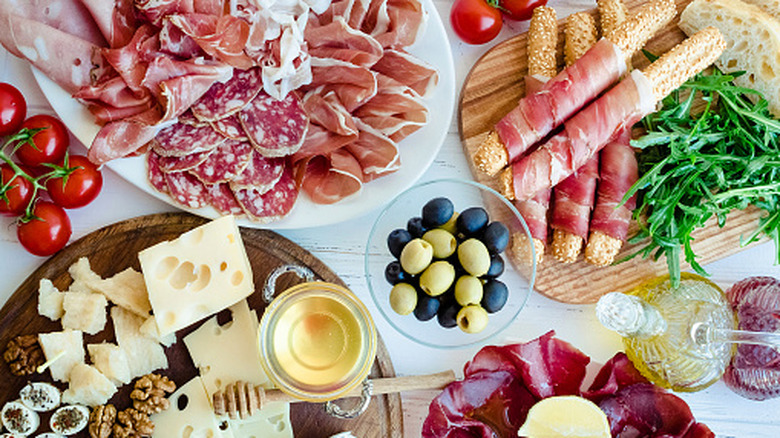
Although the goal when pairing is to find the perfect drink to go with whatever you're eating, Richard Hanauer is clear about what comes first. "Everything revolves around the food," he says. Instead of trying to tweak a recipe to fit with a sweet or tangy drink, he recommends starting with the food and ensuring that it remains the star of the show. The real purpose of seeking an appropriate drink pairing, in his opinion, is to create balance with the food. "Sweet with salty, bitter with sweet, etc.," he explains.
In this way, food flavors aren't masked with the addition of a drink, but instead are highlighted in such a way that the whole is greater than the sum of its parts. This isn't all that far off from the notions that guide alcoholic beverage selections to accompany a meal. "In homage to wine pairings, we want the dish to reach its greatest complexity with the beverage's complement," Hanauer specifies. Much like when it comes to adding condiments to food, you want them to enhance what's already there, not cover it up.
2. Consider different methods of pairing
There's a whole science to wine pairing, and you can use the same principles when it comes to non-alcoholic drinks. Among the options, Darryl Chan lists, "[A]lways aiming to balance acidity & sweetness, matching flavor intensities, or highlighting herbal and savory notes." For example, food that is acidic will make sweet flavors in your beverage stand out while taming acidity. So if you want a tangy drink that doesn't overwhelm the senses, it works well to pair it with tangy foods, such as vinaigrettes or lemon-forward dishes. Bitterness is also worth considering when mixing a non-alcoholic drink. To prevent it from overwhelming your palate, serve it with saltier food, which helps mitigate some of the bitter taste.
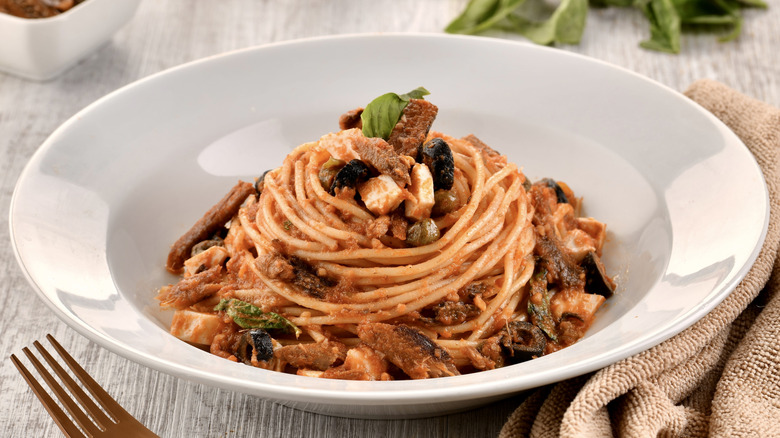
Aside from working with the different tastes, pairing based on flavor intensity is important. If your zero-proof drink has intense fruity, tangy, or bitter flavors, it's best to pair it with a dish with bolder flavors to ensure balance. For example, a puttanesca pasta dish needs a drink with a solid backbone to stand up to the salty, briny, umami flavors packed in the bowl.
Meanwhile, Richard Hanauer highlights the importance of complementary flavors. He suggests something like "using chocolate to complement a dessert of the same ingredient" for a direct match. On the other hand, the match can be more subtle, such as incorporating basil into a drink to serve with a citrusy dish. The two ingredients naturally work together, creating a complementary balance with nuance.
3. Look to a range of flavor profiles
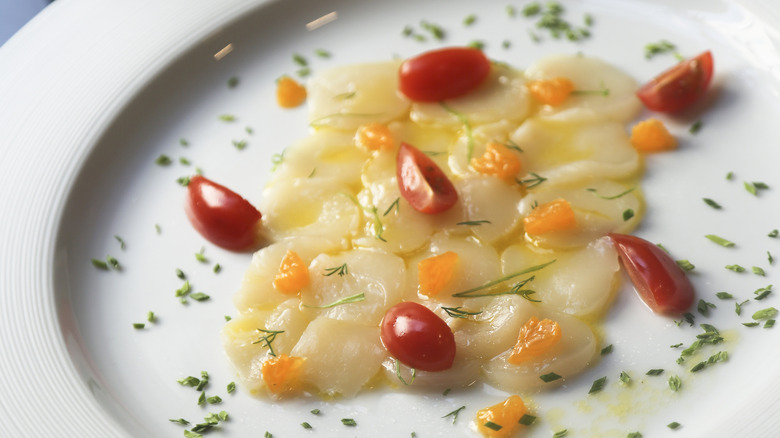
Some flavor pairings, like a chocolate-based dessert with a chocolatey drink, are pretty straightforward, leaning on the primary flavors in the dish. However, others are subtler, taking notes from condiments, garnishes, and background flavor profiles to create harmony between the food and beverage. Darryl Chan notes that this principle guides several subtler non-alcoholic pairings on menus he works with. "On our Crudi menu, for example, we lean toward high-toned, refreshing ingredients that build clean, bright profiles," he explains. This shows up in drinks like a zero-proof Spritz — which plays on flavors like honeysuckle and Meyer lemon — that avoid overpowering the delicate flavors of raw fish, seafood, and meat.
Sometimes the flavors are at the center of the beverage, but other times they play more of a supporting role. For example, Chan mentions verjuice as a common choice for adding acidity. Made with unripe fruit, this ingredient adds plenty of tangy notes and can be customized depending on the overall flavors of the drink. Chan also highlights a citrus oil garnish as a way to bring fresh aromas to a drink right before serving.
4. Be wary of soups
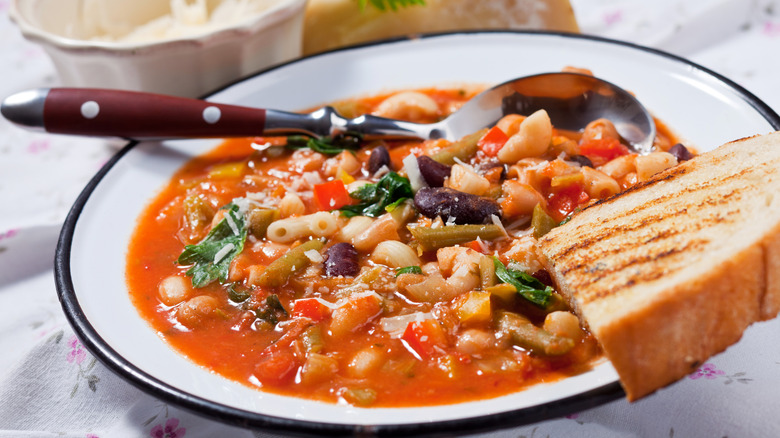
Most foods can be paired with some type of beverage with varying degrees of success, but Richard Hanauer notes that soups and consommés are especially tricky to pair with non-alcoholic drinks. "If the chef thought the dish would be better with an added liquid, they would employ it," he says. The issue is that due to the similar consistencies, there's a fine line between enhancing the soup and taking over the flavor. "The pairing tastes as if we are changing the recipe, often not for the better, Hanauer warns.
That said, if you're eager to pair a minestrone or Tuscan kale soup with a non-alcoholic beverage, look toward subtle options. A simple sparkling botanical tonic can highlight herbaceous flavors, whereas an apple cider drink can bring acidity and sweetness to complement a rich, creamy soup. If you're reaching for a tomato-based soup like pappa al pomodoro, minestrone, or ribollita, make sure to balance out the acidity found in the tomatoes, like with a lemony drink.
5. Choose a pastry pairing for an easy win
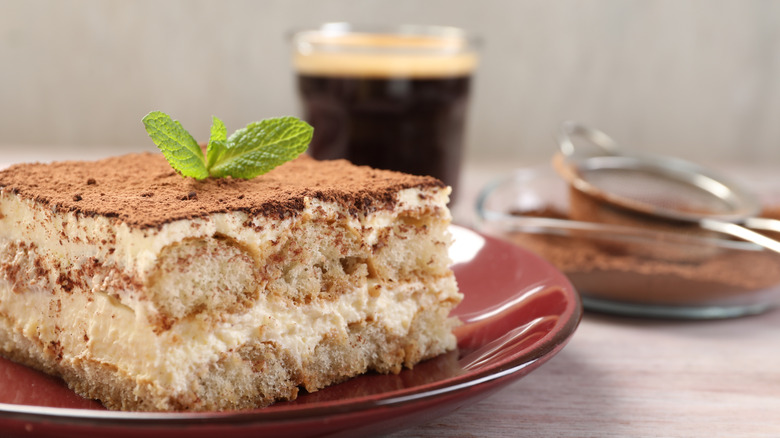
As long as you remember the foundational principle of pairing beverages with sweet food, it's pretty straightforward to choose a non-alcoholic pairing to go with your dessert. The key concept to remember is that sweet foods make beverages taste less sweet and less fruity. So if you want to avoid dulling the flavors in your drink, make sure to pair desserts with something as sweet or sweeter.
According to Richard Hanauer, "Pastries would be the easiest option because sweetness is so effective, and there are myriad ingredients to complement it." Aside from working with sweetness levels, desserts often include a range of creamy, fruity, tart, and rich flavors that can all be worked with when determining an optimal non-alcoholic pairing.
For example, a pairing for tiramisu might start with a coffee base, along with hazelnut or almond extract, and an alcohol-free amaretto syrup. Meanwhile, a dessert like cannoli features a creamy ricotta or mascarpone filling that's often enhanced with orange essence, lemon, or cinnamon. Pairing it with a sweet drink that plays on citrus or spice aromas would be an easy winner.
6. Get something bubbly when in doubt
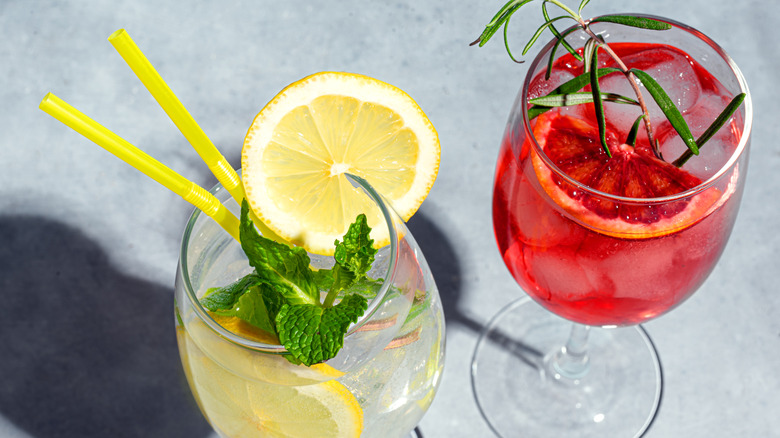
Champagne or similar sparkling wines tend to pair well with food across the board, as Richard Hanauer notes, thanks to the palate-cleansing effect of the carbonation. Not to mention, there's always a celebratory feeling when you're drinking something bubbly, no matter whether it's Champagne or a mocktail. There's a way to work with that while abstaining from alcohol, and you don't have to stick to Pellegrino. "The non-alcoholic iteration would be similar to effervescence with citrus," Hanauer says, also highlighting a sparkling elderflower beverage as an excellent foundation.
Darryl Chan agrees and points to Spritz-style drinks as classic options that are appreciated by most diners. If you're dining at an Italian restaurant and want to skip the booze, a zero-proof Spritz is a great alternative. "A tried-and-true technique is to combine a non-alcoholic or functional spirit — selected to complement or contrast the dish — with a flavored soda or NA sparkling element, then finish with a citrus or herb garnish that echoes the flavors in the plate," Chan recommends, pointing to a straightforward formula that can be easily adapted to suit the dish in question.
The only instance when Chan advises against a carbonated beverage is in the case of especially rich or hearty dishes and sauces. While it does have a refreshing palate-cleansing nature, bubbles paired with a particularly filling meal can be overkill.
7. Astringency can be a reliable pairing quality
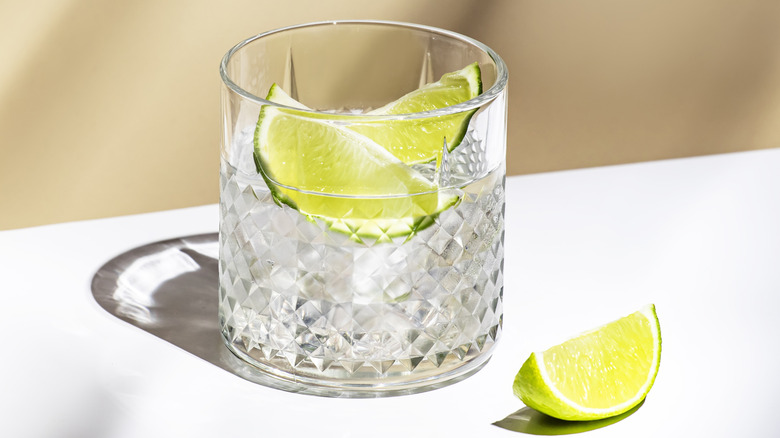
While astringent qualities can sometimes feel overwhelming alone (think of a teabag left in the cup too long, or 90% chocolate when you're used to semi-sweet), they can actually work favorably in a pairing situation. This notion is regularly employed with wine, considering that red wines high in tannins are astringent. Much in the same way that tannic wines can pair well with meaty, fatty dishes to refresh the palate, astringent non-alcoholic drinks can work well with fattier foods to create balance.
Richard Hanauer points to quinine as an excellent component of non-alcoholic drinks. "[W]ith quinine added ... astringency will almost always be beneficial," he says. Quinine is most commonly found in tonic water, which is a classic drink component that brings both effervescence and astringency to the palate. It's also bitter, which helps stimulate hunger — a notion that's put to use in most Italian aperitivo drinks. The next time you're having a slow start to dinner or meeting up with friends for a plate of salumi post-work, consider ordering a drink with bitter and astringent compounds to prepare yourself for the meal to come. Citrus and botanicals are excellent complements to quinine-based mixers, so you won't be left with a bitter taste in your mouth.
8. Don't just stick to chilled NA beverages
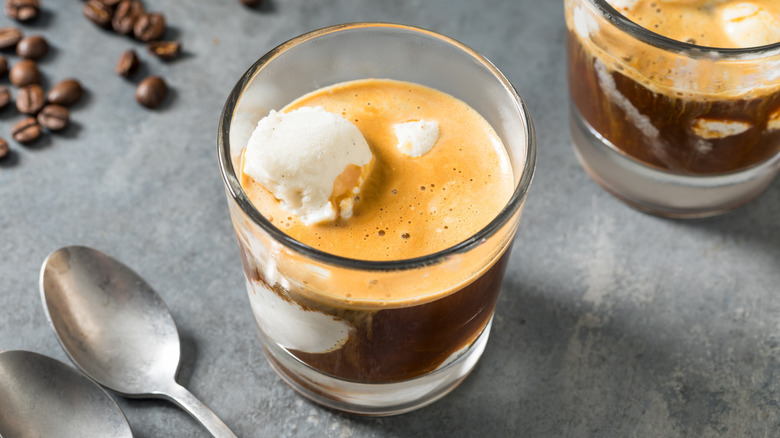
It's most common to sip on a chilled or ambient-temperature beverage while having a meal, but Richard Hanauer thinks that limits the amount of non-alcoholic pairing options on the table. Considering different types of foods are served at varying temperatures, it makes sense to adjust the drinks we pair with them to widen the possibilities. "I really like serving cold, warm, and hot beverages throughout a pairing to match the food," he says.
For example, tiramisu served with a spiced coffee drink complements the flavors, while contrasting bitter and sweet tastes. The chilled dessert reaches melt-in-your-mouth extremes paired with a hot coffee beverage. Similarly, while an affogato is a dessert in its own right, it still plays on the juxtaposition between sweet, frozen gelato and hot, bitter espresso.
Savory dishes can play with varying temperature levels, too. Consider a warm concoction with lemon and ginger to bring levity to a creamy dish like carbonara or Alfredo pasta. Meanwhile, warm, spiced apple cider can work well with fall recipes like mushroom risotto. Introducing elements like herbs can add a whole other level to warm drink pairings with your favorite Italian dishes.