

If Your Plates Look Like This, It's Time To Toss Them Out, According To Chefs
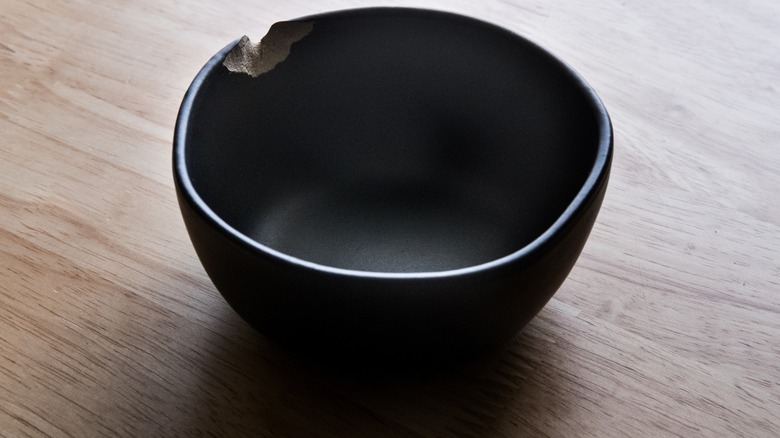
Standards in home kitchens are often not as stringent as in restaurants, but when it comes to health and safety, they should be. For example, professional chefs and kitchen staff monitor plates and other dishes for telltale signs it's time to throw them away. This isn't just about mere presentation — visible damage, like chips, cracks, dents, or "crazing" (those hairline fractures that look like a spider's web), indicates potential hazards.
In an exclusive interview with Tasting Table, experts weighed in on 10 kitchen items professional chefs say you should throw away and chipped dinnerware ranked among them. According to Pankaj Singh Panwar, executive chef at The Westin Resort & Spa, Himalayas, "Cracks and chips can harbor bacteria that survive washing, and small fragments may break off into food." Aside from collecting hard-to-excavate dirt and debris inside their crevices, chips and cracks can also cause physical injuries, like cuts, just from handling them. Additionally, that glossy coating that makes a set of dinner plates so shiny and attractive also functions as a protective layer, preventing harmful elements that manufacturers use to make dinnerware more durable, such as lead, from leaching out.
Chances are, not every piece of dinnerware in your cupboard is in pristine condition. You probably already know which of your plates, bowls, or mugs are damaged. Perhaps you're holding onto something because it's your favorite, a family heirloom, or just completes a set. But safety must come first — it's time to purge those items from use.
Protecting your dishware from damage
When it comes to protecting your plates, bowls, and mugs, the best offense is a good defense – there are so many things you can do to keep your dishware from getting damaged in the first place. The number one rule — avoid overcrowding. It just makes sense that if you can't extract something from the cupboard without it clanking against something else, things are going to get chips, scratches, or worse.
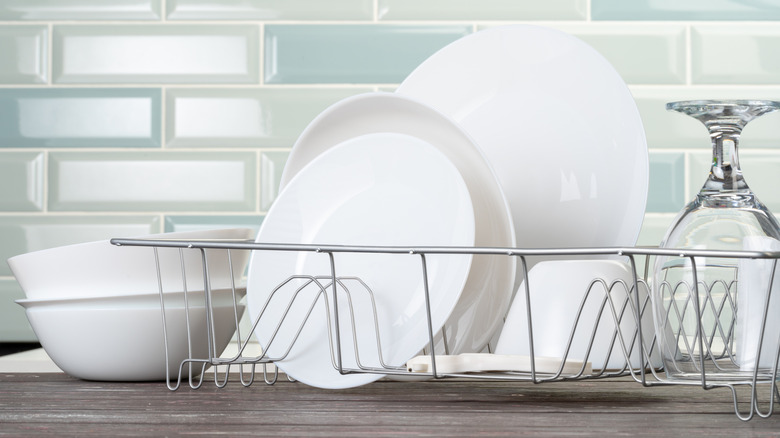
Also, limit how high you stack your dishes. For plates, experts recommend stacks no more than six plates high. Bowls should follow a similar principle. Using felt, foam, or thin fabric protectors between the plates and bowls helps greatly to reduce wear. Better still, keep your plates from touching or getting stress fractures from weight bearing by investing in vertical dish storage racks. And never hang your mugs by pegs, as this puts undo stress where the handle connects. Rather, use silicone or felt mug separators. Lastly, always use a cabinet liner to provide some cushioning, and carefully consider the best times to use your fancy dinnerware, while also learning how to clean vintage dishes the right way.
Chef Rohit Yadav, executive chef at Marriott Executive Apartments Bengaluru UB City, summed it up in our exclusive interview, stating, "Using designated racks, avoiding sudden temperature changes, and discarding damaged pieces immediately helps maintain safety standards and preserves the overall presentation and professionalism of the kitchen."