

Why Brewing Beer At Home Can Smell Pretty Bad (And What Rotten Egg Odor Means)

When you venture into the world of home brewing, you're likely only thinking about the highlights reel. You tinker away with your equipment and your recipes, and you are rewarded with unique-tasting beers on par with any craft brewery. What no one thinks about is just how much the process can smell, and not just like beer.
It's important to remember that brewing involves fermentation and that odors, unpleasant or otherwise, are just part of it. Fermentation is when yeast converts the sugars in the mix into alcohol, and is also where the beer gets its carbonation. As a byproduct, additional gas is released (which is why your homebrew equipment features an airlock).
The smells that emerge with this gas will vary depending on the type of beer you're making, the yeast you use, and the brewing temperature. You might get aromas of apple, pumpkin, banana, or butterscotch, but just as easily, your beer might smell of solvent or the rotten egg aroma of sulfur. A rotten egg smell does not mean that anything is wrong. All yeasts release sulfur gases during fermentation, but particularly when brewing lager. It's just unfortunate that humans have a particular sensitivity to sulfur compounds, with our noses able to detect as little as a few parts per trillion.
Managing smells during the brewing process
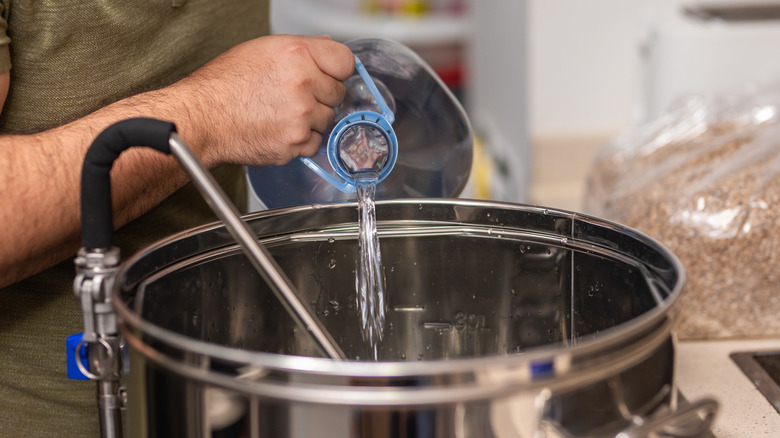
Avoiding unpleasant smells during brewing is not really possible, but there are some things you can do to help mitigate them. The first and perhaps least satisfying answer is to give it more time. As the yeast completes the fermentation process, the release of sulfur compounds will slow. This won't help the odors that are already in your house, but leaving enough time will stop any unpleasant smells from ending up in the bottled beer.
You can reduce the amount of sulfur gas through your choice of yeast. This can be tricky if you are brewing lager compared to ale, but there are still some suitable yeast strains that are less prone to producing sulfur. What's known as stressed yeast can also produce more sulfur. Yeast stress occurs from a lack of vitamins and amino acids (which can be avoided by adding nutrients during the boil) or from fermenting at too high a temperature.
Although these smells are generally normal, they can be exacerbated or caused by the presence of a bacterial infection. And if this is the cause, you'll have more to worry about than the smell — you could end up with spoiled beer. One of the most essential tips for novice homebrewers is to sanitize your equipment, which will ensure you're avoiding infection and only including the specific yeast you want in the brew.