

These 9 Grocery Items Might Be More Difficult To Find In 2026
Many of us take the simple, everyday task of grocery shopping for granted. You walk through the doors, grab a cart, throw in the things you need, pay the (ever-increasing) bill, and then go on your way. In theory, it should be simple. But actually, grocery shopping can be challenging, especially when the things you need aren't on the shelves.
If you were hoping to stock up on cottage cheese, domestic beef, and wild blueberries anytime soon, we have some bad news. These are among the grocery items that might be more difficult to find in 2026.
Keep reading to find out more about why these staples, alongside other fruits and vegetables, including iceberg lettuce, cauliflower, and Brussels sprouts, might be scarce in the coming weeks and months. Spoiler alert: Rising temperatures and the climate crisis come up more than once. And reader, we're sorry to say, but chocolate is on this list.
Florida oranges
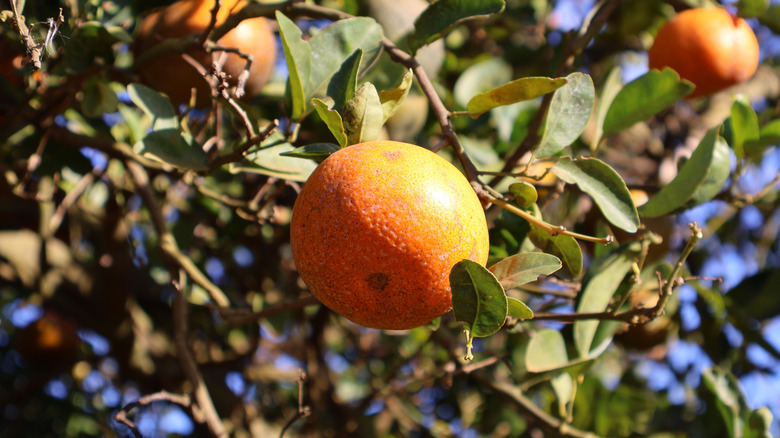
When you think of Florida, a few things probably pop into your head. Walt Disney World is probably one of the first, followed by things like alligators, Miami's South Beach, eternal sunshine, and oranges. The state is famous for its citrus fruits; once upon a time (before 2014), it even reliably produced 70% of the U.S. orange supply. But in recent years, Florida's orange industry has taken a serious hit. In 2026, things are tougher than ever, and state production has dropped to a new record low.
Florida is still producing millions of oranges, of course, but numbers are declining steadily. Today, you're more likely to find California oranges on the shelves, as the West Coast state is now leading the country in citrus fruit production. So, what happened to Florida's oranges? A few things (including hurricanes), but one of the biggest issues is citrus greening. While it doesn't sound particularly ominous in name, citrus greening is actually a catastrophic bacterial disease spread by the Asian citrus psyllid insect. In the last 20 years, Florida's orange production has suffered dramatically as a result of its spread. In 2025, Florida ended the citrus growing season with the lowest amount of fruit in an entire century.
If you see a Florida orange on the shelves, buy it and savor it — you never know when they might be gone forever. But all hope is not lost. Researchers are working on ways to combat citrus greening, so keep your fingers crossed.
Wild blueberries
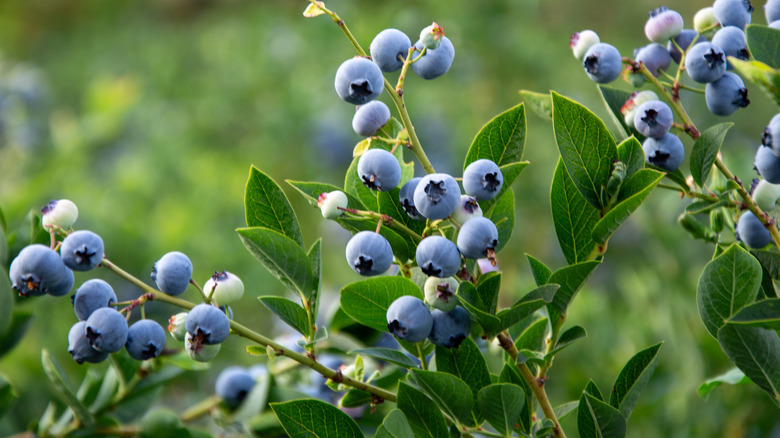
Blueberries are one of the most beloved fruits in the U.S. In fact, according to Mordor Intelligence, the market is expected to surge to a value of nearly $10 billion by 2031 (up from $6.4 billion in 2026). But while this predicted growth is promising for many blueberry producers, one sector of the market is struggling right now. Wild blueberries (which, unlike farmed blueberries, grow in the wild, where they are nurtured by humans) are being negatively affected by climate change. As a result, the wild blueberry industry is struggling to keep up with increased demand from consumers.
Here's what's going on: Most wild blueberries in the U.S. are produced in Maine, but lately, the state has been dealing with a major drought. The latest period of dry weather began in summer 2025 and has been holding strong for months. Wild blueberries are resilient, but they are not invincible, and the ongoing dry weather has had a catastrophic impact on the harvest. For example, one farmer told Maine Public Radio they lost 28 acres of fruit during the 2025 harvest season and were only able to salvage wild blueberries from 4 acres of land.
Unfortunately, it's not looking promising for 2026, as the drought is expected to last until spring, if not longer. Right now, experts also expect 2026 will be just as hot as 2025, which will inevitably increase the risk of further drought.
High-cacao chocolate
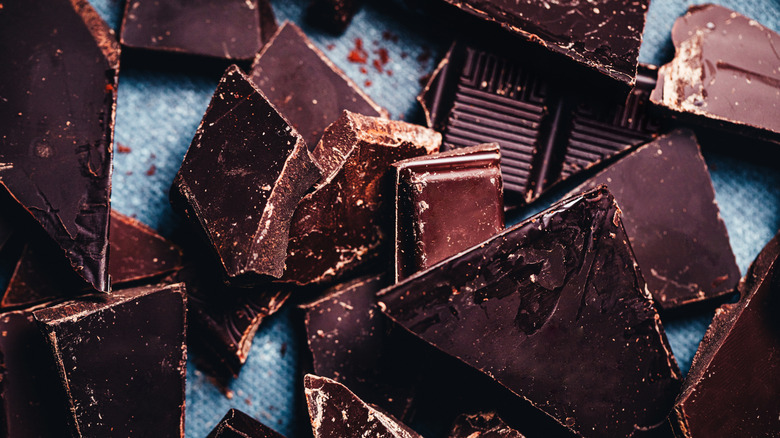
The cocoa industry has been in crisis for a while now. And once again, climate change is to blame. In early 2025, research from Climate Central found that excessive heat in West Africa, where most of the world's cacao is produced, was having a serious impact on the health of the crop. In Ghana and Côte d'Ivoire, two major cacao-producing countries, for example, there have been around 40 days each year over the past 10 years with temperatures above 90 degrees Fahrenheit, which is hot enough to seriously threaten a cacao harvest.
In 2026, things haven't gotten any better. Cacao prices are rising sharply as a result of the climate pressure on the industry, and this means that major chocolate companies are looking for alternative methods. Some brands are reducing cacao content and increasing sugar, for example, while others are looking to other options like carob. Carob grows on trees in the Mediterranean, and when it's ground into a powder, it has a similar flavor to chocolate.
Ultimately, cacao-free or low-cacao chocolate might become the new norm. After all, global temperatures aren't falling; they're rising, and that means more excessively hot days in West Africa to damage the crops. Serious changes are already happening. In the U.K., for example, Nestle recently changed some of its recipes to reduce cocoa solids and increase vegetable fats. This means that some of its popular bars, like Toffee Crisp and Blue Riband, can no longer legally be labeled as chocolate.
California Brussels sprouts
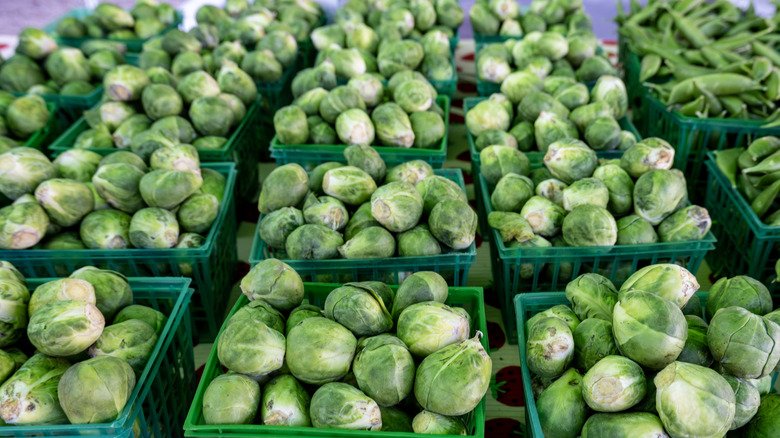
Brussels sprouts haven't always had the best reputation. For some, this humble cruciferous vegetable is simply too bitter, while others just don't like eating their greens at all. But this divisive vegetable also has plenty of fans. Gordon Ramsay, for example, loves eating them with pancetta, chestnuts, and lemon. But if Ramsay wanted to cook up a recipe with California Brussels sprouts anytime soon, he might be disappointed.
California produces around 90% of the Brussels sprouts in the U.S., but lately, the industry has been facing some serious challenges. One issue is excessive rain, and another is increased insect pressure. That basically means that more insects are infesting the fields where the Brussels sprouts are growing (you probably guessed it, but the climate crisis makes insect pressure more likely). All of these insects have had a hugely negative impact on California's Brussels sprouts, decreasing supply by up to half in 2025.
Fortunately, Mexico was able to step in and fill in for California by exporting more Brussels sprouts to the U.S. So, if you see Brussels sprouts on grocery store shelves anytime soon, it's likely they have come from Mexico. That said, California's Brussels sprouts growers are hoping to rebound in time for the spring.
U.S. beef
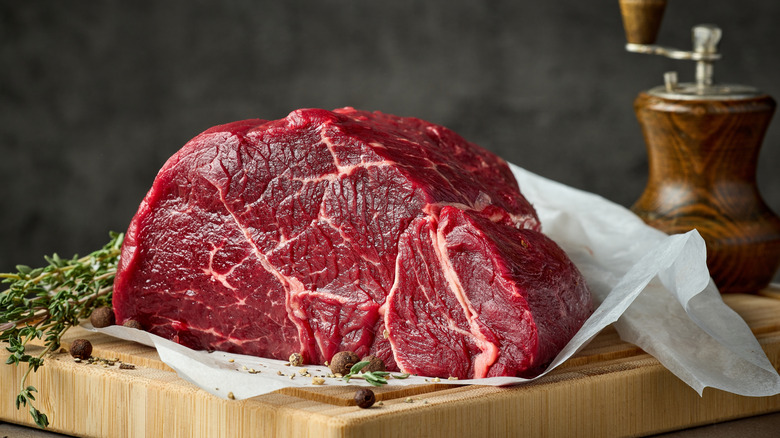
Drought doesn't just impact fruits like wild blueberries; it also has a big impact on the meat industry. In the U.S., domestic cattle herds have shrunk to their lowest point in the better part of a century, in part because drought has devastated grasslands, making it difficult for ranchers to feed their herds. Other issues include rising costs and low heifer retention (which basically means farmers are unable to hold on to young female cows).
This means that the domestic beef supply has reduced, and the beef that is available is more costly. It also means that more retailers and foodservice operators are looking to imported beef instead. In October 2025, the American Farm Bureau Federation reported that beef imports in the U.S. had reached a record high, with meat coming in from countries like Argentina, Mexico, Canada, Australia, and Brazil.
Still, of course, if consumers don't want to pay rising prices or choose imported beef, they have other options. Incidentally, the North American tofu market is thriving right now, as more consumers seek out healthier plant-forward products. Just a little food for thought (you can swap tofu for ground beef, after all).
Iceberg lettuce
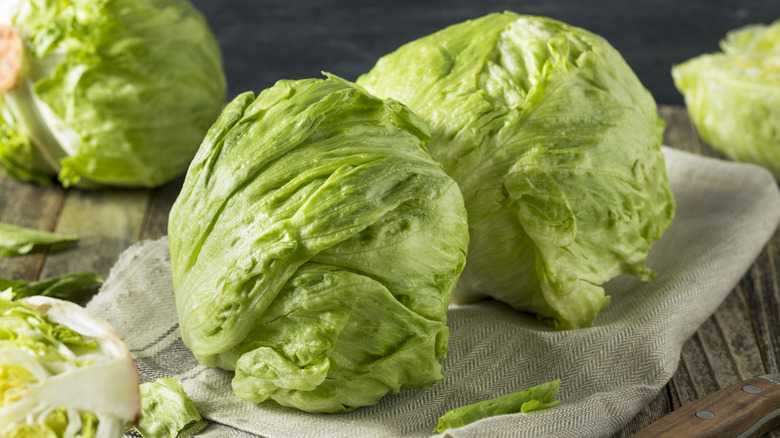
In October 2025, lettuce growers in California warned restaurants across the country that due to challenging weather conditions in the state (including rainstorms and high humidity), the quality of their produce wouldn't be quite up to the standards they were used to. The restaurants were left with little alternative, though. California is a key supplier of iceberg lettuce in the U.S., producing around 70% of all iceberg lettuce for the country.
Unfortunately for restaurants and grocery stores, though, things don't seem to be improving. In 2026, iceberg lettuce is facing problems again. Market reports in February 2026 revealed that supplies of the vegetable were very tight due to low quality caused by erratic weather.
California is incredibly vulnerable to extreme weather. While in October 2025 it was dealing with excessive rainstorms, the state also deals with frequent droughts and water scarcity. That's a big problem for crops like iceberg lettuce, which are currently extremely reliant on the majority of California's water supply.
Cottage cheese

Be honest: Have you eaten cottage cheese because TikTok told you to? If the answer to that question is yes, you are far from alone. Thanks to nutrition trends on social media, the dairy product boomed in popularity in 2025, and it's not showing any signs of slowing down. According to DataM Intelligence, the market is expected to surge from $91.4 billion in 2022 to nearly $150 billion by 2030.
But that astronomical rise will not be smooth. In 2025, cottage cheese producers were struggling to keep up with the sudden rise in demand, which led to shortages on the shelves. In 2026, the problem won't easily be resolved. While brands are working hard to increase their supply, the truth is, making more cottage cheese isn't that straightforward, and it won't happen overnight. Companies need time to build more production facilities that can handle the complexities needed to produce higher amounts of cottage cheese on a mass scale, and that's not going to happen in a few months.
In the meantime, you could make your own cottage cheese from scratch. If your diet is plant-based, you can even make it with cashews and tofu. Alternatively, substitutes like Greek yogurt or hummus can give you the same creamy texture.
Cauliflower
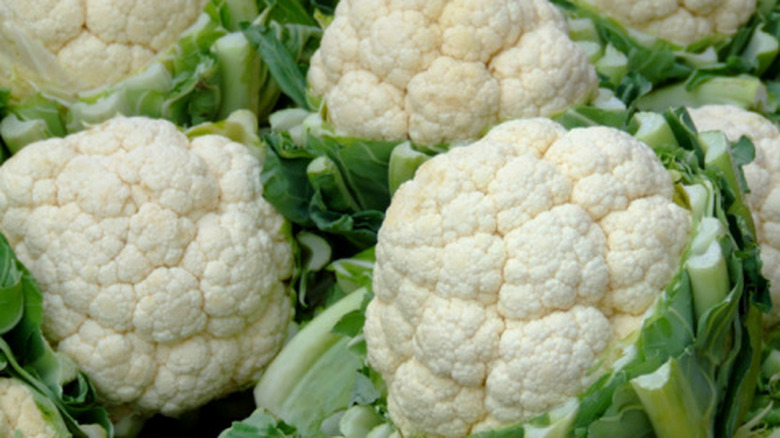
California doesn't just produce the most lettuce and Brussels sprouts in the U.S.; it's also a leader in cauliflower production. Outside of California, Arizona is the next-biggest cauliflower producer in the country. In both states, cauliflower is grown in desert regions. But recently, as the U.S. has been dealing with an onslaught of cold weather, cauliflower growing in the desert hasn't been doing so well.
At the moment, the cauliflower supply isn't looking too bad, but growers are expecting the impact of the cold to start rearing its head soon. This might mean that it's harder to find good-quality cauliflower on grocery store shelves for a little while. And another reason why the cauliflower market might be about to face a shortage? The market for the vegetable was active and ahead of schedule in February 2026, which sounds positive at first, but it actually usually leads to lower supply further down the line.
Florida's Asian vegetables
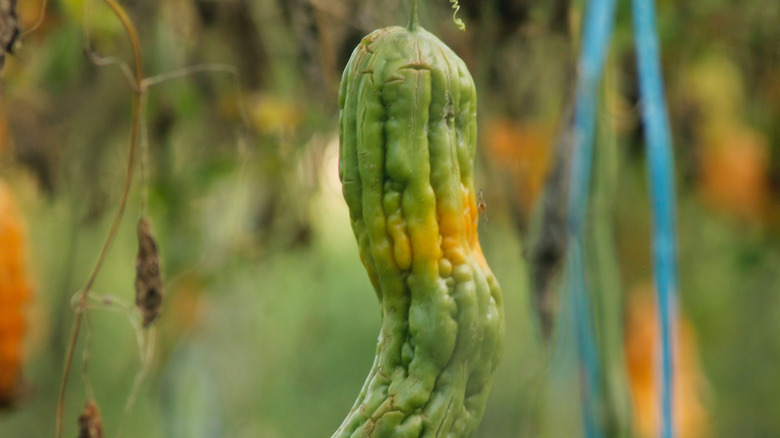
It might have a reputation for sunshine, but Florida isn't exempt from occasional chilly temperatures. In fact, February 2026 saw some of the coldest temperatures in history hit the state. Unfortunately for farmers, though, the freezing weather had a catastrophic impact on many crops, including the already-struggling citrus fruits and Asian vegetables, like Chinese bitter melon, callaloo, and pumpkin leaf.
Some Asian vegetable farmers in the state told Fresh Plaza that they lost their entire crops to the cold weather, which meant that they had to look for external support. Similar to the Brussels sprouts situation in California, Mexico has been supplying Asian vegetables to Florida suppliers. Honduras has also been stepping in to help.
The Asian vegetable industry is struggling right now, but it's not just because of the cold weather. Florida growers also told Fresh Plaza that many of their usual customers who come from Latin American or Asian backgrounds are not out shopping for fear of being detained by United States Immigration and Customs Enforcement (ICE) agents.