

Why Solo Dining May Be Even More Popular In 2026
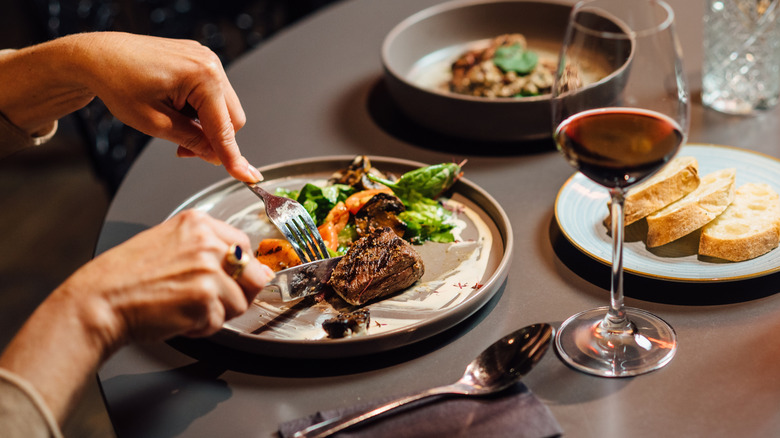
Dining out is predominantly viewed as a social experience. The table sizes and the menu specials tend to reflect that, as they're largely geared toward groups and duos. Sit at the table alone, and a server might just ask whether you're still waiting for somebody. But curiously, eating alone has become one of the coolest dining trends that is steadily on the rise, and it might become even more popular in 2026.
According to a survey by Touch Bistro conducted in 2025, 29% of people in the U.S. dine alone at least once or more a week. Of that figure, 7% dine alone every day, 12% a few times per week, and 10% just once. Additionally, 8% of people dine alone at least once a month. These numbers show that solo dining is not a rare occurrence anymore, especially among younger generations. Per the survey, almost half of Gen Z and Millennials do so on a weekly basis, if not more frequently.
Clearly, solo dining is one of the food trends you can expect to see more of in 2026, but why is that? People's view of "alone time" seems to have changed — where it used to represent something lonely, it now presents an opportunity for peace amid a busy schedule. This is especially the case in metropolitan areas, where work dictates the pace of life and reflective moments with your own thoughts can be scarce.
Restaurants are noticing the rising trend of solo diners, but are they adapting?
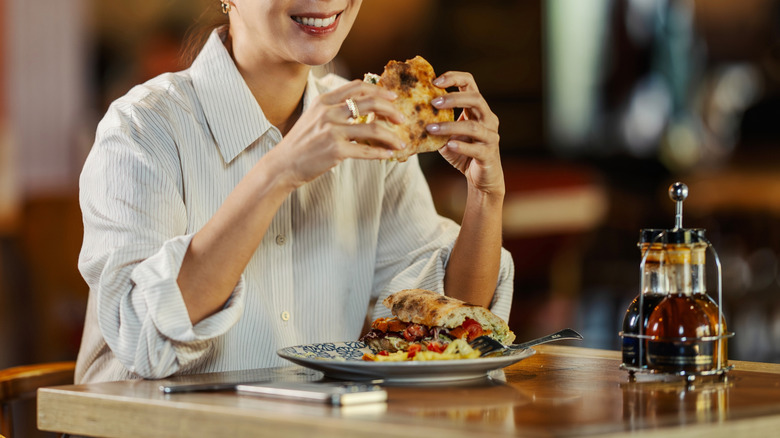
Customer habits steer the direction of the restaurant business, and it seems that eateries will have to start intentionally catering to solo diners. Yum! Brands, which houses chains like KFC and Pizza Hut, published a report of food trends we can expect in 2026 based on the research data from 2025. The findings show that restaurants are definitely beginning to notice the solo dining shift among customers.
"Solo orders now make up almost half of eating moments," the report states, showing that 47% of dining experiences come from parties of one. As previously mentioned, eating alone is becoming an intentional self-care decision, which is reflected in the way solo diners spend their money. "Over half of solo occasions are premium moments," Yum! Brands reports. Essentially, we are willing to spend more money when we dine alone, prioritizing customized experiences that are fully centered around our individual preferences. Eating alone has become peak "me time," and therefore a worthy investment for many.
So, what does this mean for restaurants? Hopefully, it translates into more seating options and menu items geared towards solo diners. While some might be hesitant to change their age-old table configurations and lunch specials, eateries that have leaned into these changes in 2025 have seen great success as a result.