

What Happens To Your Body When You Eat Bananas Every Single Day

Bananas are a sweet, healthy, ready-to-eat snack perfect for grabbing on the way out the door. They are also incredibly nutrient-dense, containing high levels of potassium, fiber, vitamin C, and vitamin B6, all of which can improve digestion, boost energy, and benefit heart health. But is eating a banana every day too much of a good thing? Tasting Table spoke with Kathleen Benson, certified registered dietitian at VNutrition, to find out.
Benson told us that "eating a banana every day can be completely fine for most people," but like any other type of food or beverage, over-consumption can cause problems for some depending upon their overall diet and health. She clarified that the type of banana you eat matters, saying, "For some people, especially those with more sensitive digestion, very ripe bananas can contribute to bloating or discomfort. That really depends on the individual and their tolerance." If you feel uncomfortable after eating a ripe banana, or if you're experiencing digestive problems or tummy upset, you might consider choosing one that is still a little green. According to Benson, "bananas that are more on the green side contain more resistant starch, which acts as a prebiotic and helps feed beneficial gut bacteria."
In general, one banana a day might not necessarily keep the doctor away, but it will benefit your health, especially if you work out regularly. Says Benson, "bananas provide potassium and carbohydrates that can support energy, which is why a lot of people like them before a workout." If you want to try this, eat a banana about 30-60 minutes before your workout for an energy boost and an influx of potassium, which could prevent muscle cramps and support muscle function and recovery.
A banana a day can be part of a healthy diet
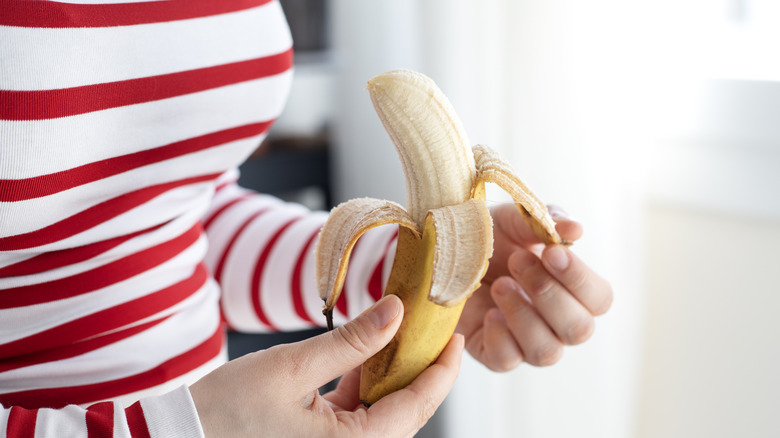
There shouldn't be any issue with eating one banana each day, especially if you maintain a healthy, balanced diet overall. They can keep you full longer, which can help you maintain a healthy weight. Because they are rich in fiber, they can improve digestion and gut health. Increased fiber intake can also support healthy blood sugar levels, lower blood pressure, improve heart health, and reduce inflammation. All of these benefits can lower your risk of chronic disease.
Yet if bananas are the only thing you're eating, you could experience serious health problems due to vitamin and nutrient deficiencies. Though bananas are rich in potassium and vitamins C and B6, they don't contain vitamins D, B12, or E; additionally, the levels of vitamins A and K, zinc, sodium, calcium, and iron they provide are negligible. All in all, over the long-term, an all-banana diet could lead to heart problems, organ damage, or death. And if you're consuming multiple bananas per day, or if you're only opting for deep-fried bananas, you run the risk of hyperkalemia as well as bloating, weight gain, and blood sugar spikes. The risk of health problems is even higher if you have existing kidney problems or Type 2 diabetes.
Everything in moderation – including bananas
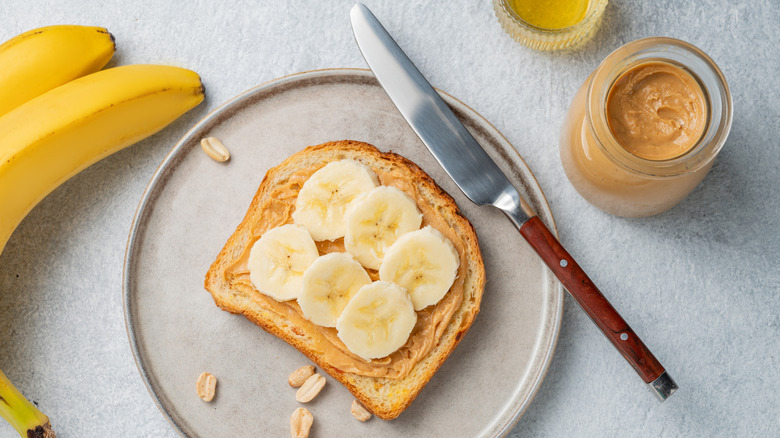
As Benson says, "If someone feels good eating a banana daily, there is no reason to avoid it." She does recommend adding some power-ups to the snack to further benefit your health, such as "pairing it with some protein or fat, like nut butter [or] yogurt." Try slicing up your banana and putting a dab of peanut or almond butter on each slice, then popping each banana slice on a whole wheat cracker. You can also add bananas to your overnight oats or slice one into a bowl of plain Greek yogurt for a more balanced snack.
Benson also recommends eating a banana "alongside a full meal, so it is more satisfying and supports steadier energy rather than eating it by itself." Having a banana before you eat lunch or dinner could prevent overeating or filling up on less healthy alternatives. It could also support better digestion and aid in gut microbiome balance. Just try to stick to only one or two bananas per day to avoid health complications.