

Bi-Level Vs Galley Kitchen Islands: Here's The Actual Difference
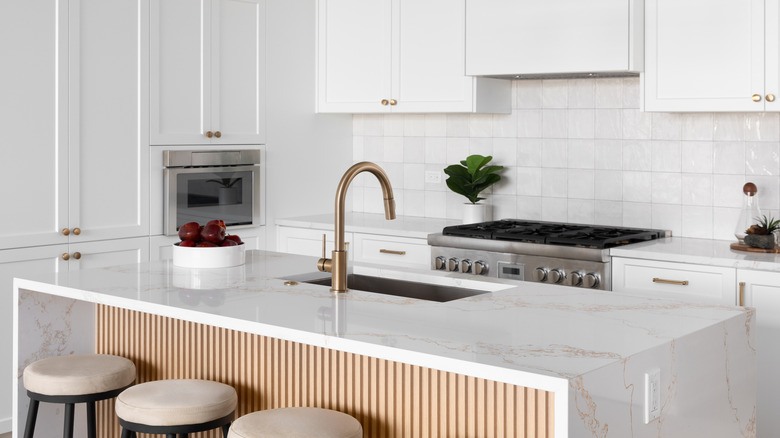
Adding an island to the center of your kitchen can free up counter space around the perimeter of your kitchen, and give you extra food prep and storage space. Modern kitchen islands can incorporate useful features that make cooking and baking easier, like a built-in stovetop, sink, cutting board, and shelves and drawers. The type of island you choose will depend upon your habits and lifestyle and the types of meals or dishes you regularly create. Two of the biggest kitchen trends set to dominate in 2026 are galley and bi-level islands.
The biggest differences between these two types of kitchen islands are their size and function. A galley island is designed for a galley-style kitchen, which is long, narrow, and compact. This type of island is streamlined, sleek, minimal, and efficient and can maximize space in a small kitchen. The size, height, materials, and features of the island can be customized, but its overall design remains simple and functional. However, unlike a bi-level island, the workspace is just one level.
Bi-level islands have two distinct, tiered levels. One is a shorter workspace that can be used while standing, and one is a higher level designed for bar-style seating. This style reduces counterspace but allows for distinct zones that can make the kitchen a more collaborative space that is ideal for socialization and entertaining. To choose the perfect kitchen island for your home, you'll need to consider the size and layout of your kitchen, your routine and habits, and the pros and cons of bi-level vs galley kitchen islands.
Bi-level islands are versatile but bulky
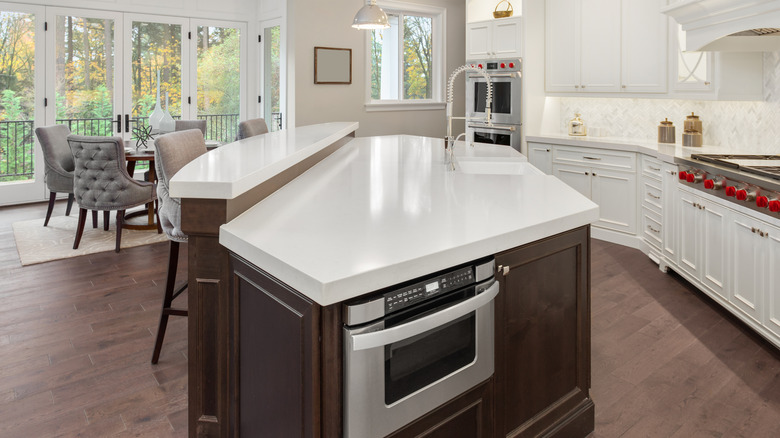
A two-tiered kitchen island is highly functional and versatile, and offers the best of both worlds: A functional food prep area with extra counter space, and a comfortable place to eat, study, do homework, or just carry on a conversation with the person cooking. If you prioritize conversation and cooperation while cooking, this style allows you to make the most of your island space. Because the higher level faces the rest of the kitchen or home, it can hide food prep mess from view, yet you can still easily see over the upper tier if you want to carry on a conversation or watch TV while you cook.
It can also be customized to complement the existing architecture and style of your home. Although your kitchen island doesn't need to match the rest of your kitchen, a bi-level island may work best for certain kitchen design styles, such as farmhouse, rustic, or craftsman. It is bulkier than other types of kitchen islands, so it may stand out in a sleek, modern home. Plus, if you have a small kitchen, it might just not be practical.
Another major downside of bi-level islands is that they are harder to clean. You'll need to worry about spills, messes, and clutter on both sections of the island. You also risk items falling off of the upper tier onto the lower level or the floor. The higher level may end up making the kitchen feel more cramped or claustrophobic. The island may also end up being more expensive to install as it could require custom elements to ensure it fits properly in your kitchen.
A galley island can be customized to any kitchen layout, but may be too small
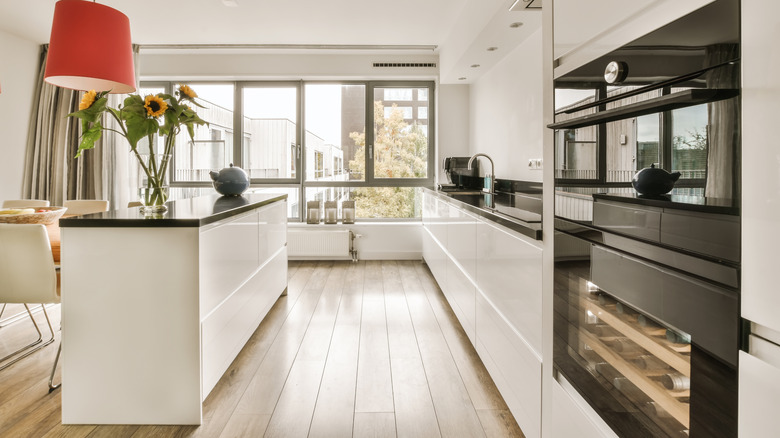
You have a wide range of customization options for a galley island, including kitchen countertop material, height and width, custom features, and storage solutions. In many cases, a galley island is less expensive than other options due to its sleek, streamlined design and smaller size. It can be arranged to fit in almost any type of kitchen, making it both a good value and a functional yet aesthetic option. Like a bi-level island, it can also be used for food preparation, storage, and seating. Many galley islands have one side dedicated to slicing and dicing ingredients and storing kitchen gadgets and cookware, and the other side devoted to bar-style seating.
However, this island style does have its cons as well. Because galley islands are designed for a galley kitchen, they are typically smaller than other work spaces. They tend to be long and narrow, which may not work for every kitchen size, layout, or style. If you don't have much space in your kitchen, the island may be limited to food prep only and may not accommodate storage or seating. If your space is particularly limited, even a galley island can interrupt the flow and inhibit movement. Some homeowners also find that a galley island actually dates the home, as the design options tend to be limited or even boring. If you do opt for custom features, that will drive the cost up and may require extra plumbing and electrical work.
Overall, before choosing a kitchen island you should assess the space available. An island requires about 36-42 inches of clearance on each side for proper flow and movement, and shouldn't account for more than 10% of the kitchen floor space. It should enhance storage and food preparation, and make your kitchen more functional and attractive.