

Martha Stewart's Foolproof Method For Erasing Stubborn Marble Countertop Marks

We may receive a commission on purchases made from links.
Marble countertops are gorgeous but somewhat high maintenance. One big thing to consider before committing to marble countertops is that they need to be re-sealed every six to 12 months to protect it from staining, and you should avoid getting any acidic liquids on the surface to prevent etching. However, if you do notice stubborn marks, stains, or etching on your marble counters, Martha Stewart has a foolproof method for erasing them.
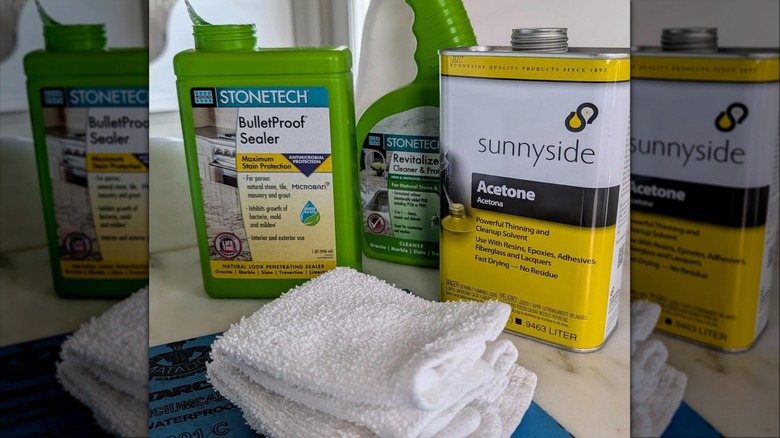
In a January 2026 Instagram post, Stewart explained how she removes etching from her gorgeous marble countertops. She learned these tips from Mark Galazzo, the owner of Precision Stone, Marble & Granite. All you need for this method is acetone, waterproof sandpaper, and two Stonetech products: Revitalizer, Cleaner & Protector and BulletProof Sealer. Outlining the step-by-step process on her blog, Stewart advises removing everything from your counter and wiping away any crumbs or debris. Then pour a little bit of acetone onto a clean, dry cloth. Gently wipe the marble surface with the damp cloth, and then pour bottled or distilled water onto the counter. Next, use a waterproof 400-grit sandpaper (like this one from Dura-Gold) to slowly and gently buff away any etching. This can take up to 10 minutes depending upon the size of your counters and the extent of the etching.
After sanding, wipe the counter off and then spray it liberally with the Stonetech Revitalizer, Cleaner & Protector. Wipe the counter again until it's completely dry. The final step is to add a light layer of sealant to the counters. Pour the Stonetech BulletProof Sealer on the counters and wipe the counters carefully to make sure the sealant covers every inch.
Preventing etching and staining on marble countertops
If you use your kitchen every day to prepare meals, it's really important to do whatever you can to protect your marble countertops. The major downside of marble countertops that no one mentions is that it's a naturally porous stone, which means liquids can easily penetrate the surface and cause staining and discoloration. This is also what makes counters prone to etching, with acidic substances dissolving the upper layer of sealant and producing dull or white spots. Consequently, countertops need to be sealed to create a protective barrier.
In addition to sealing your counters, you can also take steps to prevent damage from acidic foods and liquids. Always use a cutting board when preparing acidic foods like lemons, limes, oranges, pineapples, tomatoes, and pickled or fermented foods. If anything spills or leaks, wipe it up immediately and clean the spot with a pH neutral marble cleaning solution. Using trivets, coasters, and cutting boards can also protect surfaces from contact with acidic, oily, or hot items.
Another one of the biggest mistakes people make with marble countertops is using harsh chemicals and abrasive tools. Along with avoiding acidic vinegar and lemon juice, do not clean your counters with bleach, ammonia, metal tools, or scrubbing pads. These can remove the protective coating from the surface and cause scratching or etching.
Finally, use a marble coating to give your counters some extra protection in between applications of sealant. Products like Stonetech Protector and BulletProof Sealer, AntiEtch, or TuffSkin can create a barrier that prevents harsh liquids from penetrating the surface of the marble. While this isn't totally foolproof, it can slow down the etching process and reduce the risk of long-term damage.