

I Tried Every Matcha Powder From The Spice & Tea Exchange And This Was My Favorite
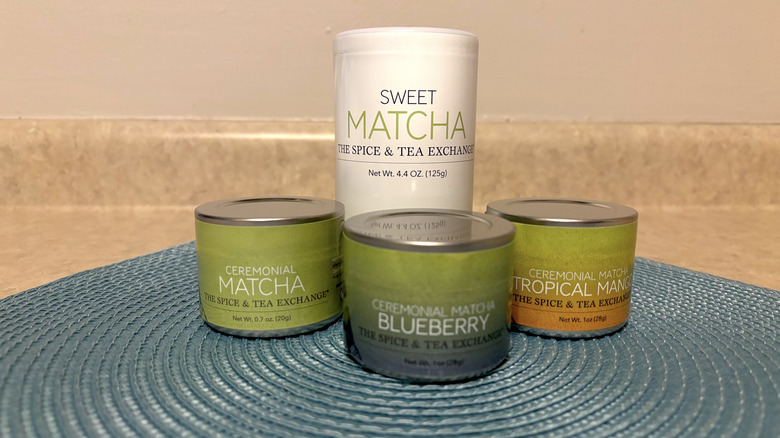
Matcha seems to be everywhere these days, probably because it is; sales of the powder have skyrocketed in recent years. Originally, matcha was reserved for Buddhist Zen rituals and then widely used in Japanese tea ceremonies. But in the American culture of today, you can find matcha being used just about everywhere you look — including in lattes, cookies, ice cream, and cakes.
Matcha is a fine powder that is made from young, shade-grown green tea leaves. When you have matcha, you're not just having brewed green tea, as with matcha, you're ingesting the buds and full leaves of the plant. You're also consuming more caffeine than green tea, which is probably the reason many people are reaching for a matcha latte over their usual morning cup of coffee. But it is also high in antioxidants and is believed to help memory, reduce anxiety and stress, have possible cancer-fighting properties, and many more health benefits.
And all these things sound very promising. But one reason that has kept me from embracing matcha in my everyday routine is its flavor. Matcha has a reputation for being bitter, vegetal, and earthy. Thankfully, The Spice & Tea Exchange offered me the chance to experience all the matcha powder it offers to perhaps change my mind. With all options in hand, I got to work making matcha lattes. Instead of something grassy, I went in search of a tea flavor that was smooth, rich, and had acceptable amounts of umami. Here's how each of its matchas fared.
Some recommendations are based on firsthand impressions of promotional materials and products provided by the manufacturer.
4. Ceremonial matcha
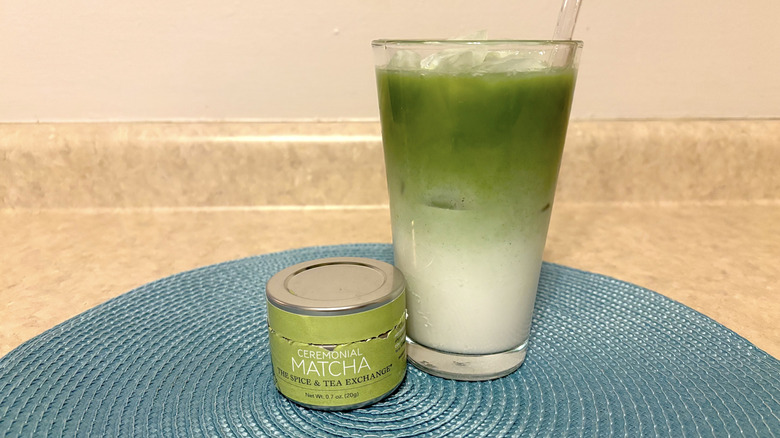
There are three different grades of matcha. Ceremonial is the highest grade, contains the most caffeine, and is generally enjoyed without any additions due to its delicate flavor. Daily grade is less expensive, contains less caffeine than ceremonial, and has a more robust flavor that is good in lattes. Culinary grade is the lowest grade and is known for having a more robust and savory profile. It is often reserved for cooking and baking.
When I opened the tin of ceremonial matcha, a subtle, sweet scent slipped from the dark green powder. I smelled no hint of grass or earthiness and was immediately put at ease. It blended with the hot water effortlessly. And once cooled, it made a lovely green topping for the milk and sweet cream I had prepared over ice. When I tasted it, I immediately understood why ceremonial matcha was held at such a high level. It didn't need anything added to it and was quite overpowered by the latte ingredients. While I could still catch a hint of savoriness, most of the flavor was lost.
I knew I had done a disservice to this matcha in my preparation. But since matcha lattes are the most popular form I know of, that is how I was tasting all the powders. The company does sell a cranberry orange matcha latte kit using this matcha, which is most likely better balanced. But this matcha alone should be saved for sipping plain and hot.
3. Tropical mango
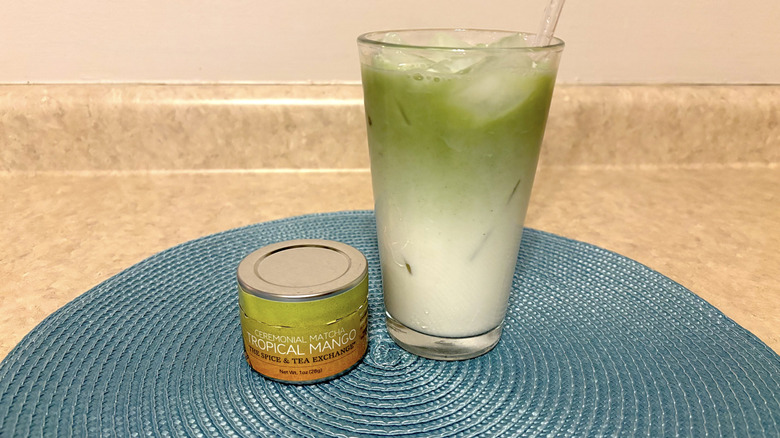
The tropical mango ceremonial matcha from The Spice & Tea Exchange is meant to offer an umami-rich, sweet, mango-flavored matcha. So, when I opened the small tin, I expected to be hit with the scent of something fruity and sweet. It wasn't until I added the hot water to the bright green powder that the powerful mango aroma filled the air. It was like a cloud that enveloped me, to the point where it became almost overwhelming.
Once I added milk and some sweet cream, I was ready to take my first taste. Although I was wary that the flavor was going to be as enormous as the scent, I was more than pleasantly surprised by the delicateness I received. A lovely bouquet of fruit flavors engulfed my taste buds. The mango was definitely present, but it didn't taste as if it were alone. While I couldn't pinpoint all the flavors I believed I was tasting, I was enjoying them all. This drink was refreshing, bright, and fruity.
After taking a pause from indulging myself with quite a few drinks, I noticed a slightly strange aftertaste and perhaps something slightly chalky. It was easily remedied with a quick sip of water, but it had been there. While that wouldn't stop me from enjoying this matcha again, it was something I didn't encounter with the higher-ranked selections.
2. Blueberry
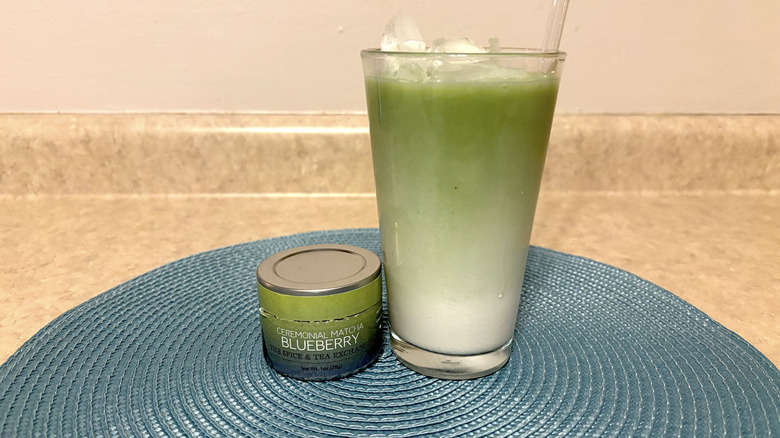
The blueberry flavor of this matcha made its presence known to my nose as soon as the tin top was removed. Since it was so fragrant, I could almost taste the blueberries via the smell; I was excited to prepare and drink it.
Once added to ice, milk, and sweet cream, the blueberry notes mellowed a bit, and the matcha colored my latte a playful bright green shade. The first taste hit my palate harder than the two lower-ranked varieties, but it did so in a positive way. Its intensity was not offensive, but it did excite me. The flavor was merely more robust and held not only the flavor of blueberry, but also introduced the blunt earthiness of the tea. The blueberry flavor was fresh and tart, as if it had just been plucked from a vine. But accompanying the taste was something more — something savory and tastefully natural.
The definitive flavor of tea leaves appeared in the background, allowing my palate to enjoy an earthy, natural overtone. It wasn't bitter, nor was it grassy. The flavor was actually quite pleasant. It added a heightened level of sophistication to the latte that I hadn't expected. This flavored matcha held a more well-rounded tea flavor than the lower two. And for those who are fans of blueberry, this made for a great matcha latte. Although it might not be for everyone, as I believe the next one is.
1. Sweet matcha
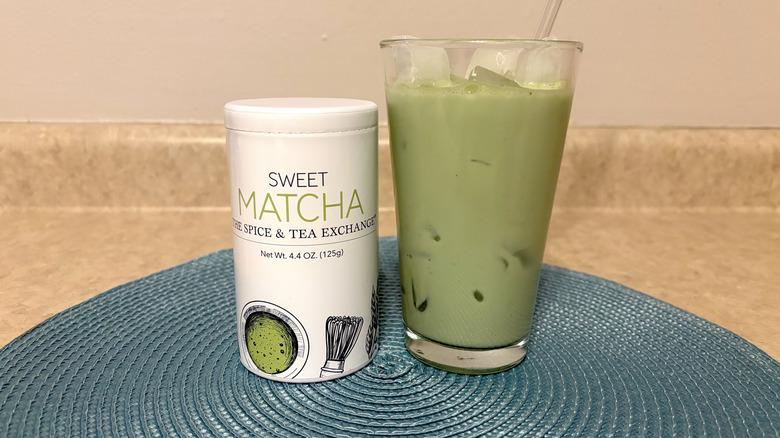
There were many things that made this sweet matcha different than the others. I noticed that it was not labeled as ceremonial grade on the tin. It was also much lighter in color and called for a larger portion to be added to the recipe. And the tin was quite a lot larger than the others and featured directions for several applications, including baking.
Since it was already sweetened, I skipped the sweet cream. I was surprised to find that it was indeed sweet enough on its own. The flavor profile was rich and held its ground against the milk. There was a bit of a grassy quality to it, but I found myself tasting it with more intrigue than I thought I would. It was different from anything I had tasted before. There were hints of vegetal flavor, but it was rich, bold, and savory. I could pinpoint the aspects of tea that were balanced against the sweet creaminess. I finally understood why people would substitute this for coffee.
For someone just venturing into matcha, this would be the product I would recommend. It has nice packaging and is inviting to the palate. The wonderful taste was well-balanced in its bold uniqueness. Instead of trying to explain the flavor of matcha, I think it would be best to just say, "Taste this."
Methodology
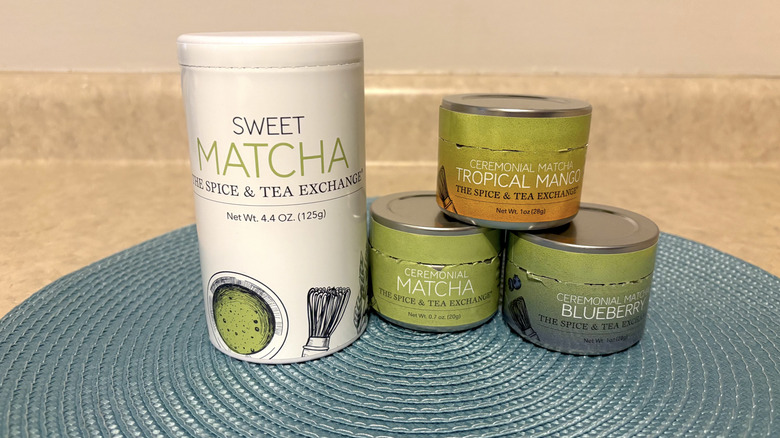
In order to see how these matcha powders compared against one another, I tried them all as iced matcha lattes. Matcha lattes are incredibly popular, and I felt it was the best way for me to fairly rank them. Using the measurement guidelines on the tin, I first dissolved the matcha in hot (not boiling) water. Using boiling water is a common mistake people make with matcha lattes and is what makes them bitter.
Each powder dissolved easily. Once cooled, I poured the prepared matcha over iced milk and, for all but the sweet matcha, sweet cream. I then gave it a final stir and began to drink. I had no problem with drinking at least half of each latte, which I spread over the course of a day, and cleansed my palate between each sample.
I found all the matcha options from The Spice & Tea Exchange to be incredibly flavorful and delightful to drink — despite assuming that matcha just tasted like "grass water." But when it came to these flavors, that couldn't have been further from the truth. To some degree, each one made for a matcha latte that was smooth, rich, and had hints of umami. The higher-ranked ones were just more robust, balanced, and yummy. My top pick, the sweet matcha, could be used in so many ways and was incredibly easy to prepare.