

The Hands Down Best Way To Drink Contemporary Gins
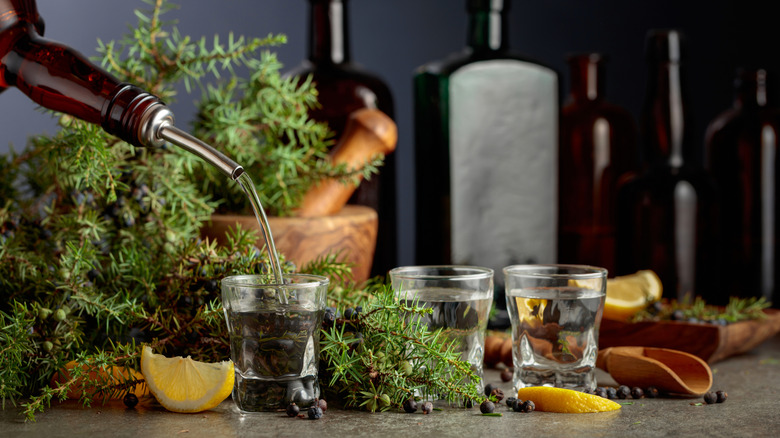
If you are a gin fan, then you have certainly heard of contemporary gin, a style that is gaining momentum and appreciation in the spirits world. Because they are less juniper-forward, distillers can play with different botanicals, often native to their area, to give the spirit a stronger sense of place. Therefore, when using contemporary gin in cocktails, your best bet is to craft a simple bramble to better appreciate these flavors.
"I wouldn't say the bramble is the only way to enjoy contemporary gin, but it's absolutely one of the most flattering cocktails to highlight the category," says Justin Lavenue, co-owner of Austin's famed cocktail bar The Roosevelt Room. "Contemporary gins, which tend to lean away from heavy juniper and more toward citrus, floral, root, and herbaceous notes, shine in cocktails where those subtleties have room to breathe. Unlike many other gin-based classics, the bramble gives them exactly that platform."
Unlike a martini, which can often be dominated by heavy juniper, or a gin & tonic that can sometimes overshadow the gin's nuances with quinine and carbonation, Lavenue says that a bramble highlights a gin's botanical blend while remaining refreshing and accessible. "It allows the spirit to remain the masterpiece, presented with a bright, refreshing, and fruit-forward frame," he says.
Contemporary gins often feature notes like elderflower, cucumber, citrus peel, pink peppercorn, or delicate herbs. "Those botanicals play beautifully against fresh lemon juice, while the blackberry liqueur adds richness and depth without overwhelming the base spirit," Lavenue says. "The result is a cocktail that feels bright at first sip, then rounds into something plush and fruit-forward, while still finishing crisp."
How to craft the perfect gin bramble, according to an expert
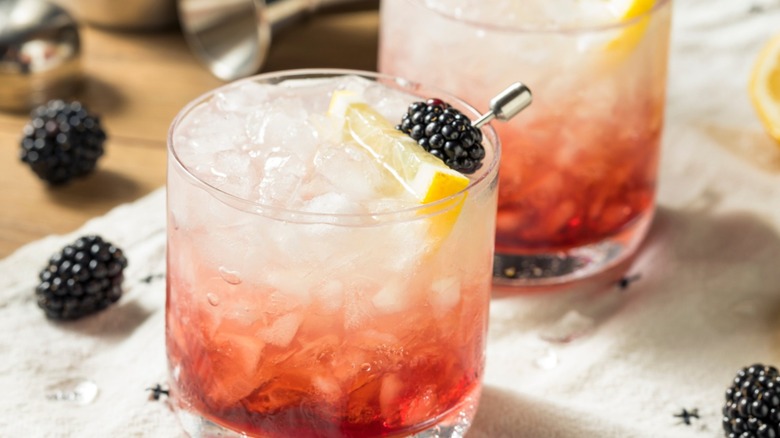
Lavenue has a few crucial tips to make the best gin bramble. "Making a truly great bramble comes down to restraint, balance, and attention to texture," he says. "It's essentially a gin sour that adds a cascading layer of berry liqueur (or freshly muddled blackberries for a more modern take), which introduces both visual drama and controlled sweetness."
He also noted that fresh lemon juice is essential. That's because, "the drink relies on bright, clean acidity to lift the botanicals in the gin and keep the cocktail feeling vibrant rather than heavy," he says. "The blackberry liqueur should be used thoughtfully—it's there to add depth, color, and a gentle berry richness, not to overwhelm the base spirit—so a light pour that slowly cascades through the crushed ice tends to create the most elegant result."
Since most contemporary gins have a lower ABV than their London Dry cousins, and they lean toward citrus-forward or floral flavors, you do not have to add as much sugar and blackberry liqueur to achieve a balanced bramble.
When it comes to the texture, crushed ice is a defining element of the drink. "The gradual dilution softens the edges of the gin and allows the botanicals to evolve as you sip, making the cocktail feel dynamic from start to finish. The best brambles feel bright, layered, and refreshing rather than simply sweet or jammy," Lavenue says.
Above all, Lavenue insists on choosing a gin with enough structural backbone to stand up to the fruit without losing its aromatic nuances. "Leopold Bros Small Batch Gin is, in my opinion, the perfect contemporary choice for a bramble because its inclusion of pomelo and bergamot gives the cocktail an elevated, almost perfumed citrus character that amplifies the fresh lemon juice and keeps the blackberry component feeling vivid rather than heavy," he says. "The result is a bramble that tastes layered, modern, and incredibly clean — exactly what you want when showcasing the nuance of contemporary gin."