

Why BBQ Spots Across America Continue To Shut Their Doors
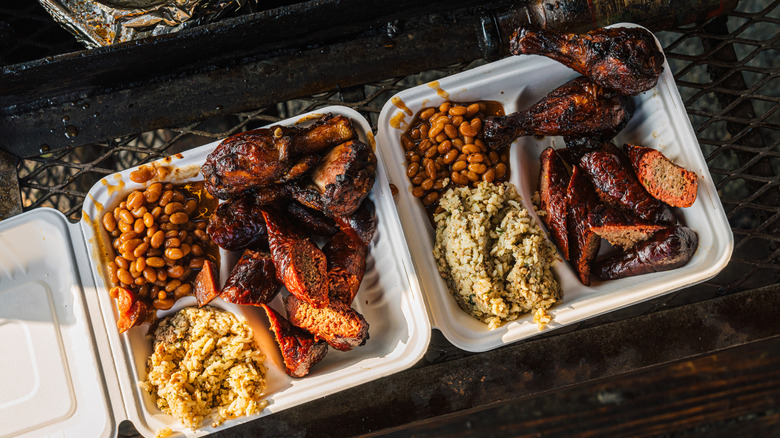
Consumers aren't the only people feeling the effects of rising food prices; restaurants are also feeling the brunt of these costs, especially when it's what is deterring customers from visiting them in the first place. Seeing "Permanently Closed" signs hanging in windows is not a new thing, but there is one type of restaurant that appears to be experiencing more closures than others: eateries that specialize in barbecue.
Barbecue spots across the country are shutting their doors in droves, from large chains like Dickey's Barbecue Pit to more local spots like Texas' Merritt Meat Company and Bar-B-Q King in North Carolina, which was featured on "Diners, Drive-Ins and Dives." There are several reasons why barbecue joints specifically are in hot water (err ... on hot coals) and closing at rapid rates. For one, consumers are cutting back their spending. While they may have once ordered their own plates and all the classic barbecue fixings, some of them are now switching to shared plates — or just eating out less altogether.
Barbecue spots are also primed for financial trouble because their costs are so high, especially when it comes to one of their main expenses: meat. According to data gathered by the Bureau of Labor Statistics and reported by NPR, beef prices between February 2020 (pre-pandemic) and September 2025 increased a whopping 51%. Plus, 2026 data gathered by the USDA suggests that the number of cattle is also on the decline, which may alter prices even more going forward.
As prices go up, business goes down
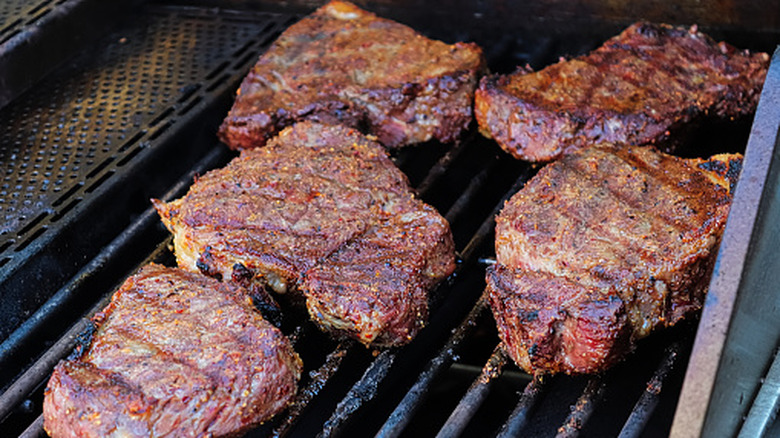
Besides the rising costs of food, which means higher operating costs for restaurants and for diners, barbecue chains have also faced other issues that have led to their closure. Barbecue has regional distinction, meaning that expanding into different locations and markets beyond their respective regional style – be it Texan, North Carolinian, or Georgian — may not always be so openly embraced by the surrounding community.
Labor is another issue, and not one that's confined to just barbecue spots. Pre-pandemic, VinePair estimated that most restaurants were paying between 30% and 35% in labor costs. But now, to attract and retain employees, restaurants are shelling out between 40% and 50% on average, with some spending more than half of their gross sales on labor. In a business with already thin margins, increasing labor expenditures can be catastrophic.
But this isn't all to say that barbecue restaurants aren't trying to combat growing expenses and keep customers coming through the doors. Smaller portions, promotions, and upselling more profitable menu items may help barbecue joints (and restaurants as a whole) retain patrons; yet, it's also worth noting that this can affect a customer's experience and make them not want to come back. After all, people go to barbecue restaurants for the ample meat and sides, not to be haggled over if they want an overpriced slice of cheesecake for dessert.