

Why Fresh Goat Cheese Tastes So Different From Aged
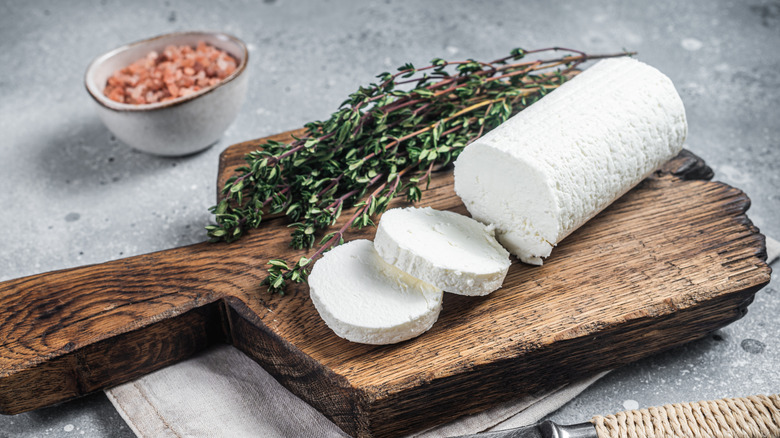
The world of cheese encompasses a truly dizzying array of flavors, from savory parmesan to pungent Roquefort, and the almost sweet tang of ricotta. Even knowing just how varied cheese can be, there's probably one question that's crossed your mind at some point: Why is fresh goat cheese so different to its aged counterpart? A mature goat cheese is often mild and nutty and can even be indistinguishable from regular cow cheese, while fresh goat cheese has a more unique taste that's often described as tangy, lactic, or simply goaty.
All cheeses change in taste as they age, including cheddar, so the question has more to do with what gives fresh goat cheese its distinctive flavor in the first place. The taste and aroma both come from three chemical compounds present in goat's milk: Caproic, capric, and caprylic small chain fatty acids. If your Latin is up to scratch, you might be able to divine that they're all named after the word for goat, "caper," and although these acids are also present in cow's and sheep's milk, the levels are considerably higher in goat's milk.
Notably, there are a few variables that will dictate the concentration of these compounds, hence why some types of goat cheese are more intense than others. Diet plays a role, as does the age of the milk when it's turned into cheese, with the fresher kind offering a milder taste. The goat's hormones are a key factor too, and keeping male and female goats together during breeding season can result in cheese with that strong barnyard flavor too.
How the flavor of goat cheese changes with aging
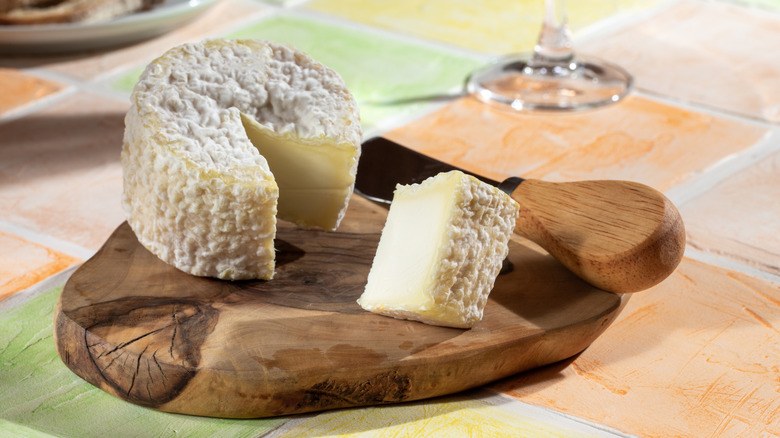
When you're enjoying fresh goat cheese in a French-inspired arugula and chèvres salad, or as part of a creamy chèvre cheese dip with crackers, what you're actually tasting are the natural flavors of the goat's milk itself. Without the additional, more complex notes that are developed throughout the aging process, it's typically easier to pick up on those classic goaty flavors. As goat's milk turns into cheese, the fatty acids begin to break down, mellowing out the specific flavor that people associate with goat cheese.
Soft, ripened goat cheese like brie can be very delicate, with an even milder profile than ripe cow's milk brie. That's not to say, however, that all aged goat cheese is mild — the flavor profile will be largely determined by the type of cheese you're making. Some aged goat cheese might have a strong taste, but it's not necessarily a goaty one. Washed rind cheeses are known for their pungent taste and aroma, and those made from goat's milk are no exception. However, the sharpness is due to the cheesemaking process, in which the exterior is washed to encourage bacteria growth in the cheese.
Likewise, older cheeses vary from younger cheeses in their moisture content too, which evaporates during the process. As well as giving the cheese a firmer texture, it can concentrate the flavors, sometimes resulting in a more piquant taste.