

The Only Way To Know If Your Thrifted Pots And Pans Contain Lead
We may receive a commission on purchases made from links.
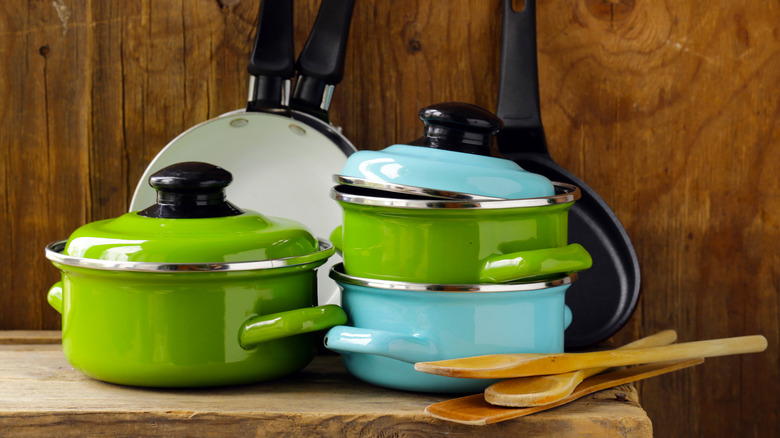
Thrift shopping for your kitchen is underrated. Not only can you find things of great value — like decorative vintage plates or antique mason jars — you can also pick up utility items at ridiculously low prices. From baking tools and essentials like coveted KitchenAid stand mixers to pre-loved vintage crocks that even Martha Stewart swears by, there's a world of kitchen goodies waiting at a second-hand shop near you. However, If you're investing in pots and pans at a thrift shop, you must make sure they don't contain lead — and the only way to do that is by using a lead test kit.
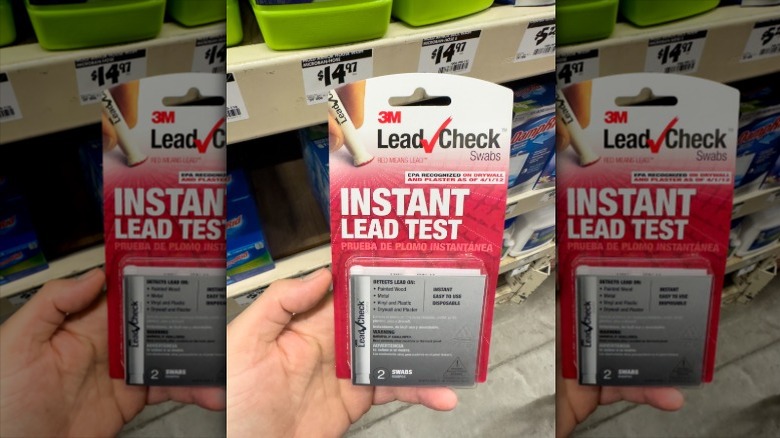
These kits, approved by the Environmental Protection Agency, are very simple to use. "They're sold at hardware stores and everywhere online for around $10. The kit comes with cotton buds in it. You just wet the cotton bud and rub it on the surface you want to test. If it turns red then lead is present," Stacy Verdick Case, the owner of Peony Lane Designs, explained to Tasting Table. Verdict Case also insisted that all cookware older than 50 years should be tested for lead.
"Anything before the mid 1970s, including enamelware and china, should be tested for lead because lead was used to make colors more vibrant," she said, adding that lead was also used a lot in coatings. "You want to be sure that none of that leaches into your food."
Even minimal traces of lead can be dangerous
Even the tiniest traces can be harmful. As Stacy Verdick Case said, "If you discover that grandma's beloved skillet has lead in it, set it on a shelf for display. You do not want to risk lead exposure." According to the World Health Organization, lead poisoning can impact the development of the central nervous system in young children and cause high blood pressure, cardiovascular problems, and kidney damage in adults. Exposure to lead during pregnancy can even result in preterm birth.
The Environmental Protection Agency (EPA) recognizes three lead test kits — LeadCheck, D-Lead, and kits made available by the State of Massachusetts for trained professionals who test for lead on construction sites to make sure there's no regulated lead-based paint present. The same kits can be used to test for the presence of lead on any surface, and it'll take less than 30 seconds to find out whether or not your utensils are fit to use.
Incidentally, your thrifted pots and pans aren't the only potential source for lead poisoning in your home. While it's generally considered safe to drink tap water in America, it might be worth getting it tested. While the EPA banned the use of lead in pipes way back in 1986, there are still millions of old houses that might still be connected through service lines containing lead. You can send samples of the tap water to EPA certified laboratories for analysis. These tests cost between $15 and $100.