

The Boneless Prime Rib Roasting Setup That Prevents A Soggy Bottom
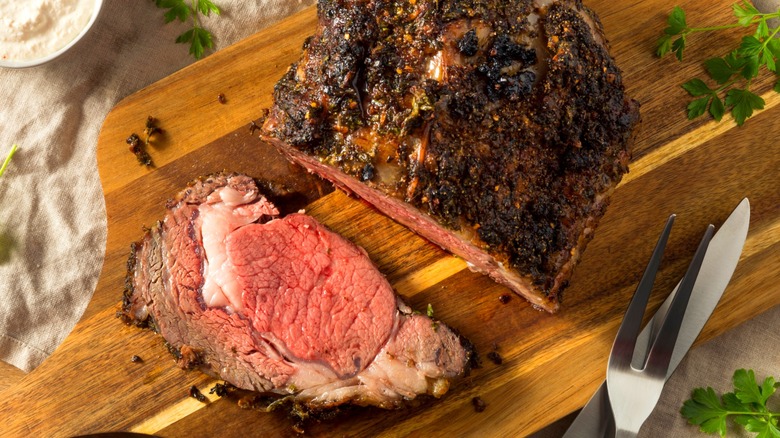
What is there to complain about with a roasted, boneless prime rib? Though bone-in cuts have some flavor advantages, boneless beef is quicker to cook, effortless to carve, and overall less fussy — except for one problem. The side of the roast that sits on the baking pan won't sear like the rest of the meat, turning soggy and gray instead of browned and delicious. Luckily, a roasting rack is all you need to avoid this issue.
There are many differences in cooking bone-in versus boneless prime rib, but one of the most under-discussed is this: You're supposed to roast bone-in prime rib with the fat cap facing up and bone facing down. This not only helps the fat to render, but the bone props the meat up and away from the surface of the roasting pan, allowing hot air to circulate all around the beef, including the underside. This creates evenly-cooked meat that's wonderfully browned all over. But take the bone out, and one side of the prime rib will lay flat on the hot pan, creating an under-seared, overcooked bottom that feels like an awful waste of pricey cow.
To avoid this prime rib mistake, put your roasting pan in the oven, arrange a sturdy metal rack over top, put the beef on the rack, then get cooking. If you prefer to use a cast iron skillet, you can buy special racks that fit inside your pan. With this technique, the roast will get the air circulation it needs to cook up perfectly.
More tips for perfectly cooked boneless prime rib
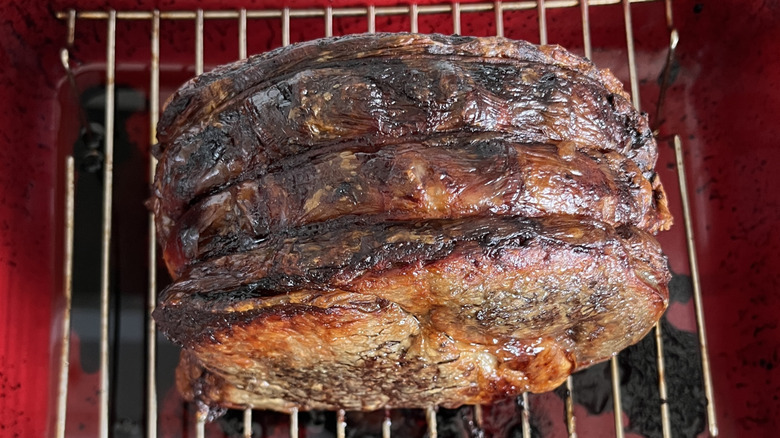
What if you want to reverse cook your prime rib by gently heating it through, then searing it? Thankfully, the process isn't complicated, and you can use the exact same rack-and-pan setup. Cook the beef through at the lowest oven setting, then let it rest. Right before serving, crank up the oven's heat, put the beef back on your roasting setup, and let it crisp up in the oven for a few minutes. Voila: a reverse-seared roast without a soggy bottom.
While a roasting rack can help your prime rib out, you still need to cook it with precision for juicy results. This can be trickier with a boneless cut because bones act as insulators that transfer heat throughout the roast, promoting an even doneness. One tip you need to make the best prime rib, especially a boneless one, is to use a food thermometer to track the internal temperature. Consider cooking the beef to a medium doneness of 130 to 135 degrees Fahrenheit. Rare, red prime rib may look pretty, but lower temperatures often don't render the fat enough, leading to an underwhelming flavor and almost gelatinous texture.
Another benefit of roasting prime rib on a rack is that the meat drippings will collect in the pan below. You can use this beefy fat to make a rich au jus sauce, or toss vegetables in the fat and roast them for the perfect side dish. You really can't lose when it comes to this clever trick.