

Is HDPE Better Than LDPE For Plastic Cutting Boards? What To Know Before Adding To Your Cart
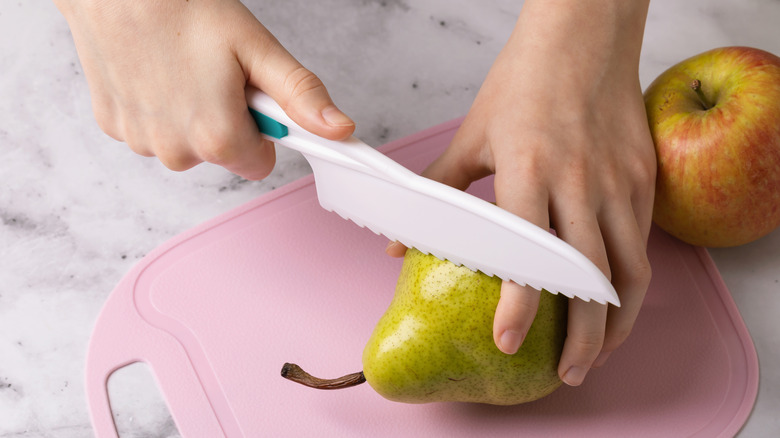
If you're in the market for a new cutting board, don't just choose the cutest one without doing a little research first. Most plastic cutting boards are made from either high-density polyethylene (HDPE) thermoplastic, or low-density polyethylene (LDPE). Understanding the differences between these two types of plastic boards can help you make the safest choice for your home, and ensure you get the best cutting board for your needs.
HDPE is an FDA- and NSF-approved cutting board material. It is rigid, hard, and available in a range of thicknesses, colors, and designs. It is non-porous, which means that it is less likely to harbor dangerous bacteria, absorb odors, or develop stains. HDPE cutting boards are also easier to keep clean, and some are even dishwasher safe up to 200 degrees Fahrenheit. Since they are more resistant to impact, knife damage, and other scratches and gouges, they may last longer. They can withstand heavy-duty daily use without becoming seriously damaged.
LDPE is a softer plastic that is less rigid and more flexible, and also less damaging to knives. It is also non-porous, but it is more susceptible to scratches and damage, and can melt or get warped in high heat. For that reason, it's best used for short-term or light tasks. LDPE boards are also great for transferring chopped vegetables to a pot or pan on the stove, or for using a color-coding system to keep raw meat separate from other ingredients you're preparing. It may not stand up to heavy daily use.
Choose a non-plastic option for enhanced food safety
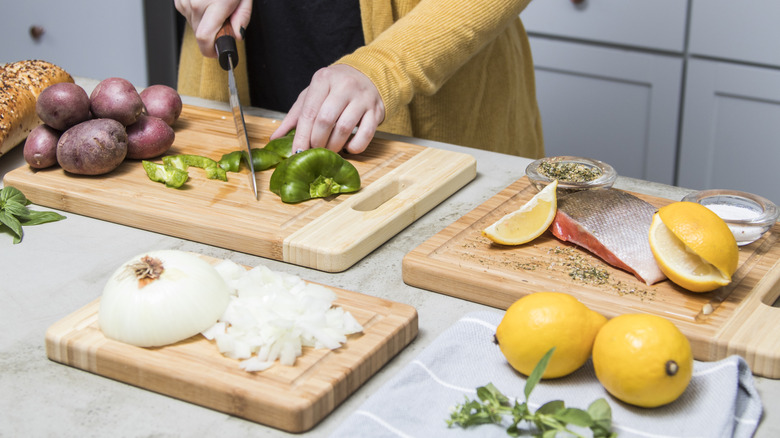
Plastic cutting boards may generally be the most affordable option, but they typically aren't the safest or most hygienic. Even HDPE cutting boards can develop deep scratches and gouges over time. Those gouges can harbor dangerous bacteria that can transfer to food or other food preparation materials or surfaces. Any type of plastic cutting board also has the potential to transfer microplastics into your food. Every time you cut something on its surface, you may be infecting your food with tiny nanoparticles of plastic material. If you notice that your cutting board is damaged, scratched, or worn, you should dispose of it.
Glass and natural stone cutting boards are non-porous, which means they resist odors and stains, are more hygienic, and are easier to clean. However, they can cause excessive damage to knives, and it could be a safety mistake to use glass cutting boards for some kitchen tasks.
Wooden cutting boards are porous, but are gentler on knives and can be cleaned effectively by making a solution of one gallon of water and one tablespoon of bleach. Flood the surface of the board with the solution and leave it be for a few minutes, and then rinse it clean with water. Solid, hardwood cutting boards are worth splurging on because they can be cleaned in the dishwasher. Bamboo cutting boards are less porous than other types of wood, and they are also more durable and bacteria-resistant. If you want a low-maintenance, eco-friendly, and non-toxic cutting board, bamboo is the most affordable and durable option.