

This Old-School Dish Is Basically Lobster Ravioli — Without The Pasta
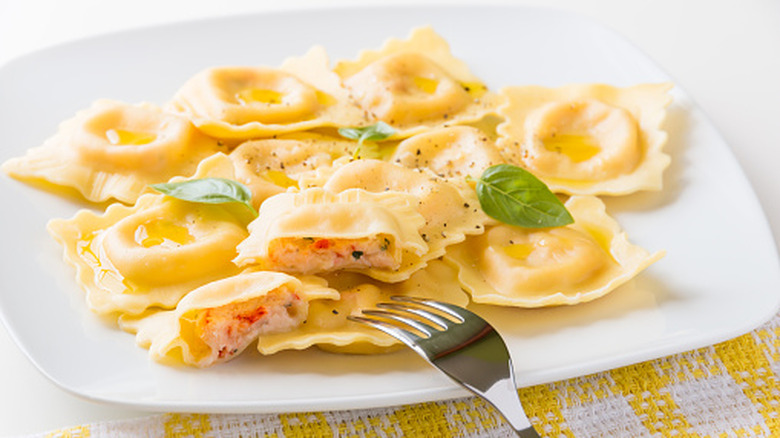
A simple search for the best way to cook lobster will lead you down many different paths: boiled, steamed, poached, roasted, or placed in a sous vide machine to cook low and slow. Not many modern recipes will ask you to pound it into a paste or chop it up fine. Believe it or not, though, that's how they rolled in back in the day — we're talking hundreds of years ago, when lobsters were abundant and the meat was treated with far less respect than it is today. A great example of this is lobster ravioli, where this premium meat is chopped up into small pieces and stuffed into pasta. Or even the lesser-known lobster farces (or farci), an old-school dish which is basically lobster ravioli without the pasta.
According to a recipe from the "Larger Cookery Book Of Extra Recipes," written by renowned food inventor Agnes Marshall and first published in 1902 (via Chest of Books), this is how lobster farces was prepared: "Pound till smooth four ounces of cooked lobster, four boned anchovies, a teaspoonful of anchovy essence, a dust of coralline pepper, half an ounce of butter, four ounces of Panard [a mixture of butter and flour used for binding]; add a few drops of liquid carmine and two whole raw eggs, rub through a wire sieve and use."
Here's where the recipes for lobster ravioli and farces deviated. The lobster mix for ravioli is placed between two sheets of pasta and boiled. For farces, a vintage seafood dish that has quietly vanished, the mix may be stuffed into rolled-up fillets of fish or even the lobster's own shell.
More similarities between lobster farces and lobster ravioli
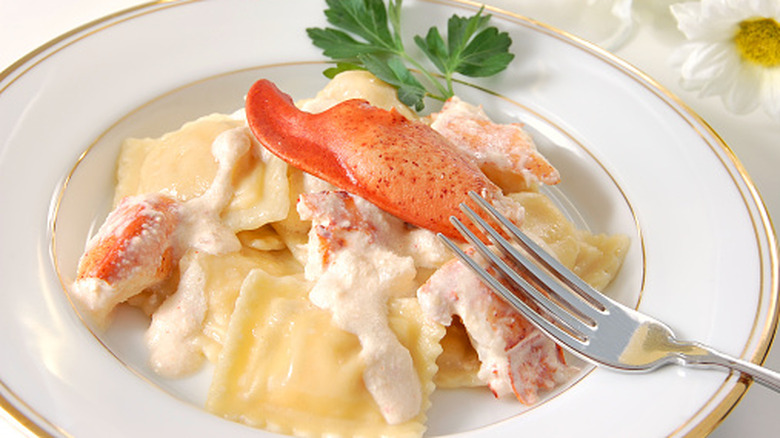
Lobster farces and lobster ravioli do have a few things in common. They both use chopped or minced lobster, of course. They also both come from an era in which lobster was so abundant that, far from being a premium delicacy, it was served to prisoners and even referred to as the "cockroach of the sea"! They also share a similar three-step process of mincing, seasoning and then stuffing, whether into pasta sheets or into fish or lobster shells.
But while lobster farces has long disappeared from cookbooks, lobster ravioli has stood the test of time — which is quite remarkable for a dish whose origins can be traced back to the 14th century. In fact, there's a fascinating recipe for lobster ravioli in a 16th century cookbook called "The Opera of Bartolomeo Scappi." Here, the author asks to grind the lobster with "steeped pine nuts, fresh dates and marzipan paste" before combining it with eggs, spices and herbs such as cinnamon, mint and marjoram. "With that mixture make up a torte with a small sheet of pastry both beneath and above," the recipe says (via Historical Bites), adding that the ravioli could be "dressed with sugar and cinnamon," which sounds deliciously decadent!
If you're looking for something more modern, our delicious lobster and mascarpone ravioli recipe calls for lobster pieces to be mixed with mascarpone cheese, lemon zest, salt, and pepper. The key while making the filling is to ensure that the lobster steals the spotlight when stuffed in ravioli — you're not cooking with the cockroach of the sea anymore!