

Why 2026 Could Be The Perfect Year To Buy Good Bourbon
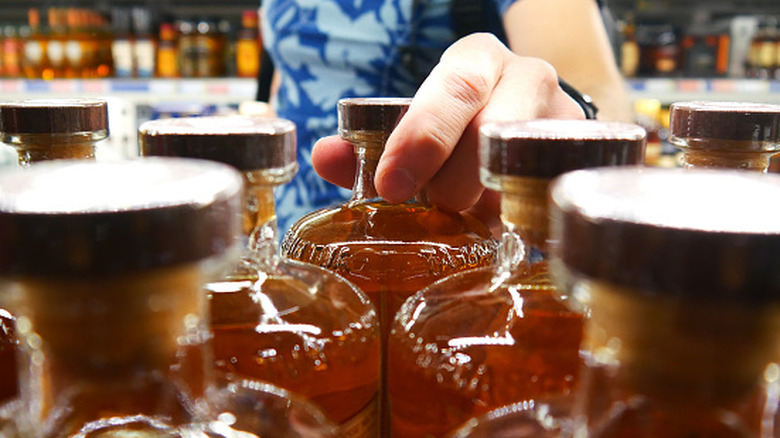
As of early 2026, news in the bourbon world hasn't been great. Following what was a period of high sales and rapid expansion, the market is contracting for a number of reasons. Alcohol consumption has declined in recent years, for one thing, but international response to U.S. tariffs has also hit bourbon sales hard, with exports of the liquor dropping significantly in 2025. Many icons of American whiskey have been affected, with Brown-Forman — parent company to Jack Daniel's, Woodford Reserve, and Old Forester, among others — laying off a significant portion of its workforce, and Jim Beam halting production at its flagship distillery for the year. But while these stories are concerning for the industry, insiders note that they might not be a bad thing for consumers.
In an exclusive chat with Tasting Table, Ari Sussman, whiskey maker at Whiskey JYPSI, explained why this was one of the whiskey trends to watch in 2026. As he put it, the previous decade's bourbon boom led to significant outside investment and overproduction across the industry. The market has started to correct as that demand has faded, resulting in a significant surplus of the spirit.
This surplus is especially evident for many finer bourbons, which were produced at the height of the boom but take longer to reach the market due to their extended aging. "Everyone has to figure out a way to sell this high-quality whiskey in volume," Sussman said, "and that means consumers can expect prices to come down."
The state of the bourbon surplus
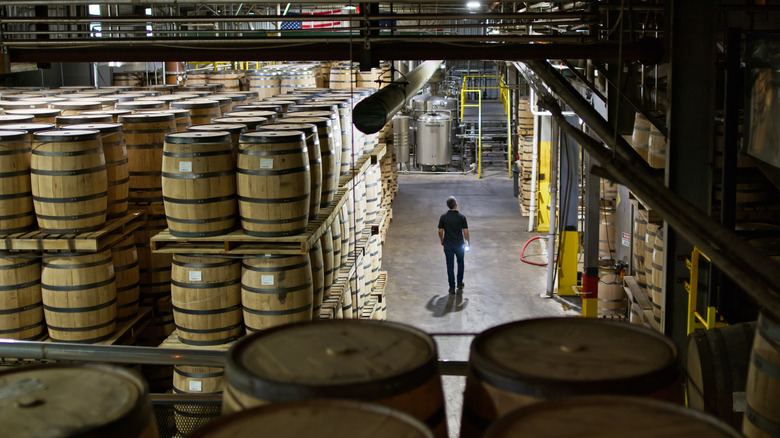
Up through the early 2020s, American distillers were producing at record levels to stay ahead of skyrocketing global demand. The pandemic, in particular, created a surge in demand for whiskeys of all kinds, leading, in turn, to significant price increases. But since then, the market's myriad changes have created havoc. U.S. spirit exports to Canada, for example, dropped by 85% in response to U.S. tariffs in the second quarter of 2025 (via OhBEV). Exports to elsewhere in the world dropped by smaller margins, but the damage was still noticeable — U.K. and Japan exports each dropped by nearly a quarter within that same window. Add to that changing alcohol consumption and general economic uncertainty, and the scope of the problem becomes clearer.
The issue of this surplus for Kentucky distillers, in particular, is more than just a saturated market. Kentucky is the only place in the world that taxes barrels of aging spirits, leading to significant additional stress on bourbon producers in the spirit's birthplace. According to the Kentucky Distillers' Association, the state currently has an all-time high of 16.1 million bourbon barrels aging in its warehouses, estimated to be an oversupply of 300% (according to Forbes) and a treasure trove that incurred around $75 million in taxes in 2025.
These taxes, amid other market difficulties, have led to significant financial hardship, with famous brands like Uncle Nearest facing bankruptcy. And given that the majority of the aging barrels won't mature until 2030 or later, these distilleries must make some nimble decisions to keep the bourbon flowing.
What this bourbon excess means for consumers

Fortunately, consumers don't need to worry too much about these numbers. Overproduction has created a precarious situation for many distillers, some of which could end up in trouble. Larger producers, however, should have no trouble weathering the storm. And when it comes to actually picking up a bottle at the liquor store, well, that could look a whole lot sweeter in the coming years.
A decline in overall demand paired with an increase in supply is likely to produce several consumer-level boons. First off, expect a decrease in price. That's the basic economic rule: When supply outstrips demand, prices drop. Especially in a highly competitive market like liquor, these distilleries are likely to push significant discounts to help clear that excess inventory. But beyond price, consumers can also expect some of the bourbon-mania to disappear, with the bourbons that collectors search for no longer disappearing from shelves the second they arrive. Finally, with the art of blending taking hold and bringing home medals to non-distiller producers — like 2025's IWSC best bourbon — these quality whiskeys selling at bargain prices could result in some intriguing creations.
As precarious as the bourbon industry might seem at the moment, the outlook is good for the whiskey lover's wallet. Reduced production may seem like a step in the wrong direction, but no market can boom forever. And when it comes to choosing a few bottles for a home bourbon tasting, you might be able to sample some spirits in the coming months and years that previously would have been outside your price range.