

The 5 Biggest Changes You'll Notice At Kroger In 2026
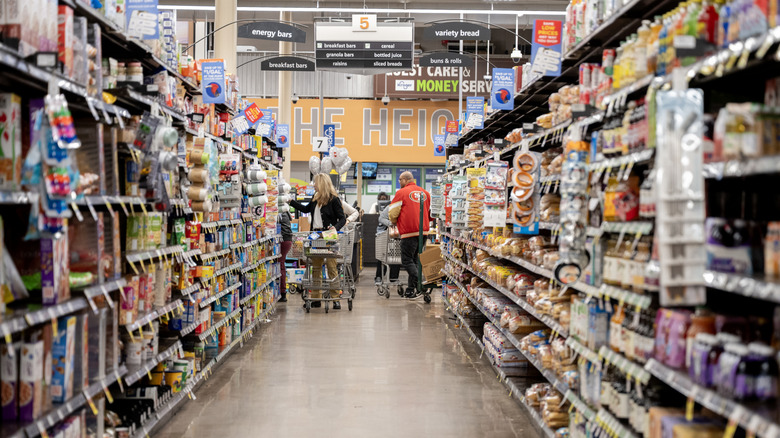
It's fair to say that 2025 was a mixed year for grocery giants like Kroger. Unlike retail behemoths Walmart and Aldi, the grocery chain didn't spend a chunk of the year fretting about tariffs. However, it did spend considerable time recovering from the blow that was the failed $24.6 billion merger with Albertsons, a deal that finally collapsed in the final weeks of 2024 after a protracted legal saga. In the end, the brand's CEO (who had been in the company for five decades) stepped down.
Kroger is one of the oldest grocery chains in America, with an origin story that extends all the way back in 1883. But in an increasingly crowded and competitive marketplace where folks are either looking for the "best deals" or the "best quality," being the "oldest" isn't a good enough sales pitch. Kroger may have come out of 2025 in decent shape, posting better-than-expected sales numbers for the first two quarters, but this was driven primarily by general financial uncertainty and the resultant spending patterns.
Having said that, it's not all doom and gloom. America's favorite grocery brand can look forward to 2026 with some positivity, as can its many fans (the chain serves over 11 million customers daily). The appointment of a new CEO is imminent, and it has clear plans in place to spark a period of sustained growth based on specific consumer needs, interesting partnerships, and access to new technology that could change how folks shop in-store. Here's what all of this means for customers.
Fast, convenient delivery via Uber apps across America
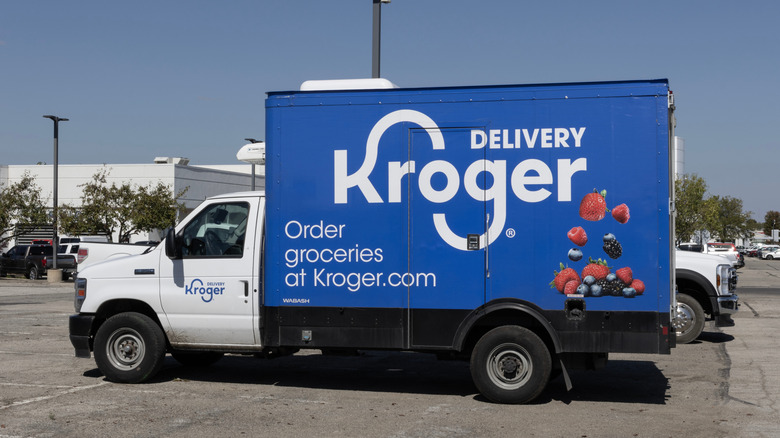
From baking bread in-house and cutting costs to selling cooked sauerkraut and increasing profits, the chain's founder Sam Kroger was always known for his innovative thinking. You could even say he came up with same-day delivery long before the phrase was coined. According to the Kroger website, in the early days of the business, "Barney would saddle up his horse Dan to his wagon and deliver groceries to customers around Greater Cincinnati."
Kroger has come a long way since its founder drew a horse-drawn wagon. Now, a deal has been struck with Uber that will put 2,700 Kroger Family stores on the Uber, Uber Eats, and Postmates apps. What this means is that customers can now buy groceries, plus their favorite items from stores such as Ralphs, King Soopers, Fry's, and Mariano's, among others, before scheduling delivery at their convenience.
"Customers' needs evolve constantly, and at Kroger, we're committed to meeting them with solutions that fit every moment with the understanding that what is convenient changes day-to-day," Kroger Digital Experience and eCommerce Group Vice President explained in an official press release. "Collaborating with Uber enables us to deliver even more convenience and flexibility, helping more families access the food they love with ease and reliability." This kind of customer-focused solution should come as no surprise from a company that not so long ago delivered groceries to your car in the parking lot!
More protein to fuel your fitness goals
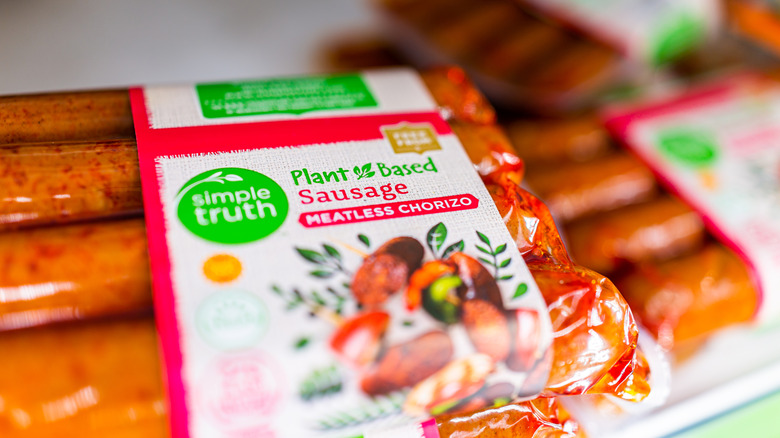
Just as 2026 kicked off, the USDA released a new and improved version of the Food Pyramid, a set of visual guidelines for a healthy diet. Now inverted, the pyramid gives proteins pride in place right at the top, which will work out perfectly for Kroger customers due to the recently expanded Simple Truth menu.
As Kroger's private label brand, Simple Truth sells wholesome food that's free of artificial ingredients at accessible prices. In 2026, the brand is set to introduce a line of new products, including high-protein cereal, beef sticks, water enhancers, and high-protein energy bars in three flavors: peanut caramel, cookie dough, and chocolate caramel. Talk about a sweet deal.
"As customers focus on their wellness goals in the new year, they are looking for high-quality options that fit their lifestyles and budgets," explained Ann Reed, the Group Vice President of Our Brands at Kroger, in an official press release. "We are supporting customers as they work towards their goals with nutritious, affordable and great-tasting protein offerings that are simple and free from unwanted ingredients."
A personal shopping companion (driven by AI)
Grocery and retail chains across the board, regardless of scale, are trying to extract every ounce of competitive advantage they can by leveraging data and technology. In recent times, digital grocery shopping has fueled Kroger's success. So, it's no surprise that Kroger's plans to deploy artificial intelligence in 2026. The company announced a partnership with Gemini Enterprise that will transform the shopping experience through a new personal shopping assistant.
The app is set to combine Google's cutting-edge tech infrastructure with the Kroger's knowledge of its customers gathered over 150 years to "provide personalized offers and value to each customer," according to the brand's official press release. If things go to plan, the assistant will break down single instructions into actionable tasks — from exploring meal ideas to comparing product details. For example, your goal for a simple "vegan tomato soup" will be broken down not just into a step-by-step recipe, but also into a list of ingredients that will be integrated with your shopping cart.
Even Google is excited about the project. "Kroger is pioneering the future of commerce by embracing true generative and agentic AI at the heart of their customer journey," noted Darshan Kantak, VP of Product for Applied AI at Google Cloud. "Kroger will be setting a new standard for grocery, ensuring its agent becomes a comprehensive digital concierge across every customer touchpoint." The future is now.
Access to bigger discounts for those in need
When it comes to offering deals and discounts, relatively mid-sized chains like Kroger and Albertsons find it hard to compete with the Walmart and Aldis of the world. This is because they use very different pricing models for their products. Where a business like Kroger still needs to maintain a reasonable profit margin for every product, giants like Walmart can give more aggressive discounts, so long as the overall topline is healthy.
Going into 2026, Kroger has found an innovative approach — providing super-aggressive discounts for those that need it the most. The brand has launched a new "Verified Savings Program" through which customers on various government assistance programs can access discounts of 20% on fruits and vegetables. These customers are also eligible for a 50% off on the Boost by Kroger Plus Membership, which unlocks more benefits such as free home delivery and deals on fuel. All eligible customers need to do is fill an online verification form and create a digital account with Kroger. All relevant discounts will automatically be applied on check-out.
Kroger has a history of serving up rewards programs that save customers a lot of money, so this announcement should come as no surprise. "With the launch of the Verified Savings program, we are thrilled to make fruits and vegetables more affordable and eliminate one more barrier to food security in our mission to end hunger," noted Carlo Baldan, the brand's VP of Fresh Merchandising (via Kroger).
More store openings than closings
One much-discussed fallout of the Kroger-Albertsons saga was when Kroger announced over 60 store closures in 2025 (though, to be fair, Kroger wasn't the chain closing locations after the failed merger). Going into 2026, the grocery chain is on much surer footing, with the financial benefits accrued from downing shutters in those locations funding a string of new stores. In December, interim CEO Ronald Sargent confirmed that Kroger is doubling down on its brick-and-mortar business. "We plan to accelerate capital investment in new stores beyond 2025 to strengthen our competitive position, expand in high-potential geographies, and support long-term growth," he explained (via Food Business News).
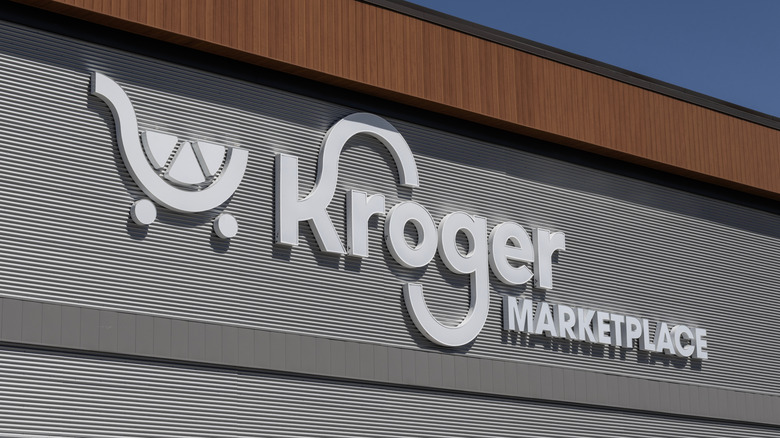
The company is betting big on the Kroger Marketplace brand, which is much more than a transactional supermarket like the main brand. Where the average American grocery store takes up around 44,000 square feet on average, Kroger Marketplaces are more than double that size, setting the stage for a more modern and premium shopping experience.
Customers can expect Kroger Marketplaces in three locations across Indiana — Crawfordsville, Zionsville, and Noblesville — as well as in Fate and McKinney, Texas. A third (yet undisclosed) location is also set to be constructed in the same area. "This is a time of growth for Kroger and this community," Colleen Juergensen, President of Kroger's Central Division, added in a statement about the $200 million expansion plans.