

Why Italian Chain Restaurants In The US Don't Provide Truly Authentic Tastes Of Italy
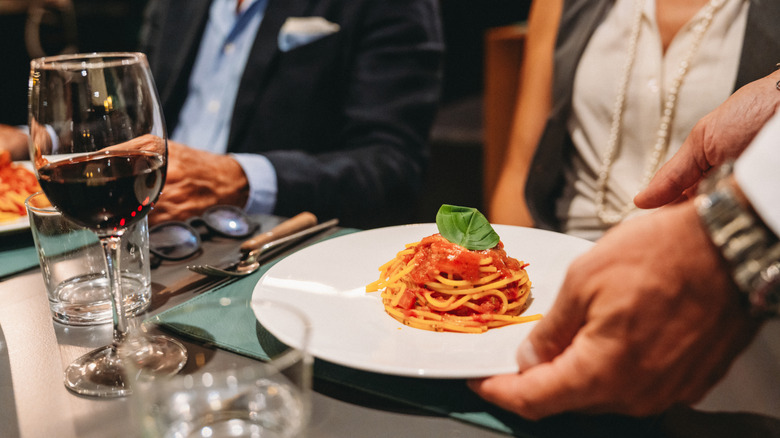
Between menus that feature carbonara "made the traditional way" or wine lists that boast Barolo, you might think you've finally stumbled upon a great Italian chain — and maybe you have. Chances are, however, that it's far from being an authentic representation of Italian cuisine. As someone who lived with her nonni, studied food culture in Italy, and currently resides in the land of the dolce vita, it's becoming increasingly clear to me that authenticity is hard to find at Italian chain restaurants.
To put it plainly, there is no such thing as an authentic Italian chain restaurant; this is true for a few reasons. First off, Italian cuisine is vast and varied. After all, the country comprises 20 regions that span mountains, sea, and everything in between. In classic cucina povera style, the unique culinary traditions of each region are heavily influenced by their respective landscapes, with traditional dishes featuring a myriad of local ingredients. This regional diversity is precisely what most Americans neglect to consider about Italian food and what can make finding an "authentic" restaurant so difficult.
It's nearly impossible to find a restaurant in the United States (or in Italy, for that matter) that would serve the northeastern classics of Friuli like frico and southwestern Sicilian staples like caponata on the same menu. Since "authentic tastes" will vary based on location, this means that many Italian chain restaurants will always come up short when branding themselves as the real deal.
Southern Italian immigrants shaped our perception of Italian cuisine
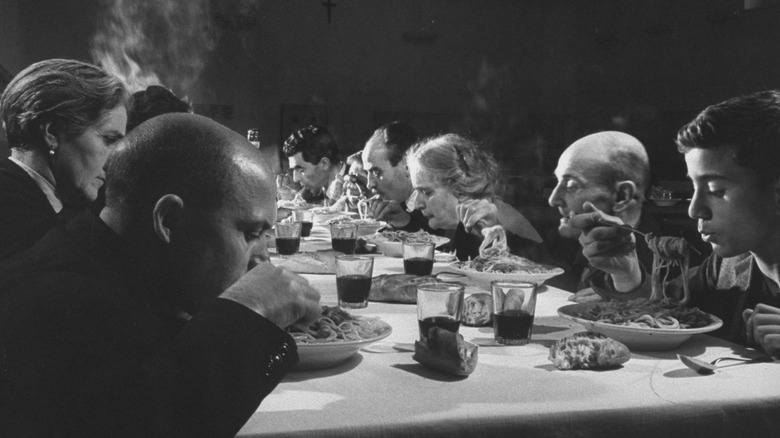
The largest waves of immigration to the U.S. by Italians happened between the late 1880s and the early 1920s. Most that had made the trek across international waters were poor individuals from the rural south of Italy — Campania, Calabria, Puglia, Sicily — in search of better economic prosperity. With the passage of time, this demographic began to shape and influence our understanding of Italian cuisine as these southerners brought certain traditional flavors with them, primarily red tomato sauce pastas and meatballs, hand-tossed pizzas, and a love of salumi and firm, funky cheeses.
With greater economic opportunity, these Italian-Americans began to change the foodscape as they started to open restaurants (enter: "spaghetti houses" and checkered-tablecloth eateries) that paid tribute to their culinary heritage, all while introducing newly available ingredients and adapting to the American palate for better approachability. As popularity for these new-old classics grew over the years, so did the presence of Italian eateries and even restaurant chains. Pretty soon, Olive Garden was serving chicken parmigiana, Fazoli's was dishing out spaghetti with meatballs, and Maggiano's was offering shrimp fettuccine alfredo on the menu.
The Italian-American recipes served at popular chains have become a close reference point for many. However, the reality is that they aren't actually classic Italian dishes you would find abroad, which is another reason that Italian chain restaurants aren't able to provide U.S. diners with authentic tastes.
Some flavors just can't be replicated, even in our globalized world
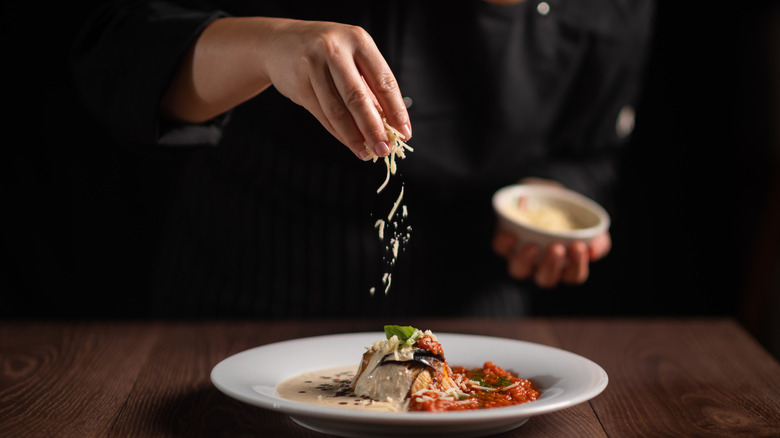
Many chain restaurants attempt to deliver a genuine culinary experience by listing menu items in Italian, offering a wide range of lesser-known wines, or simply outfitting the restaurants to look like a Tuscan villa. While these things can add a special touch, they aren't necessarily indications that you'll be served a meal that tastes "just like nonna used to make."
What's more, some Italian chains may not use key Italian staples (like high-quality extra virgin olive oil) or follow laborious preparation methods to cut costs and streamline production, which can also reduce the notion of authenticity. Even when chains pride themselves on featuring specially imported, PDO-protected ingredients like Parmigiano Reggiano or Prosciutto di Parma on their menus, something seems to get lost in translation. While some might argue that these Italian staples taste different in the U.S. — whether that's a placebo effect or a genuine consequence of travel is up to you — the reality is that these ingredients might not shine as bright because they are used in preparations alongside local, American ingredients. This is by no means a bad thing, but it simply serves as another explanation as to why Italian restaurant chains in the U.S. may struggle to deliver so-called "authentic Italian flavors."
At the end of the day, chain restaurants may not be able to provide the truest expression of Italian cuisine. They do, however, offer a representation of fusion food and the evolutionary nature of cuisine itself. It's also worth commending chains (The Old Spaghetti Factory, Buca di Beppo, or otherwise) for providing diners with consistently delicious — albeit, untraditional — favorites.