

The Boston Cooler, Explained
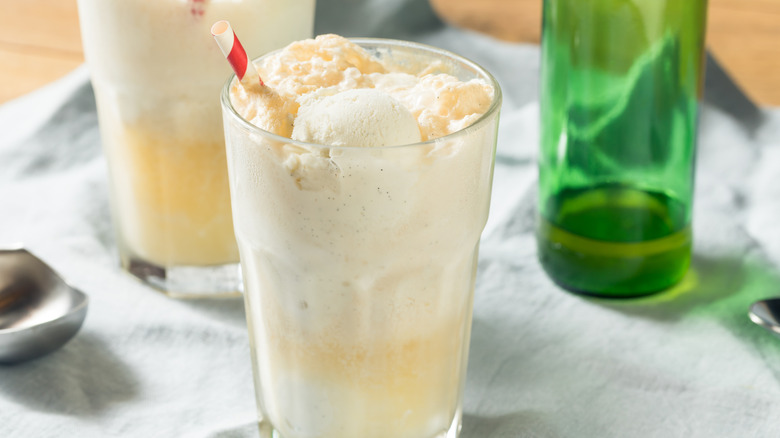
The Boston cooler has all the cultural markers of a regional specialty. For starters, the infamous soda shake boasts a distinct recipe and trademarked identity that's built directly on its historical ties to Detroit. Coupled with its legacy placement and celebrated status in Michigan culture, there's no denying that the Boston cooler is Detroit's signature ice cream soda shake.
So, you may be asking yourself, what makes this ice cream float so special? And why the quirky name with misplaced geography? Well, let's get one thing straight: The Boston cooler isn't a float. Since the vanilla ice cream and ginger soda are blended together — not simply placed over top — Detroiters are quick to distinguish their signature soda shake from any old float. While soda fountain traditionalists might still say it's technically a type of float, albeit one with a unique preparation, the widely accepted distinction among Detroiters and food writers is that a Boston cooler's texture and experience comes from the blending.
Whereas a float is fizzy with separate textures, the Boston cooler is characterized by a smooth, creamy, almost milkshake-like consistency that you can sip through a straw. Don't get me wrong, Detroiters acknowledge the traditional preparation of ginger soda poured over vanilla ice cream but they just call it the Vernors float. While both versions make for a sweet, uniquely bold dessert-like drink, only one stands out as the city's signature. As for all the quirky names, well, we'll get into that and more.
The signature soda shake of Detroit
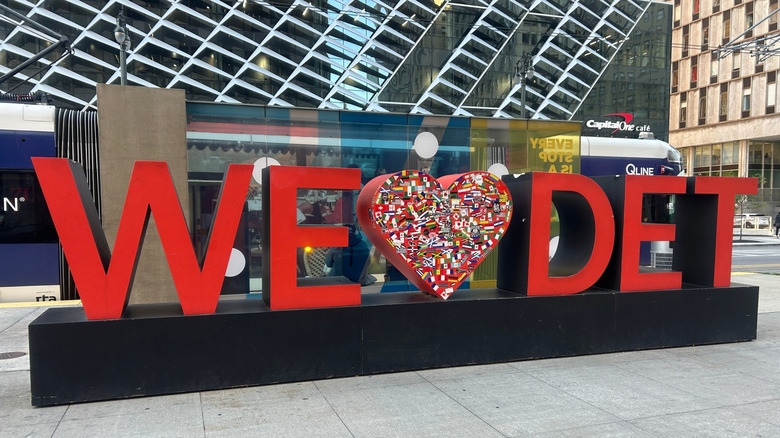
The reason behind the Boston cooler's regional significance lies deep in its historic ties to Detroit. The soda shake's history is intertwined with its essential ingredient — Vernors ginger ale. Vernors traces back to the late 1800s, when a Detroit pharmacist of the same name made and sold a distinctive ginger soda at the fountain of his drugstore. By 1896, the ginger soda had become so popular that he was able to close the pharmacy and open a dedicated soda counter and manufacturing plant, which then led to Vernors' widespread availability.
At that time, the term "Boston cooler" was a catch-all for any mixture of ice cream soda, but in Detroit, it quickly became synonymous with the Vernors ginger ale and vanilla ice cream combo. Nowadays, you need not travel far to Detroit as Vernors is part of the national conglomerate Keurig Dr Pepper and, therefore, widely distributed. But if you happen to book a flight to Detroit, you'll find it on menus at Coney Island restaurants and chains with Michigan roots.
While the Boston cooler is still a regional specialty, the name is apt to cause a bit of confusion outside Michigan. Nonetheless, the nostalgic drink continues to be profiled, helping to preserve its legacy as part of Detroit's food culture.
It's gotta have Vernors ginger ale
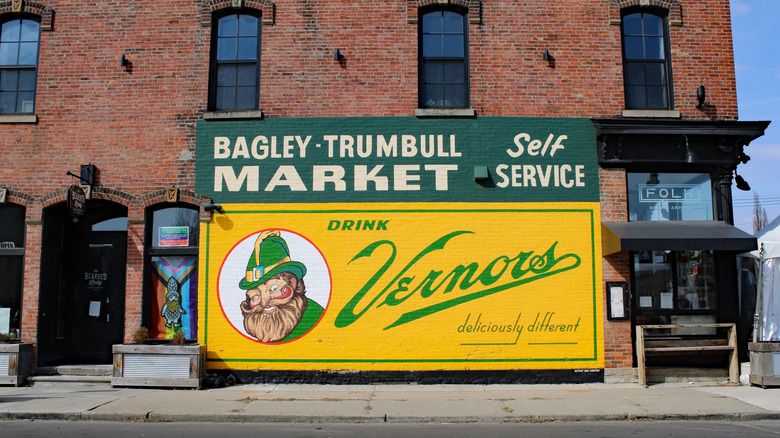
Vernors doesn't taste like regular ginger ale; it boasts a unique personality that inspired the slogan "deliciously different." Ad campaigns aside, Vernors has a signature vanilla-caramel note and pronounced ginger flavor, giving it a finish and intensity that's more closely aligned to ginger beer than ginger ale.
Historically, Vernors was produced as a ginger-ale syrup aged in oak barrels for several years, which helped set the brand apart in regard to flavor and origin story. Vernors' distinct wood aging process was credited with softening the harsh ginger notes, adding woody aromatics of vanilla and caramel to the soda while lending it a mellow bite. Compared with other ginger ale brands like Canada Dry or Schweppes, Vernors is richer and more aromatic, leaning into cream soda territory. The ginger ale's oak-and-vanilla notes lend it more complexity, too, but it remains unclear today if the soda actually sees any barrel aging. As labeling and advertising began to shift, the language surrounding Vernors' production has increasingly become more ambiguous, but in terms of flavor, its dessert-like character remains.
Another factor pertaining to Vernors' distinct flavor personality is its bubbles. Famously highly carbonated, Vernors' bubbles are sharp and known to induce a tingling effect. According to the Dr Pepper Museum, if breathed in, it's likely to tickle your nose and lead to coughing fits. We'll have to chalk that up to the drink's pharmaceutical background because the golden ginger ale is America's oldest surviving ginger ale for a reason.
Why the Boston name?
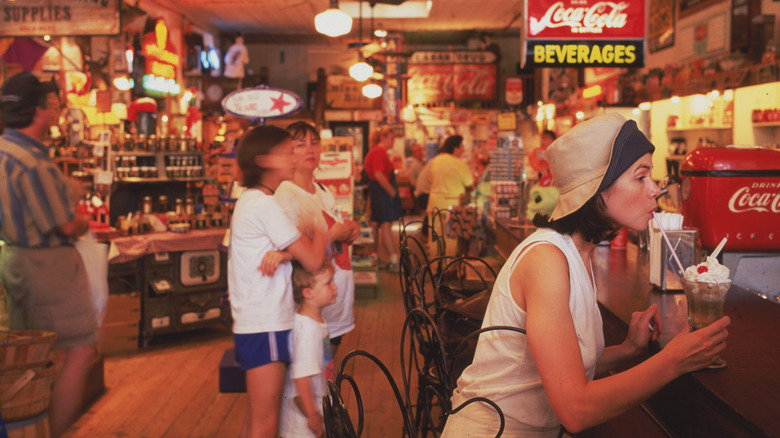
Before the Detroit soda shake gained traction under the "Boston" moniker, the phrase "Boston cooler" had already been circulating as a generic soda-fountain term for an ice cream and soda concoction. Initially a sweet mixture of sarsaparilla and ginger ale, over time the name was applied to any soda with ice cream, and by the early 1900s, the drink was being made in Detroit using Vernors. The dessert drink became so popular in the area that the combination quickly redefined "Boston cooler" to mean blended Vernors and vanilla ice cream as opposed to a generic category.
More theories about the name draw on the connection between Dr. Vernor's original soda fountain and the Detroit neighborhood known as "Boston Boulevard." Other confectionery connections to the neighborhood include Fred Sanders, the man credited for introducing ice cream sodas to the city. While the name's exact origins are murky, if you take away one fact from this speculative history lesson, let it be this: The drink has no connection to Boston, Massachusetts! Whatever's lost to history, Vernors cemented its association with the term in 1967, when it trademarked the term "Boston cooler" ahead of the launch of its Vernors flavored ice cream bar.
How to make a classic Boston Cooler
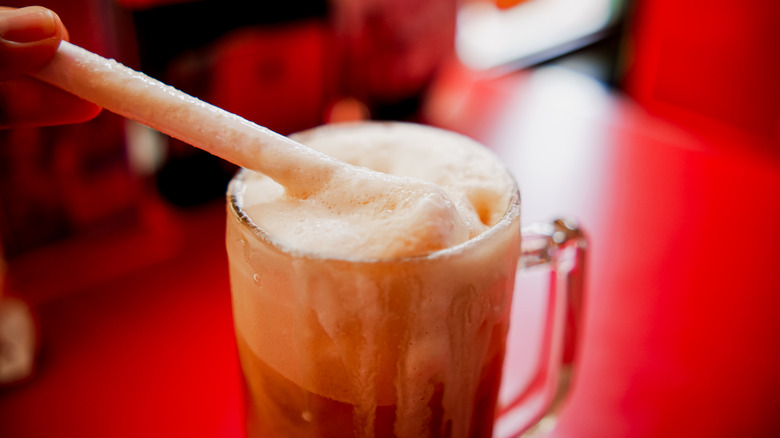
A classic Boston cooler, according to the modern Detroit understanding, is specifically Vernors ginger ale blended with vanilla ice cream into a thick, fizzy milkshake-like drink. According to the Detroit Free Press, a common home formula is 1 cup ice cold Vernors with 2-3 small scoops of softened vanilla ice cream, lightly blended to keep some froth and carbonation. To ensure an old-school fountain feel, the trick is to stir until just smooth rather than fully aerated. For added authenticity, many Detroiters insist on using another regional favorite — Stroh's vanilla ice cream.
Common bar tweaks and at-home upgrades add vodka or whiskey to the traditional Vernors and vanilla base, serving it as a boozy Boston cooler float. Conversely, other recipes suggest thinning the classic cooler by using more ginger ale for a lighter, more drinkable texture as opposed to a rich shake.
Vernors ginger ale is still pretty regional, and therefore, its availability is mostly limited to mainstream supermarkets in the Midwest. However, there are plenty of specialty webstores that ship Vernors nationally in cans or bottles, and if you have gift-giving in mind, opt for The Vernors Store, which sells the old-school glass bottles in packs of 12.
The Boston cooler's enduring legacy
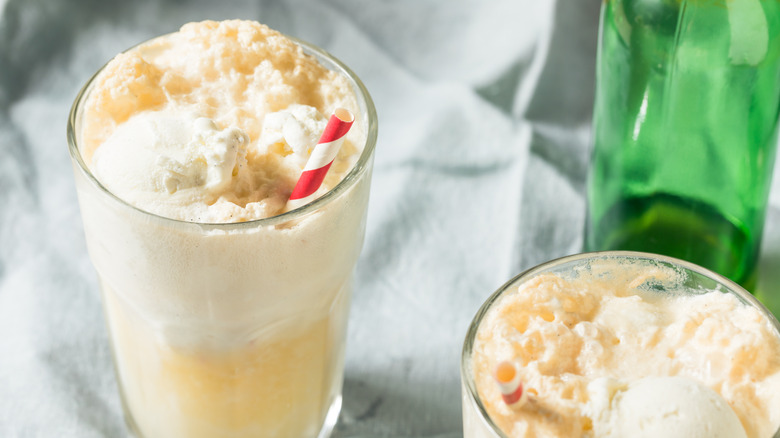
What began as an aged tonic built on roots and spices, Vernors ginger ale is now a mass produced soft drink. What has remained unchanged, however, is the brand's indelible mark on the Boston cooler, reinforcing the dessert drink's popularity as a go-to cold indulgence.
In the early 20th century, soda fountains were social hubs, and while Vernors captured Detroiters' hearts through their tastebuds, different regions adapted their own localized versions of the novelty drink. For instance, Philadelphia fountains used Hires root beer, while the go-to brand in Maine bars was Moxie, mixed with a little lime and rum. While the centuries have seen the brand shift production and advertising standards, Vernors and the Boston cooler have long been embedded in Midwestern soda-fountain culture.
In Detroit, that's still true to this day. The soda shake's broad appeal means it's both a featured item at restaurants across the city and celebrated as a high profile symbol of Detroit pride. Take, for instance, the 2025 cross-promotional campaign between Vernors and McDonald's called "313 Day," where select Detroit locations included a free Boston cooler with every meal. With an enduring legacy as Detroit's go-to tasty cold treat, Detroiters continue to encounter Boston coolers at local venues and major platforms alike, actively keeping the signature Vernors-and-vanilla combination alive.