

Your Ticket To Fluffier French Toast Is Already In Your Pantry
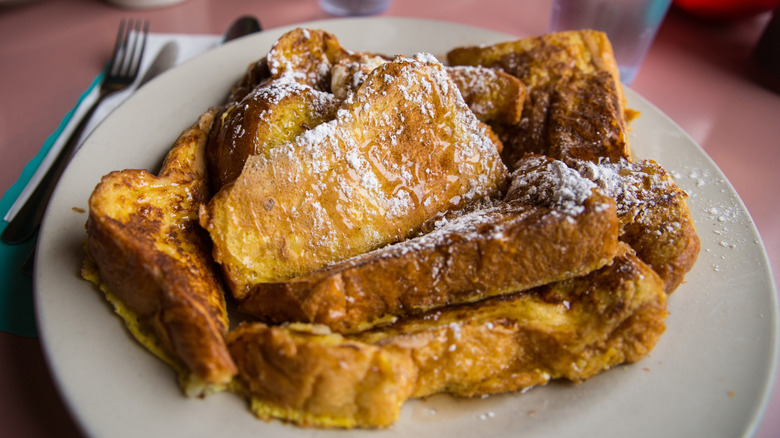
French toast is a fan favorite that has countless delicious variations. But, before you make a mascarpone filling or a glazed fruit topping, you need to perfect the basic recipe. French toast is, essentially, slices of bread dunked in a milk, egg, and spice batter. While this sounds simple enough, there's a secret ingredient to ensure the perfect texture: flour. Despite its absence in many classic French toast recipes, flour is truly miraculous for both the consistency and structural integrity of the final product. In addition to being the base for many baked goods, flour is both a binding and thickening agent. It will thus transform a custard into more of a liquid batter, which effectively prevents soggy bread because it won't get oversaturated.
As a binding agent, flour helps unite the milk and eggs together to form a more uniform coating for the bread. A flour-thickened batter will also create a thick layer around the bread, thereby ensuring it won't fall apart in the frying pan. Lastly, the flour will help the batter to crisp up beautifully as you fry it. Adding about a quarter of a cup of flour per cup of milk and two eggs will create the ideal batter for French toast, which is golden and crispy on the outside and tender and fluffy on the inside.
More tips for tastier French toast
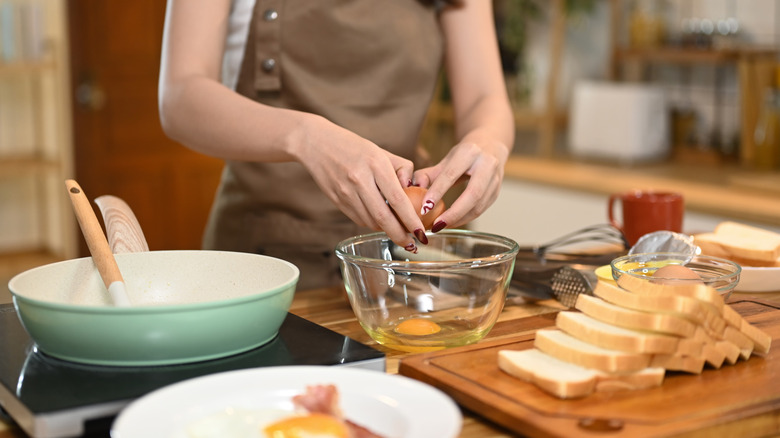
Adding flour to French toast batter is a game changer for texture, but the bread itself has a lot to do with the success of the final result too. Luckily, you've got plenty of options when it comes to the best types of bread for French toast. Challah and brioche are increasingly popular choices, thanks to their fluffy and rich crumb. As far as we're concerned, though, stale, crusty sourdough is the absolute best type of bread to use for French toast. Its tangy profile balances the sugary sweetness and baking spices in the batter beautifully while its thick, dense texture will hold up well to soaking and frying.
Whichever type of bread you choose, a thicker slice is preferable to a thin sandwich bread for better structural integrity. A thin slice will fall apart under the weight of all the liquid it absorbs while a thicker slice will provide that great contrast of crispy exterior and fluffy interior. The key to soaking French toast for perfectly fluffy results is two minutes per side for each thick slice.
Soak the bread long enough for it to properly absorb the custard, but not so long that the crumb disintegrates. Now that the basic elements and techniques have been covered, you can explore more creative tips for the best French toast like stuffing it with canned fruit, Nutella, or cream cheese. Vanilla is an ingredient that'll boost your French toast, but always splurge for the bean paste!