

The Red Flag That Makes Me Walk Out Of A Restaurant As A Former Server
Working in kitchens and restaurants for years, I developed a finely honed sense of what corners can be safely cut. Sometimes, during a rush, aesthetics drift; garnishes are forgotten or the plating is a little imprecise. It's stressful and bad to forget to send an order to the kitchen, but it happens, and as a diner, it's not the end of the world. I don't really enjoy it when a dining establishment has QR code menus, empty condiment bottles, is super crowded, playing annoyingly loud music, or has harsh LED lighting, but none of those are safety issues. To me, a red flag is a sign of something substantively, meaningfully dangerous. Which is why, as a former server, the health code red flag that makes me walk out of a restaurant is STICKY TABLES.
Tables aren't decorative surfaces. They're communal, high-contact zones that every guest touches, often repeatedly, before touching food, glassware, or their face. Who knows what they were up to before coming in, or in the bathroom — if and how well they washed their hands afterward. It's safe to assume that whatever's on your table, ends up in your mouth. Tables need to be cleaned and sanitized between parties, with the same seriousness as a plate or utensil, because we have no idea what the previous diner's hygiene habits were. When that task is rushed or skipped, it's gross, from a sensory perspective, but more importantly, it's potentially dangerous because it opens up a superhighway for communicable diseases between dining parties. It's also an indication of how devoted the staff is to mandatory, and common-sense cleaning tasks. It's something you can see and feel, so you just have to imagine hygiene conditions behind the scenes, where food is prepared, and you can't see or feel what's going on.
Dining room germ theory
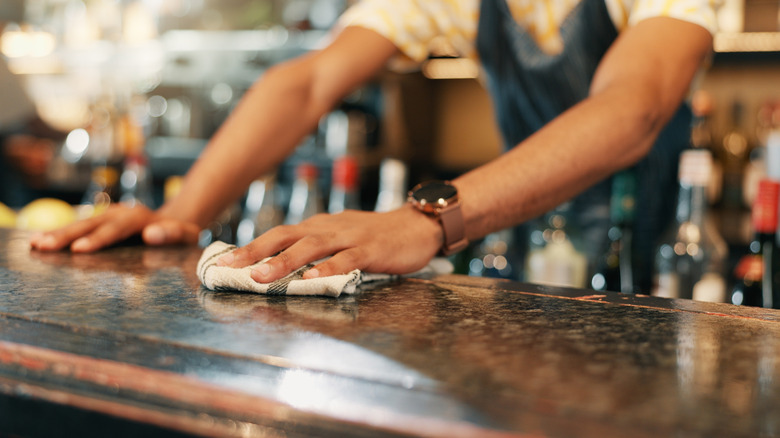
Once you've been in the restaurant industry long enough, you learn to read these signals, and a sticky table means rags or the sanitizer bucket isn't being changed enough. It suggests that cleaning is happening in a hurry, in name only, or between tasks, instead of being respected as an essential task in and of itself. And if the most visible surface in the room isn't being handled with care, it raises questions about the less visible ones. Is the meat being stored away from raw vegetables in the walk-in, is proper defrosting protocol used? Are dry goods stored off the floor? Are the made and use-by dates recorded and read? Are the workers tying their hair back, and removing their aprons before using the bathroom? Do they change their gloves, and wash their hands after touching money?
This is where experience fills in the gaps. When cleanliness slips in the front of the house, it often slips elsewhere, and worse, because it's out of sight and out of mind. Bathrooms get neglected, storage areas get disorganized and pests capitalize on the negligence. Food safety shortcuts become the culture, normalized because everyone is busy and no one is watching closely. The issue is often compounded by understaffing, poor training or management that allows or encourages crucial steps to be simply pantomimed. None of this requires malice, but Typhoid Mary, a cook and asymptomatic carrier of Salmonella typhi in turn of the century New York, didn't mean any harm either. She caused outbreaks of typhoid in eight of the families she worked for, even after being identified as a vector and legally barred from cooking. Luckily, we understand germ theory more precisely now, and we have figured out simple, actionable steps to prevent the spread of disease.
Faith, trust, and formica
Eating food prepared by someone else outside of your home is an act of faith and trust. As a guest, you're not expected to inspect kitchens or audit health codes. But you're allowed to notice what is right in front of you. Sticky tables are one of the few signs that don't require insider knowledge to interpret. They're literally a surface-level problem, but they might be the only clue diners get. There's a fine line between paranoia or performative disgust, and prudent personal risk assessment. A sticky table is not a guarantee you'll get sick, just as a not-sticky one doesn't ensure safety, because germs are invisible.
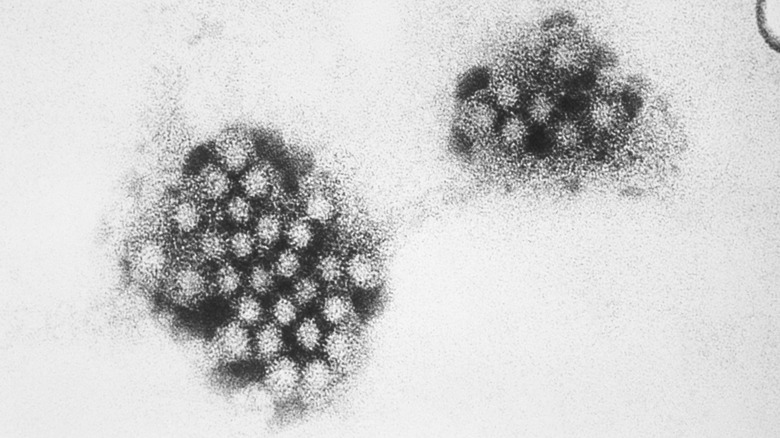
Norovirus, for example, is the most common cause of food-borne illness in the United States. It spreads primarily through contaminated surfaces and hand-to-mouth contact, not dramatic, visible kitchen catastrophes. It takes very little viral material to make someone sick, and it survives on hard, non-porous surfaces, like tables, for weeks. At restaurants, plates and silverware pass through dishwashers that run on high heat and sanitizing chemicals. If something can't fit in the dishwasher, there's a whole sink that's required to be full of diluted bleach water at all times, and which is changed on a timed schedule so the chemical ratio is kept active; anything dipped must be submerged for at least one minute to ensure proper sanitization. But tables ... depend entirely on the wipe-down.
Choosing to leave over something like this might seem dramatic. But it's more like not drinking a glass of milk that smells off, or letting a server know there's hair in your food so you can ask for a fresh plate. You can politely excuse yourself, because you need to look out for number one, and guarding your health and safety is your responsibility.