

Why These 2 States Are Spending The Most On Groceries Right Now (No, Not New York Or California)
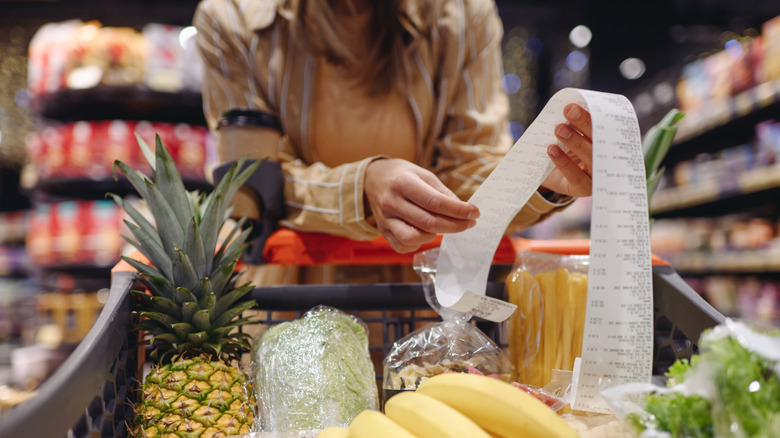
Years out from the worst of the post-pandemic food inflation, spending numbers on groceries from state to state are still as shocking as ever. Grocery prices have increased 29% from February 2020, with staples like flour and beef rising even more. Those prices are even worse for people depending on what state they live in. Groceries cost way more in certain places, and while you might think of states like California and New York as the worst, an analysis of food prices from the Bureau of Labor Statistics by Voronoi shows that Hawaii and Alaska are the two most expensive for groceries.
Utah and Idaho are both competitive in overall grocery spending, however those states also have larger than average family sizes, and families with kids spend 41% more on groceries than those without. Staple prices in Alaska and Hawaii can be eye-popping, even for people from higher cost of living cities on the mainland. In Hawaii 1 gallon of milk can cost upwards of $6 to $8, compared to an average of $4.42 on the mainland. In some parts of rural Alaska it can cost $10. As you might have guessed, the reason for those prices is similar in the two very different states.
Alaska and Hawaii have sky high grocery prices due to importing most of their food
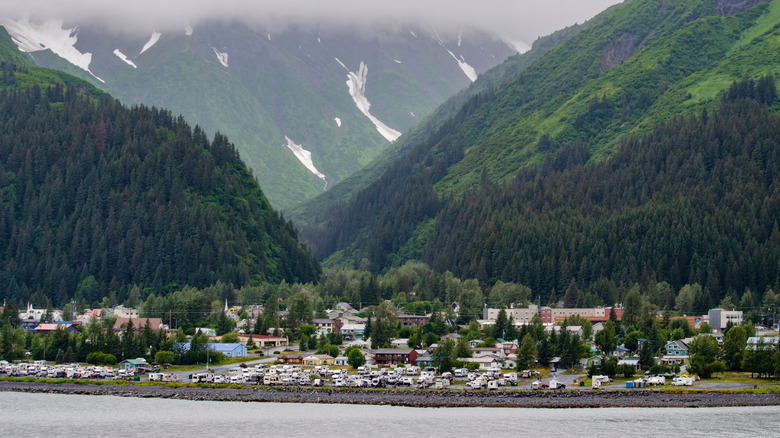
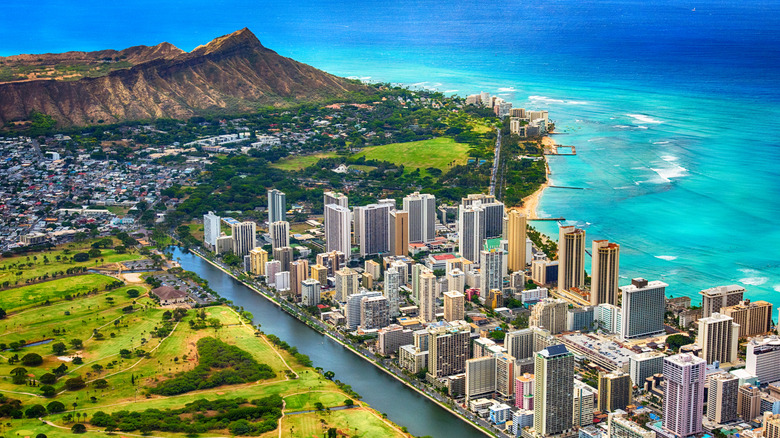
The high grocery prices in Alaska and Hawaii stem mostly from geographical challenges. Both states are obviously not connected to the U.S. mainland, and both are remote. Food production is also difficult in each state, with Alaska having a cold climate that makes farming difficult, and Hawaii being a small mountainous chain of islands where land is at a premium and an agriculture system heavily impacted by GMO research. Because of this, both states must import most of their food. In Alaska 95% of all grocery items must be shipped in, while in Hawaii the number is up to 90%.
That remoteness doesn't just mean shipping in food — it also means getting it there is more expensive. Fuel obviously drives up the cost the further that things need to be shipped, but long distances also means more uncertainty in supply chains. A storm can delay shipments, emptying shelves and leading to temporary spikes in prices. Even once food gets to these states shipping is complicated. Alaska is vast and travel between towns is difficult to the point that it's the state that ranks last for fast food access, while Hawaii is only connected by boat or plane.
There's also the fact that complicated, long supply lines mean that perishable groceries are more likely to spoil on the way, further driving up the price of what does make it. Tourism also compounds these issues when it comes to food in Hawaii, as residents are competing with visitors who are willing to pay a premium for meals and food while on vacation.
Hawaii and Alaska present difficult and unique logistical challenges for shipping food
While the natural situation of Alaska and Hawaii contribute to higher grocery prices, some government programs are also to blame. An old maritime law called the Jones Act has a big impact on these two states, and even effects food prices in places like Puerto Rico — something Padma Lakshmi called out on TikTok. The Jones Act was passed in 1920, and requires all items shipped by water between states in the U.S. to be carried by ships that are American made, American-owned, and crewed by Americans. Because few ships are actually made in the U.S., this law has massively inflated the cost of bulk shipping by water in the country.
For most states where food is shipped by truck, this isn't an issue, but for states like Alaska and Hawaii that are entirely dependent imports carried by ships, the added costs are a burden on top of an already difficult problem. While it's easy to blame things like the "island tax" in Hawaii or corporate greed, the reality is that there are genuine costs driving up the price of groceries. That doesn't mean there's no solution to these problems, which could include finding ways to grow more food locally, or bring down shipping costs — but improving food affordability for Alaska and Hawaii will mean a long-term, serious commitment to tackling the issue's root causes.