

How Sushi Chefs Build Complex Creations Like A Mosaic Roll
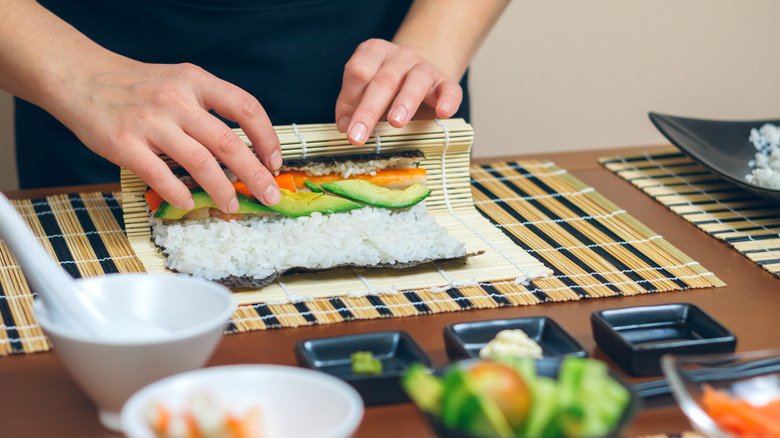
Some chefs pride themselves on blurring the lines between food and art. For Executive Chef Andrew Oh, Momoya SoHo has become revered for putting beauty on plates, such is the case for the restaurant's beautiful wine glass parfaits. However, Oh is known for sushi creations that are equally impressive. We asked the chef for tips on sushi-making (known as one of the most difficult culinary techniques to master) so that our next batch of caterpillar rolls look more professional than problematic.
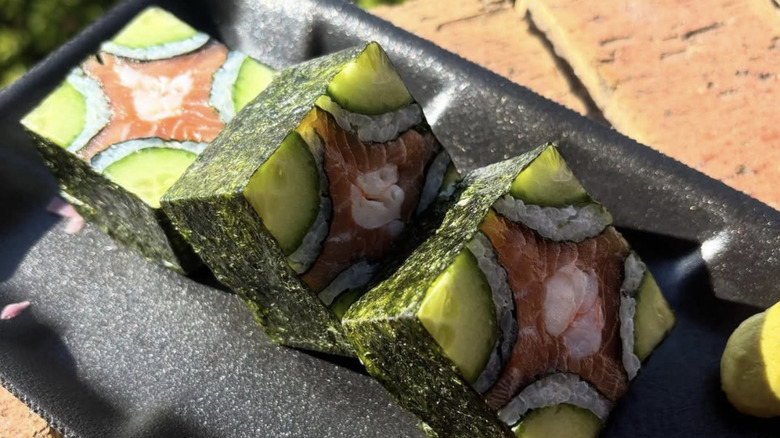
"Consider visual appearance, flavor profile, and texture," he advises, offering the mosaic roll as a key example of a recipe that requires focus. These stunning rolls require a specific approach to sushi-making, particularly because they're formed into unique shapes. It isn't simply the ingredients used to make the roll (or even how they're added) that requires some thought, though. "For visual appeal, the way the sushi is plated along with how the sauce is dressed will determine how guests think the roll will taste," Oh specifies.
If you're setting out to make sushi rolls for a party, including both basic and more ambitious recipes, Oh recommends selecting options with flavor profiles that are familiar. These "simple and delicious" combinations are not only approachable, but can lead to more impressive and cohesive meals. Beyond taste, Oh notes that considering texture is what really separates chefs with professional training from novices. "It is the final thought of the dish, and really makes a large impact because understanding textures is considered a very high-level skill," he adds.
Practicing sushi-making at home
For home cooks looking to improve sushi-making attempts, Oh suggests looking carefully at the ingredients used both inside and on top of each roll, caterpillar or otherwise. He reminds aspiring sushi makers: "Don't overfill your rolls." According to Oh, tightly-packed rolls without an abundance of fillings can be easier to handle and shape. Though beginners might be inclined to pack a roll with a generous amount of fillings, this is often seen as an amateur approach, and the pieces may not stick together once sliced.
To prevent pretty rolls from falling apart, Oh also recommends using plastic wrap to keep ingredients intact before sushi pieces are cut. "You can also use a sauce on top of the sushi roll, like spicy mayo," he adds, revealing that sauces can provide a kind of culinary glue between ingredients. Timing also matters. "I would suggest using any sauces on top of the roll as the final part of plating, so the inside of the roll remains crispy and doesn't get soggy."
After heeding Oh's recommendations, your next sushi platings will rival ones that have been made by an expert, instead of looking like a whimsical culinary experiment.