

Some People Are Actually Consuming Too Much Protein: Here's What Happens When You Do

It's become impossible to avoid the focus on protein in recent years. Even if you're not actively dieting or training, there's a push to up your intake with everything from protein sodas to added cottage cheese in every meal. It should come as no surprise then that some people are eating too much protein. This isn't just more than the daily recommended intake, but more than their body needs, and it can result in some unpleasant side effects.
In the short term, too much protein can result in digestive issues. This could be bloating, stomach pain, constipation, or diarrhea. Protein is often harder for the body to digest, particularly if you're eating high-protein foods at the detriment of more fiber-rich ones. Processing protein also requires more water, so you might find that you're dehydrated or more thirsty than normal.
Some other unfortunate side effects include bad breath — also known as keto breath — which happens when individuals eating low-carb, high-protein and high-fat diets begin to burn fat for fuel instead of glucose. And anyone who is upping their protein as part of a weight loss plan should be aware that too much protein can also lead to weight gain unless you're also tracking calories.
In the long term, the extra work required to process protein can cause strain on your kidneys and liver, and anyone with existing kidney issues should be particularly careful. Depending on the sources of protein in your diet, you may also be at risk of cardiovascular issues. Some meats can be high in saturated fats, particularly red meat and processed meat, which can cause a buildup of bad cholesterol in your arteries.
How much protein do you really need?
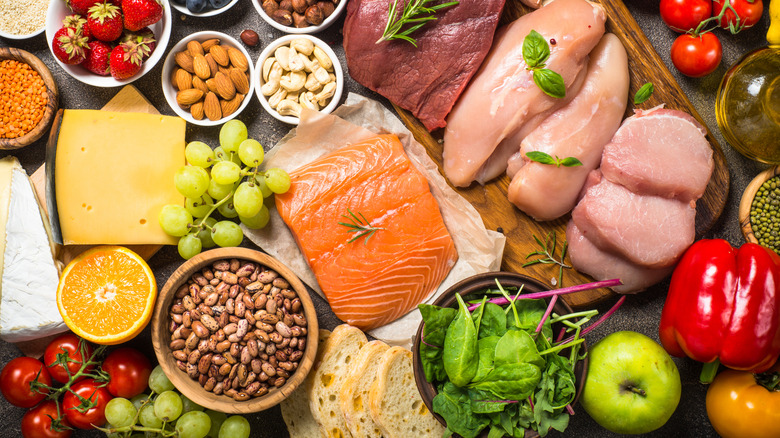
Unlike the recommended daily intake for vitamins and minerals, there's no one-size-fits-all figure for protein. It's unique to the individual and will depend mainly on body weight and activity level. Even then it's not an exact science, but there is a calculation you can use to get to a ballpark figure.
The general recommendation is 0.36 grams of protein per pound of bodyweight. This is the minimum you need to keep your body working for a mostly sedentary lifestyle. So someone weighing 150 pounds would need 54 grams of protein per day to avoid any deficiency. During pregnancy or with a very active lifestyle, this figure will go up, but anything over 1 gram of protein per pound of bodyweight is considered excessive.
This number only tells part of the story, however. What's most important is that your protein intake is part of a balanced diet. To help put this into perspective the Mayo Clinic offers a recommendation that a maximum of 35% of your daily calories should come from protein. It's also recommended that you consume smaller amounts of protein throughout the day (around 15-30 grams per meal), rather than large amounts of protein at once, as your body cannot store the excess. This is in contrast to the myth that protein needs to be eaten straight after a workout.
Studies show that most Americans (particularly men aged 19-59 ) are already exceeding their daily requirements for protein. So with a balanced diet that includes a variety of protein rich foods, there shouldn't be any need for supplements.