

When To Use Aluminum Foil Vs Parchment Paper In The Oven
We may receive a commission on purchases made from links.
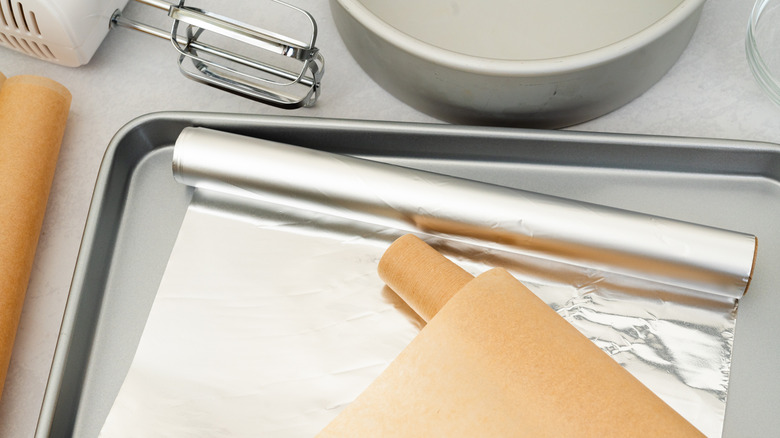
Regardless of how well you clean a baking tray, when it's time to put it in the oven, you probably add a protective layer between the tray and the food. Parchment paper and aluminum foil are the most obvious choices, and while they both prevent the food from sticking to the pan, they're not always interchangeable. It's all about what you're cooking and what result you want to get from it.
Reach for aluminum foil when it comes to all things roasting and broiling. Not only is it designed to withstand high heat but it also conducts and distributes heat efficiently. Aluminum foil is the trick to getting better browning on roast vegetables or meats. Its reflective properties also come into play when you want to protect food from browning — covering a casserole or mac and cheese with foil will prevent the top from burning before it's cooked through. A lesser known but just as handy use is resizing a baking pan with foil. The moldability and sturdy structure let you create an extra wall to contain your food.
You might associate parchment paper with baked goods, and that's really where it's best used. Parchment paper is lined with a thin layer of silicone that gives it a non-stick surface, ensuring your cookies or pastries slide off without issue. It's also the best material for lining cake tins, and the fact you can trace onto it makes it easy to cut into shape. Beyond baking, parchment paper is handy for cooking en papillote, a simple but elegant method that's great for preparing fish.
Both aluminium and parchment paper have limits
Knowing when to avoid using each of these materials can be just as important if you want to get the best results from your cooking. Although parchment paper is designed for use in the oven, it's not able to withstand high heat for extended timeframes. It is safe to use up to around 420 degrees Fahrenheit, but parchment paper shouldn't stay in the oven for more than half an hour to avoid degradation. The risk of it scorching or catching fire also means it shouldn't be used when broiling, or anywhere that it can come into contact with a heating element or flame. If you want the same non-stick surface for use at higher temperatures, consider a silicone baking mat like these inexpensive Amazon Basics ones.
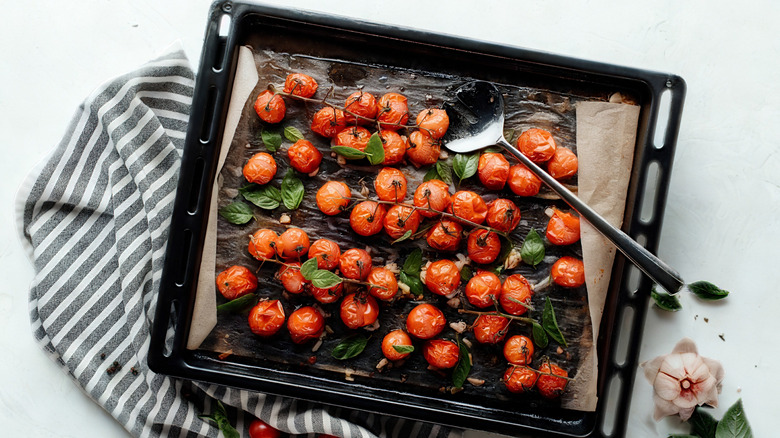
The limits for using aluminum foil tend to have more to do with the type of food you're cooking, rather than how you're cooking it. Aluminum is a reactive metal and using it with acidic foods can result in them taking on a metallic taste. This means it's not the best option for roasting tomatoes or anything with a vinegar or wine dressing or marinade.
Although aluminum foil will stop food from sticking to your pan, it isn't actually a non-stick material and can end up attaching to the bottom of delicate or sticky foods, such as melted cheese. You can use cooking spray to create non-stick foil, but even then foil should be avoided for baking things like cookies. Aluminum's efficient heat conductivity turns out to be a negative in this situation, burning the bottom of the cookies before the middles are cooked through.