

Curry Powder Vs Garam Masala: What's The Difference Between These Flavorful Spices?
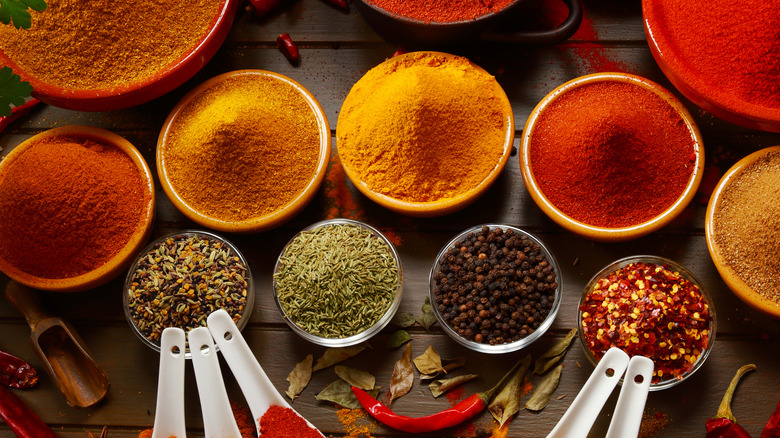
For home cooks with an interest in international cuisines, the spice aisle is a fascinating place. A recipe inviting you to pick up an unfamiliar jar can lead to a sensory experience that awakens deep curiosity. The first whiff of garam masala, for example, might transport you back to a wonderful meal that you had at your favorite Indian restaurant last weekend. Curry powder, on the other hand, despite bearing the word "curry" in its title — which is what you ordered at the Indian restaurant, right? — is unlikely to awaken such a connection. Its aroma might, however, remind you of dishes coming from countries like Jamaica, Thailand, and Japan.
The reason for this is that curry powder, that bright and earthy yellow spice blend you see at the store, is actually a British invention, an attempt to capture the tastes of India in a single spice mix. Garam masala, on the other hand, is a blend of warming spices — which is essentially its direct translation — from South Asian cuisine that is used in many dishes.
The truth of the matter is that while curry powder was a British attempt to bottle the aromas of South Asian cuisine, it is not something with which local chefs actually cook, whereas garam masala is the aromatic backbone of many recipes. In fact, the origin of the word curry, or at least its use to refer to a wide variety of Indian dishes, also comes from colonizers trying to simplify and categorize Indian cuisine. It likely derives from the Tamil word "kari," meaning "sauce," which Portuguese colonists picked up and the British began working into any Indian dish with a sauce.
Curry powder is a British invention
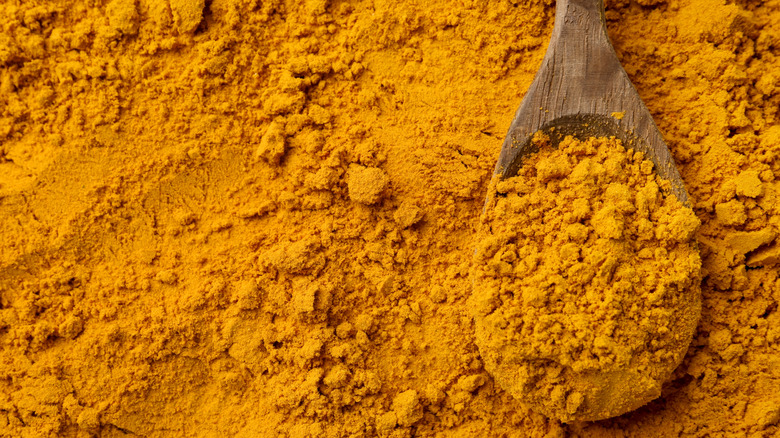
Understanding the true origins of curry powder might not seem entirely necessary to utilize it effectively in the kitchen, but the knowledge of how it came to be does greatly inform how it is used around the world. You won't find curry powder in Indian cuisine, but the British did bring the blend to many other kitchens around the globe.
Curry powders vary somewhat from one brand — or cuisine — to the next, but they do generally rely on vibrant, savory spices that are common in South Asian kitchens. The ingredient list for a curry powder from one major U.S. spice manufacturer contains: coriander, fenugreek, turmeric, cumin, black pepper, bay leaves, celery seed, nutmeg, clove, onion, ginger, and red pepper. It is not an Indian spice mix per se, but you could certainly call it Indian-inspired. But despite the seeming ties to India, curry powder actually plays a much more significant role elsewhere in the world.
Given its British origins, we'll start in the U.K., where coronation chicken (essentially, curry chicken salad) is a classic sandwich filling. Japanese curry rice also makes use of the bright yellow curry powder in a thick, aromatic gravy, which is a result of the British introducing the spice blend in the late 1800s. Curry powder is also big in the Caribbean, where it takes on an individual flair, such as with the similar-but-different Jamaican curry powder. Even in Thai food — a cuisine with a very different definition of curry — yellow curry paste is often made with that same curry powder. There are traditional yellow Thai curries that do not use the spice mix, but if you order yellow curry in a Thai restaurant, expect that familiar flavor.
Garam masala is the real deal
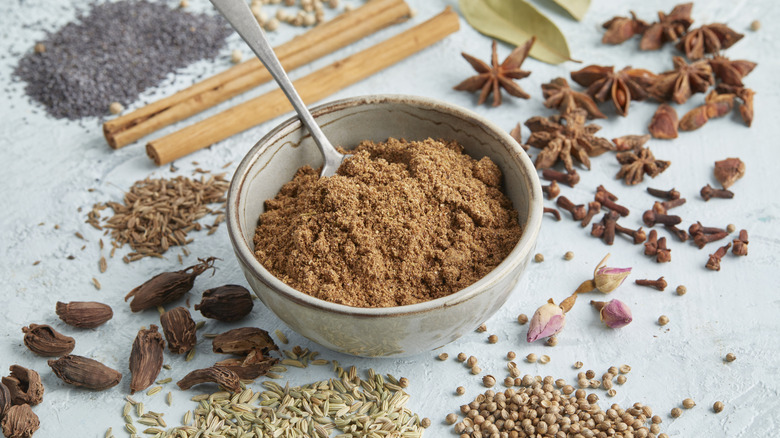
As previously mentioned, garam masala translates to something like "warm spices," a descriptor fittingly vague for what is a blend that varies considerably between regions, households, and cooks. There is no one recipe for garam masala, but common ingredients in the mixture include spices like cinnamon, cardamom, coriander, cumin, black pepper, star anise, nutmeg, mace, cloves, and bay leaves, among others. Garam masala can be purchased pre-ground in a jar for the sake of simplicity, but homemade garam masala is the norm for dedicated South Asian cooks, and it is there that these culinarians can express their aromatic creativity. Not to mention that toasting and grinding whole spices just before cooking adds a whole new level of richness to the blend.
As for how to use garam masala, it is both widely versatile and deeply necessary for many of the most popular South Asian dishes. Whether you are talking about a celebratory lamb biryani or a pot of warming chana masala, garam masala delivers the aromatic backbone that makes these recipes so satisfying. But this spice mix isn't limited to savory South Asian delights; the combination of familiar (and unfamiliar) flavors in garam masala also adds an interesting element to desserts. Or, to take us back to foods that fall in the middle ground between British and South Asian cuisines, a homemade garam masala is the secret to excellent tikka masala — a dish that is thought to have been invented by a Pakistani chef in Glasgow.