

The Difference Between Mandarin Oranges And Clementines
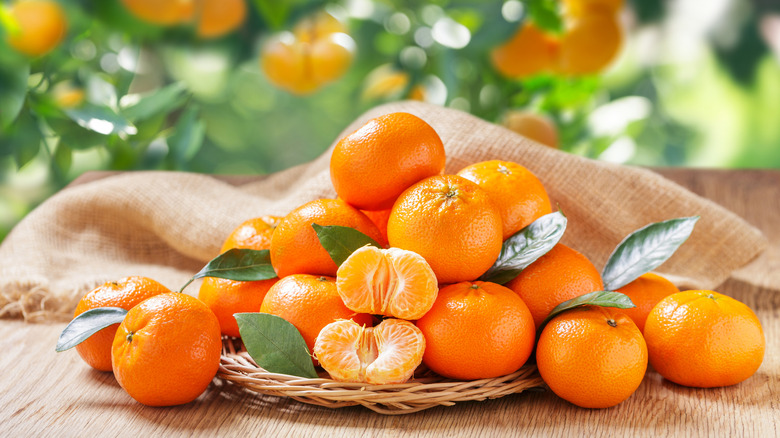
Hey, what's the difference between a mandarin and a clementine? I dunno but watch out, one of 'em looks a little "seedy." Ba-dum-tss! Seriously though, if you've ever found yourself wondering, you're not alone. While the common navel orange is easily recognizable, when it comes to its smaller cousins, things can get pretty confusing, especially when grocery stores don't always label citrus fruit accurately. In the case of mandarins versus clementines, however, it's a bit of a trick question to begin with. Why? Because a clementine is a mandarin ... wait, what?
Mandarin oranges are actually a larger, umbrella category that contains many varieties of mandarins such as clementines, tangerines, and the increasingly harder to find satsuma mandarins. And those are three of some of the more well-known mandarins, though the University of California, Riverside, lists nearly too many varieties to count. Bottom line: A clementine, by definition, is always a mandarin, but a mandarin is not always a clementine. That makes comparing the two a bit different than, say, comparing differences between two subsets like clementines to tangerines. But let's take a closer look anyway.
Generally speaking, mandarin oranges are smaller than regular sweet oranges, and in turn, clementines are one of the smallest varieties of mandarins. They're recognizable by their vibrant red-orange hue and oblate shape (round, slightly flattened top and bottom). You may have bought clementines under one of their popular brand names such as "Cuties," "Sweeties," and "Halos," though grocery stores will sometimes just label them generically as mandarins.
Roll over ye lesser mandarins, make way for the clementine
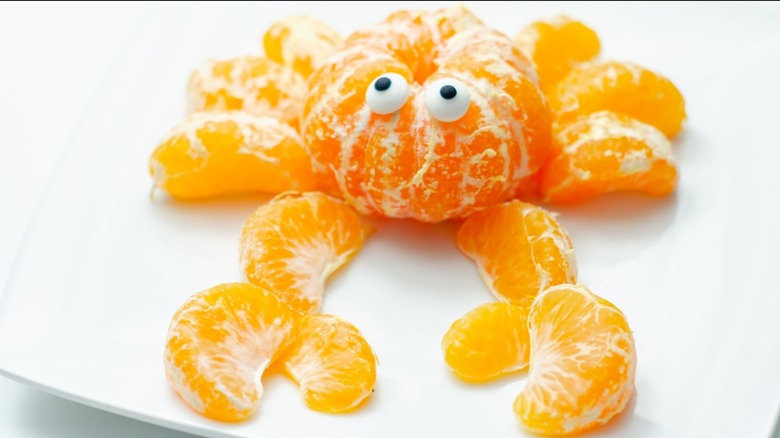
The sweetness of the two citrus fruits adheres to the same principle as their size — mandarins are sweeter than regular oranges, but retain some tartness, while clementines are known as one of the sweetest types of mandarins, with hardly any tartness at all. While some mandarins work wonderfully in salads, like mandarin and rainbow radish salad, clementines are known for their snackable qualities. All mandarins have thinner skins than oranges, but clementines are especially easy to peel. Factor in that they're nearly seedless, and their kid-friendly appeal is obvious. An argument could be made that clementines might just be the ultimate, leveled-up mandarin — they're certainly newer.
Mandarins (citrus reticulata), generally speaking, originated in South China, and their history of cultivation goes back a long time — over 4,200 years. On the other hand, clementines (citrus x clementina), which are a hybrid of willowleaf mandarin and sweet orange, hail from Algeria where they were first cultivated in the 19th century by the French missionary Clément Rodier, from which they take their name. So why is a mandarin called a mandarin? Some posit it's because their color was similar to the robes worn by counselors in the Chinese imperial courts, though evidence for that is not conclusive.
Names aside, when you peel back the layers, a mandarin by any other name (tangerine, clementine, satsuma) is just a mandarin, and variety aside, they all pack a citrusy punch of puckery sweetness. Now, orange you glad you asked?