

If You See Your Bartender Do This, It Might Be A Crime
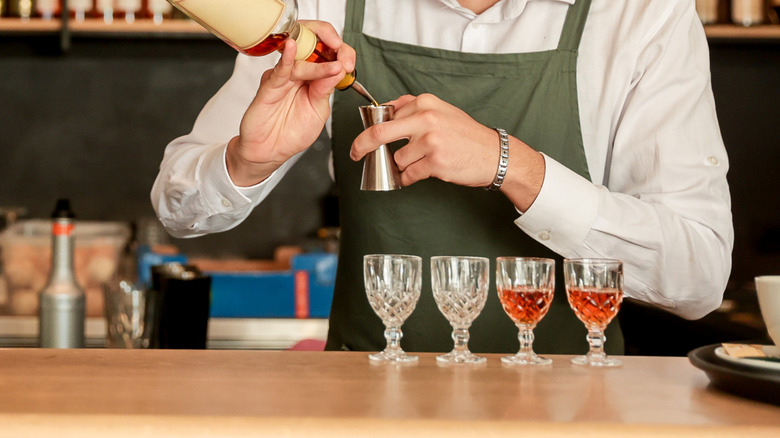
Bars exist as third places, designed for gathering, relaxing, and having fun. But because they also revolve around alcohol, their laid-back environment hinges on certain rules, regulations, and even basic etiquette tips to know. For example, can you sample drinks at the bar before committing? Are happy hours legal everywhere? And so on. One thing you could possibly encounter is a bartender doing something called "marrying the bottles" — this is good to be aware of, as it may seem completely harmless at first, but it's actually illegal.
Marrying the bottles can feel like simply staying on top of organization and tidiness. It's when you have two open bottles of the same thing, with less in one bottle than the other, so you pour that smaller amount into the fuller bottle and get rid of the empty one. If you personally do this to keep your home bar organized, it's not ideal, but not illegal. But it's against the law for bartenders to do it.
For one thing, the practice is illegal because bottles of liquor are taxed individually, and forbidding bottles from being reused helps prevent tax fraud. More importantly, especially from a customer's perspective, there are safety factors at play. If bartenders were allowed to refill any liquor bottles, they could theoretically pour in entirely different contents. For example, they could be passing off cheap whiskey in an expensive bottle, therefore cheating patrons. Furthermore, adding the contents of one bottle to another creates potential for cross-contamination and an overall degradation of quality (which is why it's still not recommended even at home).
The law against marrying bottles protects consumers worldwide
Rules around alcohol vary based on location. Utah is so strict that your pour sizes at the bar are monitored, and happy hour is verboten in a handful of states like Massachusetts. Marrying bottles, however, is illegal in every single state and even country where spirits are sold and regulated. This just drives home the point of how dangerous the practice is.
There's a long history of people attempting to pass things off as certain liquors. Amid the popularity and subsequent taxation of gin in 18th century England, back-alley distillers often adulterated their "gin" with tasty additions like turpentine. In the United States, the Bottled in Bond Act of 1897 was established to regulate bourbon quality by putting an end to shady liquor purveyors bottling poorly made moonshines with coloring and chemicals. Banning the practice of marrying bottles is just further legislation designed to protect consumers and ensure they are getting exactly what a bottle says they are, and that it's the quality they know to expect from the label. Adding water to a liquor bottle is incredibly unscrupulous, even if not outright dangerous, as it's stealing from bar patrons who order that spirit.
The next time you see a back bar that looks a little cluttered with bottles, remember this and rest assured you're at a responsible bar. It's better to have a few too many bottles clanging around than suspect any bottle marriages are going on.