

The Red Flag Every Hoppy Beer Fan Should Know About
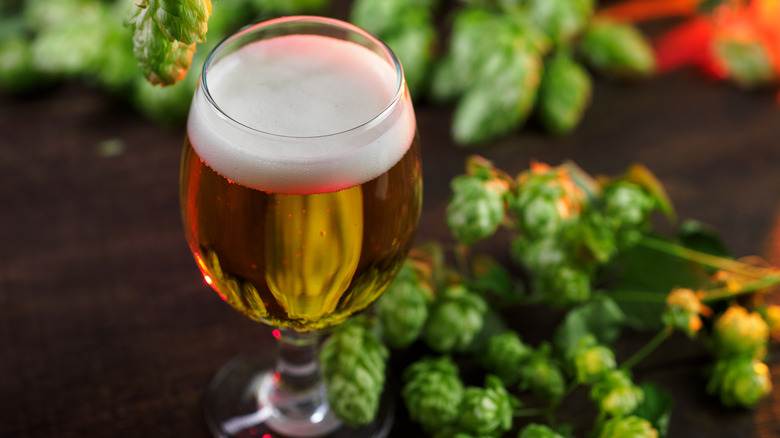
The shelf lives of different alcoholic beverages can get a bit confusing. When stored well, distilled liquors can last years, and certain wines just get better with time. It's sometimes tough to remember how long beer actually lasts, especially as it varies from style to style. We're here to help, so you never drink a beer gone bad again — especially a hoppy beer.
Darker, maltier beer styles higher in alcohol — think imperial stouts and barleywines — age well. When beer ages, oxidation occurs. Coming into contact with oxygen, various compounds in beer react and change; in darker beers it can yield notes like sherry, tobacco, leather, balsamic vinaigrette, and dark, dried fruit. But in lighter beers, oxidation can cause off-flavors like wax and wet cardboard. Hop-forward beers like IPAs and pale ales are especially sensitive to time.
In addition to standard oxidation-fueled off-flavors, hops break down over time and become stale-tasting. All those delicious citrusy, piney, resiny notes you want? Don't expect them to still be hanging around after about 90 to 120 days. This means you really want to pay attention to the expiration dates on beer. If you see a hoppy beer older than about three months in the cooler at a beer bar or on the shelf at a bottle shop or grocery store, that's a red flag. It's telling you the beer isn't being kept up with and cycled out, and that you could end up with an unpleasant dud.
How to spot hoppy beer that's too old
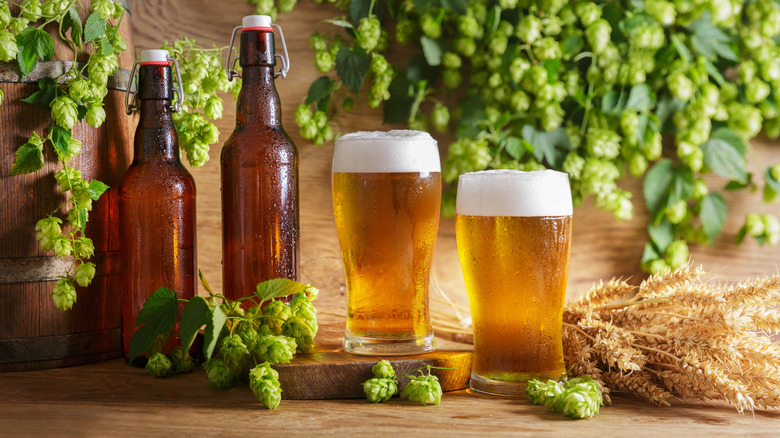
Jennifer Glanville-Love, director of marketing for Samuel Adams Brewing the American Dream told Chowhound it's best to buy hoppier beers only when you're planning on consuming them soon. While they can last about three months, their real peak freshness is right around three weeks. As retired liquor distributor Mark Tumarkin also informed the outlet, best-by dates on beer packaging help you know you're drinking beer right at its sweet spot.
Dates are one of the most important labels to look for when beer-shopping, but they won't always be written as "best by." They're typically stamped with the date on which they were bottled or canned. This can be in the standard date form or in the Julian date format, which starts with one or two digits referring to the year, then three digits referring to the day out of 365 days (366 for leap years). For example, January 27, 2026, would be labeled as either 26027 or 6027.
Keep in mind that beer degrades at different rates according to how it's kept. Breweries use a 3-30-300 rule for beer storage, which assumes that beer's quality drops at the same pace when kept at 90 degrees Fahrenheit for three days, 72 degrees for 30 days, and 38 degrees for 300 days — and this rule is pretty generous. For hop-forward beers, keep an eye out for another red flag when shopping, which is warmer beer storage. If you see unrefrigerated beer, it should be freshly packaged. Check temperature and expiration dates, and you'll enjoy hoppy beers at their best.
Static Media owns and operates Tasting Table and Chowhound.