

10 Of The Biggest Lawsuits In McDonald's History
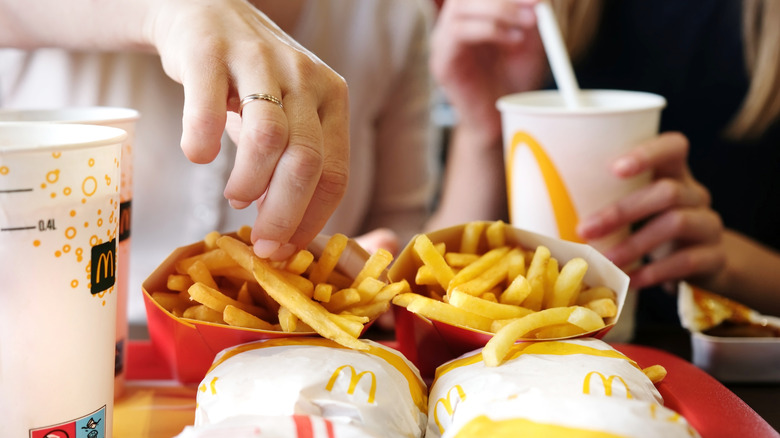
While many of us were heading to the gym, embarking on Dry January, or trying to meditate, McDonald's was starting out 2026 on a particularly bad note. The fast food giant came into the new year with a lawsuit. Yep, in January 2026, four people filed legal action against McDonald's, claiming that its popular McRib is lying to everyone because it's not really made with rib meat.
McDonald's has fought back, of course, claiming that the McRib is made with pork, and it's always transparent about its ingredients. At the time of this writing, who will win the battle over the McRib has yet to be seen, but one thing is for sure: This is certainly not McDonald's first legal rodeo. Over the decades, like many fast-food chains, McDonald's has faced multiple lawsuits for various reasons, and most are more serious than the McRib. Some involve sexual harassment accusations, others have to do with severe burns, and plenty come from employees alleging unfair treatment.
Keep reading to find out more about some of the biggest lawsuits in McDonald's history. But fair warning: Some of these details might put you off your next Big Mac.
Byron Allen's $10 billion lawsuit
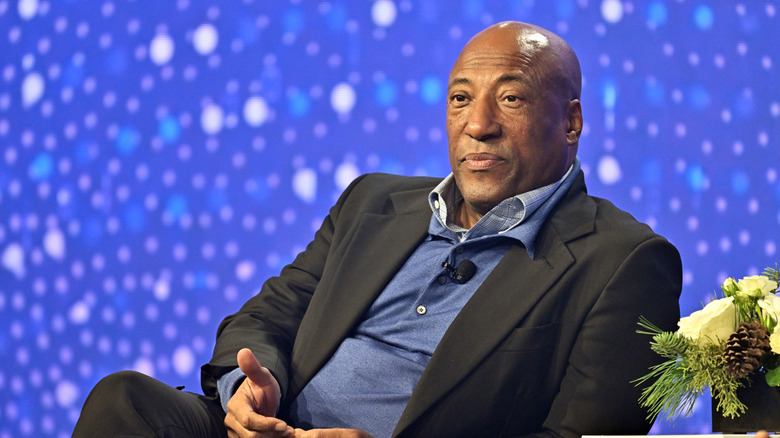
McDonald's is one of the biggest fast food chains on the planet, but it still needs to advertise to make sure we're always craving its cheap burgers and fries. The chain is very effective at self-promotion (case in point, when we write "ba da ba ba ba," we know you're hearing the iconic jingle in your head). It should be a pro, really, given that it literally spends billions of dollars on advertising every single year. But in 2021, media mogul Byron Allen took serious issue with the way those dollars are spent.
According to Allen, while Black people make up a huge percentage of McDonald's customer base, the fast food chain fails to put that money back into Black communities through its advertising budget. He noted that Black-owned companies, like his own Entertainment Studios Network, do not receive anywhere close to the budget other media outlets do. To back up his assessment, Allen filed a racial discrimination lawsuit against the chain. While the suit was initially dismissed in 2021, a judge ruled in 2022 that it could proceed after Allen presented more evidence.
In 2025, the lawsuit was settled for a mammoth $10 billion, but only on the basis that McDonald's would not have to admit fault. The chain did, however, note that it would work with Entertainment Studios Network to improve its tiered advertising budget system.
It got sued for $3.55 million for failing to pay for meal breaks
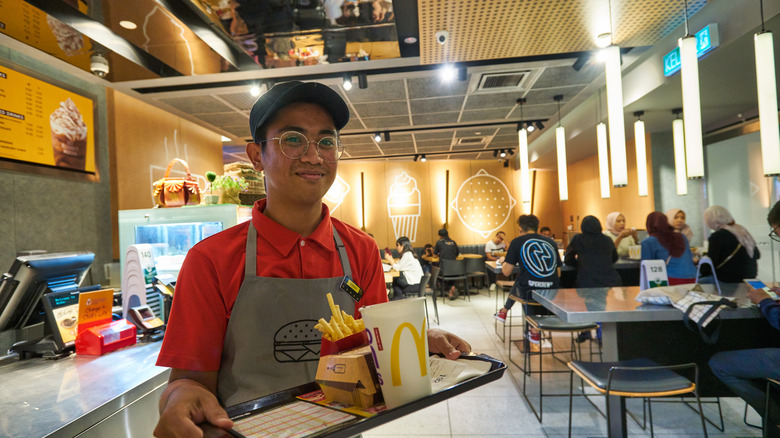
In 2025, a McDonald's franchise in Oregon was sued for $3.55 million over meal break violations. According to state law, all employees who work for six hours are entitled to at least one unpaid meal break, as well as one 10-minute paid rest break. If the work is more than six hours, the employee must be allowed to take two 10-minute paid rest breaks (unless they work longer than 10 hours, and then the breaks increase). If businesses do not comply with these rules, they might end up like McDonald's and have to pay for meal breaks retroactively.
One primary trap that the Oregon-based McDonald's franchise fell into was that it wasn't paying attention to employees who did not get to take their full 30-minute meal breaks. This means that it now owes anyone who worked for the chain from March 2014 onward payment for any missed or interrupted meal breaks. The final hearing for the settlement will go ahead at the end of March 2026, but plaintiffs who worked for more than 11 weeks at the chain since March 2014 are expected to receive up to $872.49 each. Those who worked for less than 10 weeks will likely receive just over $31.
A trans employee was awarded nearly $1 million over discrimination
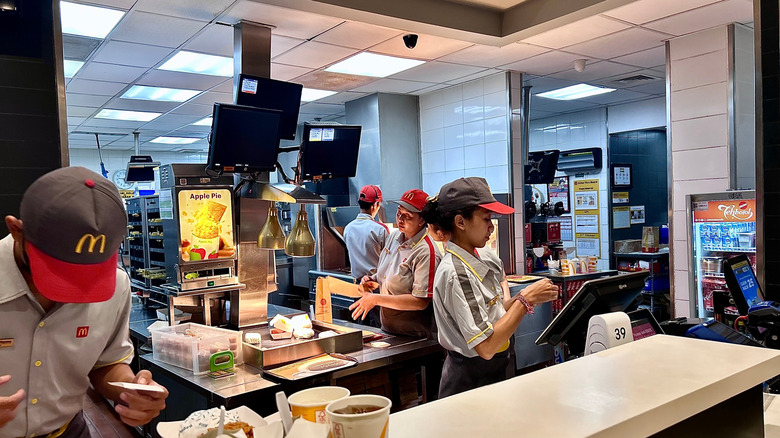
Just like Oregon, Washington, D.C., also has strict laws to protect working people across the state. For example, the D.C. Human Rights Act dictates that it is illegal to discriminate against anyone based on their gender identity or expression. That's why, in 2025, former McDonald's worker Diana Portillo Medrano was awarded nearly $1 million in damages from a McDonald's franchise.
Medrano had worked at the fast food chain for 11 years, but for nine of those years, she had to deal with harassment and ridicule from her colleagues due to her trans identity. Medrano said that her co-workers and supervisors would use her deadname (her name prior to transition), taunt her, and try to prevent her from using the women's bathroom. After she filed a discrimination complaint with the D.C. Office of Human Rights, the McDonald's franchise fired her. While the franchise maintained that it did this only because Medrano was not legally authorized to work in the U.S., her attorneys successfully managed to prove that Medrano's dismissal was related to her gender identity.
This isn't the first time that McDonald's has been sued over trans discrimination. In 2017, Michigan McDonald's employee La'Ray Reed filed a lawsuit against the chain for sexual harassment and discrimination. And back in 2009, a trans woman named Zikerria Bellamy filed another lawsuit after she alleged that McDonald's supervisors in Orlando had refused to give her a job interview because of her gender identity.
The $3 million hot coffee incident
One of the most famous lawsuits in McDonald's history happened back in the early 1990s. It all started when a 79-year-old woman named Stella Liebeck ordered a McDonald's coffee. She then proceeded to sit in her car to drink the coffee, but accidentally spilled the beverage all over her lap, causing her to suffer some nasty burns. And we're not talking just minor, superficial first-degree burns (although they certainly still would have caused Liebeck some discomfort). The coffee was actually so hot that Lieback suffered third-degree burns, which are far more serious and require urgent medical attention.
Liebeck's case ended up going to trial after McDonald's refused to pay her medical expenses, and she reportedly received almost $3 million in damages. But it wasn't over. The lawsuit ended up in the heart of a media storm, which often made Liebeck out to seem overly dramatic and greedy. But in 2011, the documentary "Hot Coffee" was released (yes, this lawsuit was so big, it even got its own film), and managed to clear up several of the myths around the case.
But has McDonald's learned its lesson? It seems not. There have been several hot coffee lawsuits against the fast food chain in the decades since. For example, in 2023, 85-year-old Mable Childress sued the chain after suffering severe coffee burns in San Francisco, and then in 2025, 84-year-old Joseph Gentry filed a similar lawsuit in Mississippi.
McDonald's had to pay $26 million for failing to pay overtime
In addition to failing to pay for meal breaks properly, McDonald's has also gotten into some serious hot water over neglecting to pay its employees for overtime. And we're not just talking about a handful of people who maybe fell through the cracks. In 2013, tens of thousands of employees joined a lawsuit accusing the chain of wage theft in California. They claimed that because McDonald's had not paid overtime to employees who worked more than eight hours during a 24-hour period, it was breaking California state law.
By 2019, McDonald's was still denying these allegations of wage theft and maintaining that it did actually comply with California laws. However, to put the suit to rest, it agreed to pay out $26 million to settle the case. It's worth noting, however, that the McDonald's workers' gripes extended beyond the lack of pay. They also complained that they had been denied breaks in the middle of busy shifts and were forced to clean and iron uniforms without compensation.
And that was the end of all the wage theft claims, right? Nope, not in the slightest. Just a few years later, McDonald's was hit with another huge lawsuit for wage theft in Australia.
More than 700 British McDonald's workers sued over harassment
In 2023, a major BBC investigation into McDonald's U.K. restaurants revealed accusations of everything from sexual assault to racism and bullying. By 2025, legal action was underway, and more than 700 junior staff had joined a lawsuit with claims against more than 450 McDonald's restaurants.
One person said they had dealt with serious homophobia, and when they complained to their manager, they were told to get on with it or leave. Others said that they had dealt with racist or ableist comments, and some claimed that their managers had touched them inappropriately.
In response to the allegations, McDonald's promised to bring in new measures to protect employees, like sexual harassment training. But things could get even more serious for the fast food chain yet because, as of the time of this writing, the legal action led by U.K. firm Leigh Day is still taking on new claimants.
The $500 million sexual harassment lawsuit
Unfortunately, it's not only British McDonald's employees who have had to face sexual harassment in the workplace. In 2020, on behalf of thousands of women in 100 restaurants, two McDonald's workers in Florida filed a $500 million lawsuit against the chain, alleging systemic sexual harassment.
Just like in the U.K., the workers claimed that they had been groped, harassed, and even sexually assaulted at work. When they tried to report the incidents, they said their bosses did not take them seriously. One individual even claimed that after complaining, her work hours were cut, while another person said they were fired.
The Time's Up Legal Defense Fund helped fund the lawsuit, which McDonald's tried and failed to get thrown out in 2021. The ongoing initiative aims to provide legal support and funding to low-income workers who say they have experienced discrimination or sexual harassment in the workplace.
McDonald's had to pay $800,000 after a child was burned by a chicken nugget
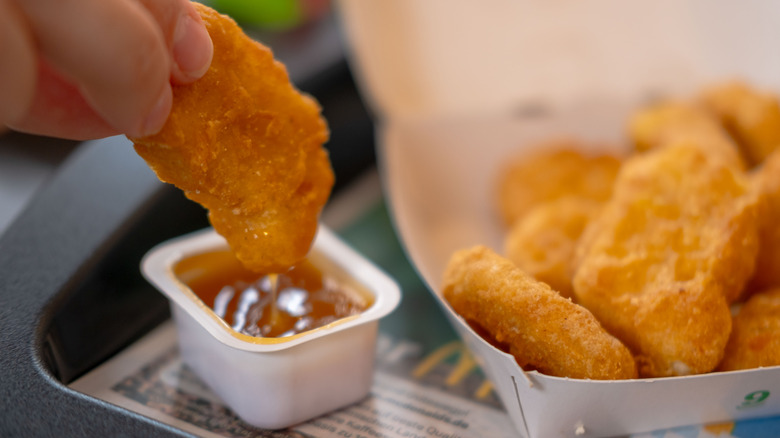
Hot coffee isn't the only McDonald's menu item that has left a customer with nasty burns. In 2023, a 7-year-old child was paid $800,000 in damages after she suffered burns from a McDonald's chicken nugget. The young girl sustained the burns in 2019, when she was just 4 years old.
Similar to the Liebeck case, the incident happened when a nugget accidentally fell on the little girl's lap. She ended up suffering second-degree burns, which, while not as serious as third-degree burns, can still cause notable blistering and skin discoloration. According to the child's parents, the extremely hot nugget left her with disfigurement and scarring on her leg. In addition to the payout, the girl's parents asked McDonald's to add temperature warnings to its Happy Meal boxes.
Also in 2023, the parents of another child attempted to sue McDonald's. This time, the allegations were that a 3-year-old girl had suffered first- and second-degree burns after a portion of extremely hot french fries fell on her lap.
The $10 million french fry legal case
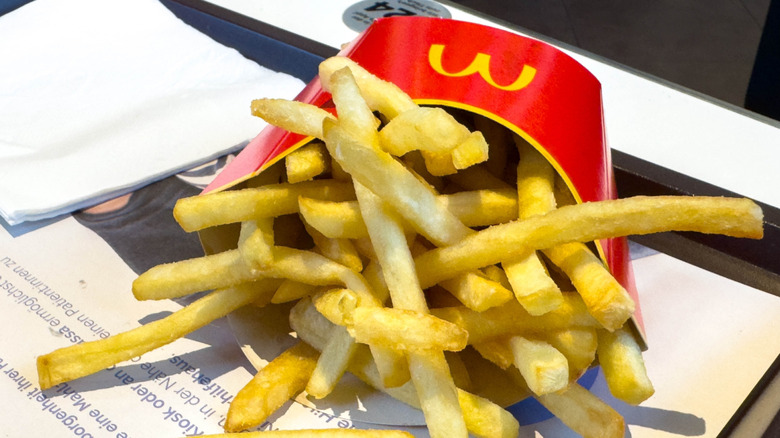
Let's be honest: While many fast-food chains have made leaps and bounds in terms of catering to vegetarian and vegan customers, McDonald's in the U.S. is seriously lagging behind. But you'd be forgiven for assuming that, if you're avoiding meat, you'd probably be safe with the fries. But while several McDonald's restaurants around the world offer vegetarian fries, that's not the case in American McDonald's restaurants. Nope, in the U.S., the fries are actually coated in beef flavoring.
Today, McDonald's U.S. has a disclaimer on its website, clarifying that none of its options are promoted as vegetarian, but it hasn't always been that way. Back in 2002, McDonald's had to apologize and pay out a $10 million settlement to Hindu communities, after a lawsuit claimed it had not clearly stated that its fries were covered in beef flavoring. Many Hindus follow vegetarian diets and avoid beef for religious reasons.
It had to pay $8.5 million to settle a trans fats lawsuit
In 2015, the U.S. Food and Drug Administration (FDA) ruled that it was time for food companies in the U.S. to stop using trans fats. Why? Well, trans fats are actually pretty risky. It turns out that a diet high in trans fats can seriously increase the risk of heart disease. But a decade before the FDA made this move, people were already getting upset with McDonald's over its use of trans fats.
In 2005, a California-based activist took legal action against the chain because he alleged that it was not taking its commitment to reduce its use of trans fats in cooking oils seriously enough. In the end, McDonald's agreed to settle the lawsuit for $8.5 million — $7 million of which was donated to the American Heart Association. Three years after the settlement, McDonald's agreed to shift to a trans fat-free cooking oil in its U.S. and Canadian restaurants.