

10 Kitchen Layouts Every Home Cook Should Know Before Remodeling
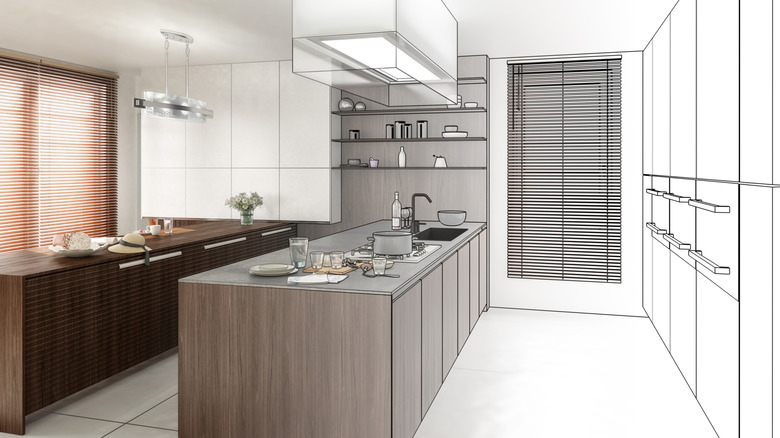
Every home cook dreams of a space that not only looks good but is also intuitively designed to serve their every need. A remodel can help transform the appearance and aesthetics of your kitchen — but it is only once you understand the nitty-gritties of different kitchen layouts that you'll be able to design a space that brings comfort and ease to your everyday workflow and cooking rituals.
At first glance, all kitchen layouts may appear the same. But once you peel back the layers of this onion, you'll find that different layouts are designed to subtly support different kinds of cooking behaviors. Do you prefer minimal distractions and interruptions during prep work, or would you rather be a part of the conversation? Are you looking for expansive work surfaces to put together multi-course meals, or are you hoping to bring the family together over the warm glow of a heartfelt dinner? The answers to these questions will help you choose the right kitchen layout before remodeling — one that won't leave you with regrets or any expensive changes to undo.
For more answers, we turned to Kadambari Uppal, founder and creative director of KAD Designs, for answers. Ahead, she details some of the different kinds of kitchen layouts to choose from and what each one can do for you.
Single-wall kitchen
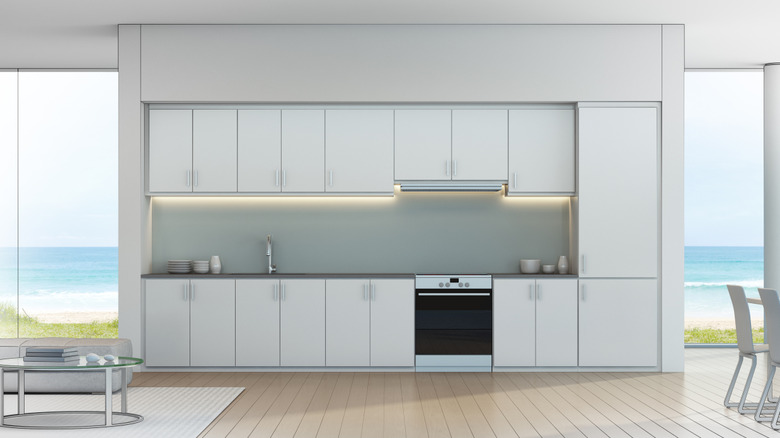
The name gives it all away: a single-wall kitchen with all the cabinets, countertops, appliances, and work surfaces arranged along one wall. This layout is generally favored for smaller homes, but the rise of minimalism also has home cooks turning towards more compact layouts like this one. You won't get lost in the cavernous depths of your cabinets with this layout, and fewer design components mean that you can expect to save some money on installation costs. "It's particularly well suited to compact apartments, studio homes, or open-plan spaces where visual simplicity is key," creative director Kadambari Uppal says.
The most compelling reason to opt for this layout is its streamlined efficiency. Home cooks who don't like to complicate matters can expect a linear workflow as they move from the prep zone to cooking and cleaning zones without any unnecessary back-and-forth movements. With all the cabinets and appliances arranged in a line, you can free up floor space and expect fewer interruptions as you move about the kitchen. The openness of this configuration also lends itself well to socializing; you won't be isolated from the conversation the same way that you would in a closed-off layout.
While single-wall kitchens are often bemoaned for their limited functionality, Uppal believes that there are ways to maximize storage by leaning into vertical solutions. "Full-height cabinets, integrated appliances, and concealed pull-out pantries help make the most of limited square footage," she says. These options can help minimize clutter without eating into the floor space.
Galley kitchen
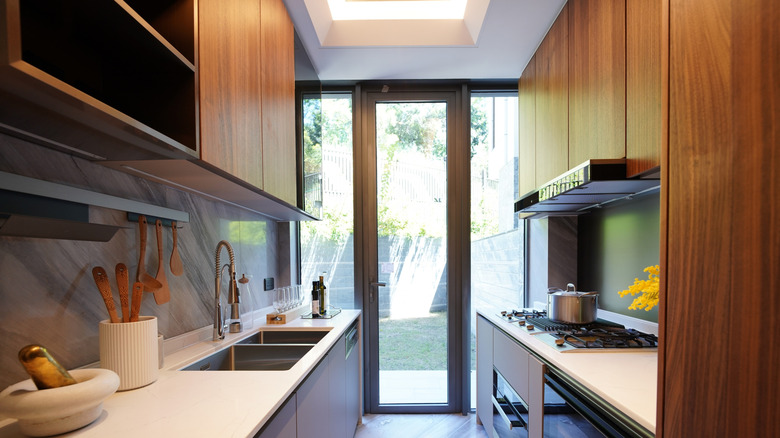
Characterized by two parallel counters, galley kitchens were favored for their space-saving design in the 1920s. However, the passage of time has done little to dull the allure of this layout. "One of the biggest advantages is workflow — everything is within easy reach, making cooking seamless and intuitive," Kadambari Uppal says.
Galley kitchens are a no-brainer for kitchens with multiple cooks; each person can have their own uninterrupted workspace. The compact footprint of a galley kitchen will also help you cut back on installation costs. With fewer countertops and cabinets, you can instead splurge on those pricey appliances you have been eyeing. However, Uppal cautions that this layout can feel narrow and confining if it isn't planned strategically. For starters, she wants you to ensure sufficient clearance between the two banks of counters — a minimum of 4 to 6 feet is often recommended. As long as you have enough space for multiple cooks and family members to pass through comfortably without any obstructions, you should be golden.
"To maintain an uninterrupted workflow, appliances should be thoughtfully placed to avoid crossing paths, and tall units should be positioned at the ends rather than the center," she advises. Open cabinets are well-suited for galley kitchens and help the layout breathe a little. Finishing touches come in the form of layered lighting, bright finishes, and handleless cabinetry to prevent the space from closing in on itself.
L-shaped kitchen
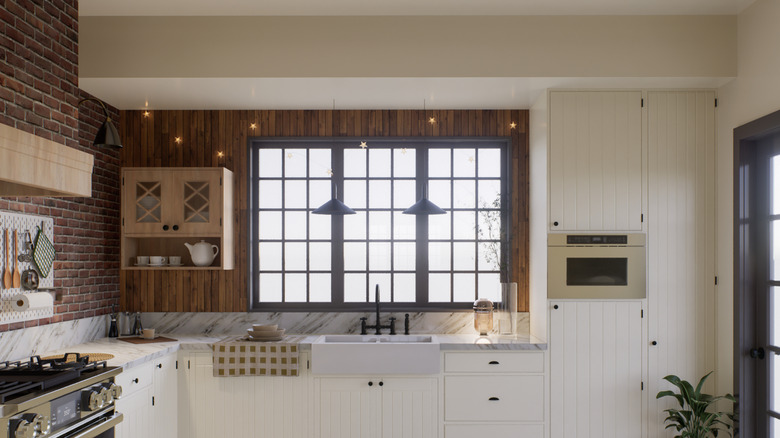
When two walls of kitchen cabinets meet at a 90-degree angle, they form an L-shaped kitchen. This versatile layout works well for small and large homes. "One of its key benefits is flexibility — it allows for easy integration of dining areas or islands if space permits," Kadambari Uppal says. If you have a growing family, you always have the option of adding a breakfast nook or a peninsula further down the line.
Multiple cooks can work comfortably along the adjacent countertops without bumping elbows. For optimal functionality, it helps to ensure that your kitchen can afford 4 to 6 feet of countertop space on each side of the L-shaped layout. Work zones can also be clearly demarcated, with one side reserved for prep and the other for cooking. This allows uninterrupted circulation from one task to the other. Those who remain loyal to the work triangle will also find it easy to set up the stove, sink, and fridge in a triangular formation within an L-shaped kitchen.
In Uppal's experience, corner storage can be a challenge with this layout. The perpendicular corner where two cabinets meet at a 90-degree angle can often amount to little more than dead space. To optimize every inch of your kitchen, she recommends opting for pull-out trays and custom corner drawers. "When designed with precision, an L-shaped kitchen balances openness with practicality, making it ideal for everyday cooking and social interaction alike," she says.
U-shaped kitchen
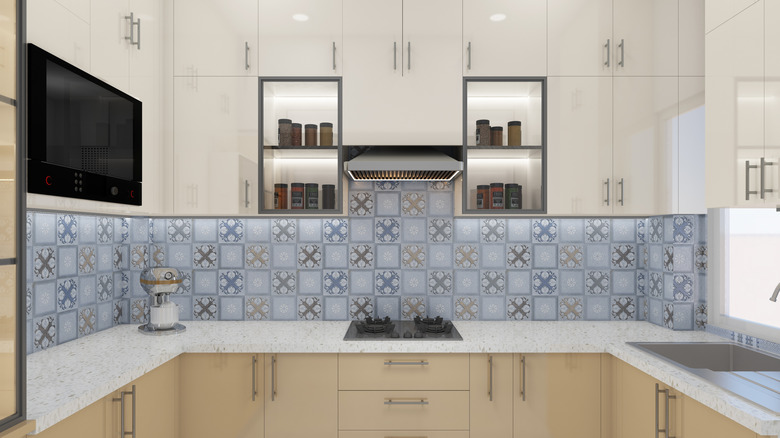
If you have three adjacent walls to play around with, you may want to try a U-shaped kitchen. This layout typically surrounds a home cook on three sides. There is ample counter space to create dedicated zones for prep, cooking, and clean-up. Storage also shouldn't be an issue either, as there is plenty of room for adding cabinets and drawers. "This layout is ideal for avid home cooks who value efficiency and organization, as it supports a strong work triangle between sink, stove, and refrigerator," Kadambari Uppal says. Those with bustling families will also appreciate this enclosed layout that minimizes distractions while cooking.
For making the most of a U-shaped layout, Uppal wants you to pay close attention to the proportions. "To avoid the space feeling enclosed, it's important to maintain adequate circulation — this can be achieved by limiting upper cabinetry on one side or incorporating open shelving," she says. If possible, it helps to anchor a U-shaped kitchen underneath a window to allow natural light to flood the space. The goal is to create a space that feels immersive without being confining, and the right finishing touches can go a long way. For brightening up shadowy corners, under-cabinet LED strips are non-negotiable. Light finishes and reflective materials for the cabinetry will further open up the space and create a sense of airiness.
G-shaped kitchen
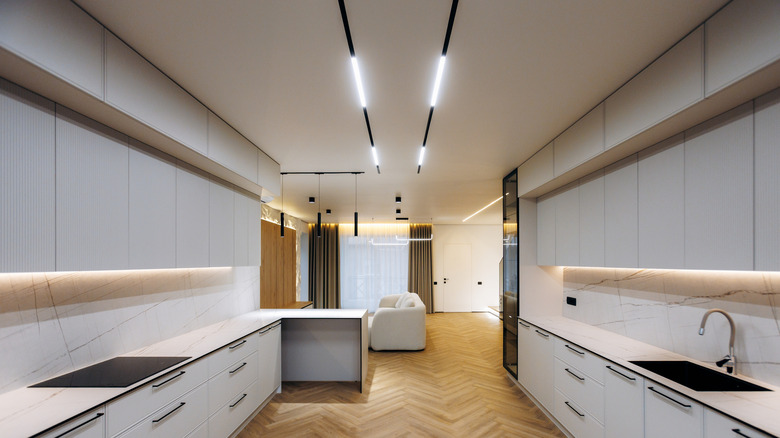
Hoping to score more counter space in a U-shaped kitchen, but don't have the room to add an island? This is where a G-shaped kitchen can come to the rescue. As the natural evolution of the U-shaped kitchen, this layout also takes up three adjacent walls — with the addition of a smaller counter or peninsula to form the letter "G." "This extra counter creates more workspace and storage while subtly defining the kitchen zone," Kadambari Uppal says.
The benefits of an additional counter are not lost on anyone — especially not on home cooks looking to turn their kitchen into a multi-tasking workhorse. "The added counter can be used for casual dining, prep work, or even as a serving station when entertaining," she adds. The peninsula can serve as a buffer between the cooking and entertaining zones for those who entertain frequently.
Storage possibilities are limitless with the option of adding cabinets above the peninsula — although it always helps to brush up on the clever storage spaces you may be ignoring in your existing kitchen first. It is easy to go overboard and attempt to cram in as much as possible, but Uppal recommends opting for a judicious approach towards appliances specifically. "Instead, consider integrating storage, seating, or display elements that enhance both functionality and flow, ensuring the kitchen remains inviting rather than congested," she says.
Peninsula kitchen
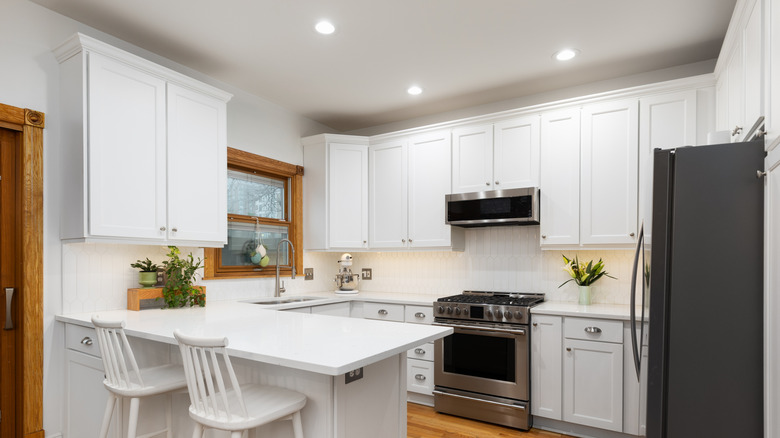
Island or peninsula? If you have been wondering which addition works best for a small kitchen, Kadambari Uppal is here to put this debate to bed. Simply put, a peninsula kitchen features an extra countertop extending from a U- or L-shaped layout: almost like an additional arm. "One of its main advantages is that it offers many of the benefits of an island — additional workspace and seating — without requiring as much floor area," she says. In her experience, this layout is especially helpful for compact homes and smaller spaces as a peninsula can boost the functionality of the kitchen while maintaining a sense of visual openness.
Beyond providing additional counter space — a godsend for home cooks who like to prepare multiple dishes for each meal — a peninsula can also serve as an effective divider between the kitchen and the living areas. The openness of this layout will help you interact with guests while putting the finishing touches on a weekend brunch ... and keep a watchful eye on the kids on weeknights.
To make the most of a peninsula kitchen, Uppal recommends keeping some golden design principles in mind. "Seating should be kept light and minimal; backless stools or slim-profile chairs work best to preserve circulation," she says. Overhang depth is another matter to approach with careful consideration — any attempts to get overzealous could compromise comfort by intruding upon walkways. "When thoughtfully designed, a peninsula can become a social focal point without overwhelming the space," she says.
Island-centric kitchen
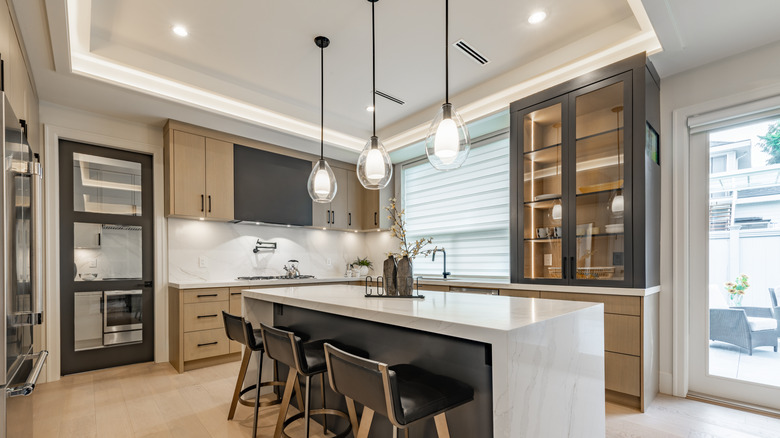
From state-of-the-art appliances to newer tools, the list of must-haves for the modern kitchen is always ballooning. The appeal of additional counter space isn't lost on anyone and it should come as little surprise that kitchen islands are among the most coveted additions for ambitious home cooks. "An island-centric kitchen places the island at the heart of the space, serving as a hub for cooking, dining, and gathering," Kadambari Uppal says. It doesn't hurt that the addition of a kitchen island can increase the resale value of your home as well.
When it comes to choosing kitchen islands, size does matter. Choosing the wrong size is among the common kitchen island mistakes that can make your space appear smaller than it actually is. As a rule of thumb, Uppal recommends ensuring that you have a minimum of 1 meter of clearance on all sides of the island to ensure ease of movement. "Placement should support, not disrupt, the work triangle," she says.
Kitchen islands are not a cheap purchase, so you'll want to make the most of your investment. Added functionality can come by way of integrated cooktops and sinks as well as add-ins for storage. Uppal has found that it helps to adopt a zone-based approach by dedicating one side of the island to prep and the other to dining and entertaining. "When designed with intention, an island becomes both a practical workstation and a social anchor," she says.
Open-plan kitchen
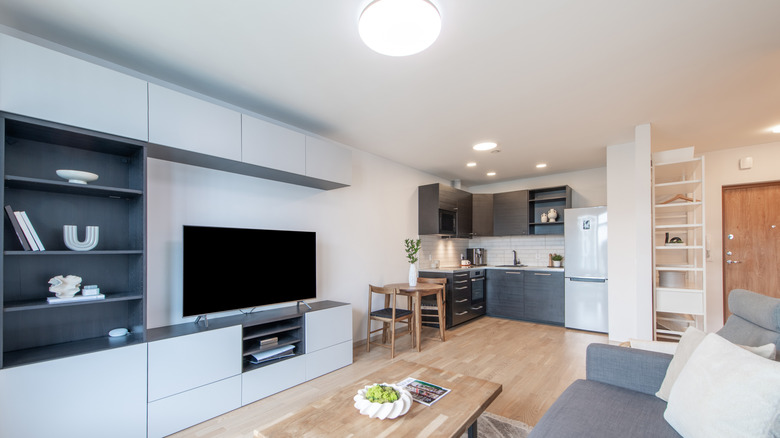
As open-floor plans began making inroads into the collective psyche by the 1950s, the boundaries between the kitchen and the dining area became blurred. And thus, the open-plan kitchen was born as a means of making smaller spaces look more expansive. "Open-plan kitchens are prized for their sense of space, light, and connectivity, particularly in modern homes where cooking and entertaining overlap," Kadambari Uppal says. The lack of tangible barriers can also maximize effortless interactions when socializing.
Open-plan kitchens are often bemoaned for putting clutter on display. However, the enhanced visibility might just encourage you to adopt a clear-as-you-go system that will minimize clean-up at the end of each day. Other ways to maintain visual harmony include opting for integrated appliances, concealed storage, and coordinated material palettes.
Managing sounds is another important consideration when choosing an open-concept layout. You'll find that soft finishes, rugs in adjacent areas, and acoustic panels can help absorb sounds rather than bouncing them around the space. "Thoughtful zoning through lighting or subtle changes in materials also defines the kitchen without enclosing it," Uppal says. Home cooks who are looking to maximize natural light within a compact space will also find it helpful to opt for light-reflective finishes in the form of glossy tiles and appliances as well as airy hues for the cabinetry.
Broken-plan kitchen
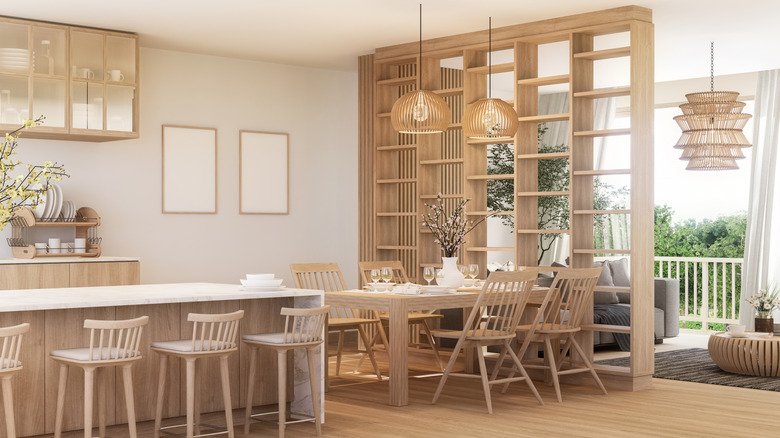
If the lack of privacy from an open-plan kitchen is a cause for concern, there are workarounds to opt for. Say hello to broken-plan kitchens, which break up an open space with structural elements. "A broken-plan kitchen offers a middle ground between open and closed layouts, using partial partitions to define spaces while preserving light and flow," Kadambari Uppal says. This layout is particularly helpful for larger apartments or villas where home cooks might want a sense of separation without creating a complete enclosure.
When it comes to creating partitions within an open space, you'll find plenty of options to play around with. "Glass screens, fluted panels, sliding doors, or open shelving are effective tools for creating boundaries without blocking natural light," she says. In a pinch, you can even add a bookshelf to delineate the space between the kitchen and the living areas. The addition of these intentional barriers can minimize distractions while you prep, while still maintaining aesthetic appeal. Using the same colors and finishes in the kitchen and adjacent areas can further create an air of cohesion across the home. "Broken-plan kitchens allow for better control of noise and cooking aromas while maintaining a sense of openness, making them a thoughtful solution for modern, multifunctional homes," she says.
Eat-in kitchen
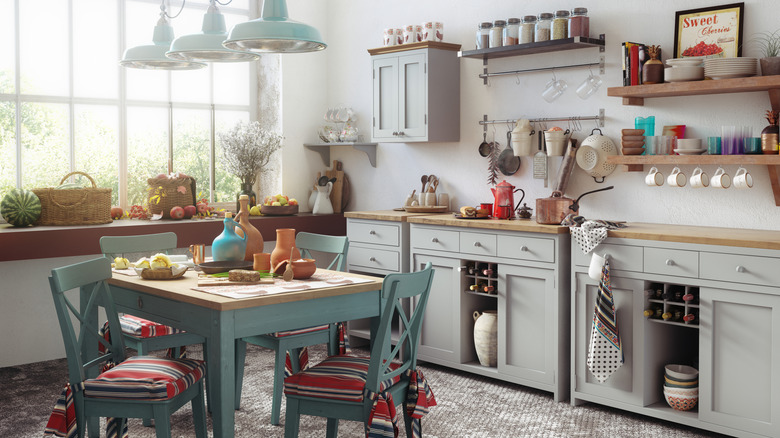
No formal dining room? No problem. The eat-in layout allows you to turn your kitchen into a diner by combining cooking and dining within the same space. Suddenly, the kitchen is elevated from a place of cooking and washing dishes to the vibrant, pulsing heart of the home. "This layout works especially well for families, as it encourages everyday togetherness while keeping meals informal and accessible," Kadambari Uppal says. For home cooks tending to bustling families, an eat-in kitchen can reduce the distance between cooking and dining — which, in turn, can make serving meals and clean-up more efficient.
Your choice of table for an eat-in kitchen depends on the intended use for the space. Those hoping to gather their loved ones together for a meal everyday will benefit from built-in banquettes and round tables that can foster a sense of intimacy. If you entertain often, Uppal recommends opting for an extended counter. This will allow guests to huddle around without disrupting your workflow in the kitchen. "The key is balance — seating should feel integrated rather than secondary. When designed thoughtfully, an eat-in kitchen becomes more than a functional space; it becomes where daily life naturally unfolds," she says.