

A Simple Kitchen Habit Worth Doing Before The Next Cold Snap
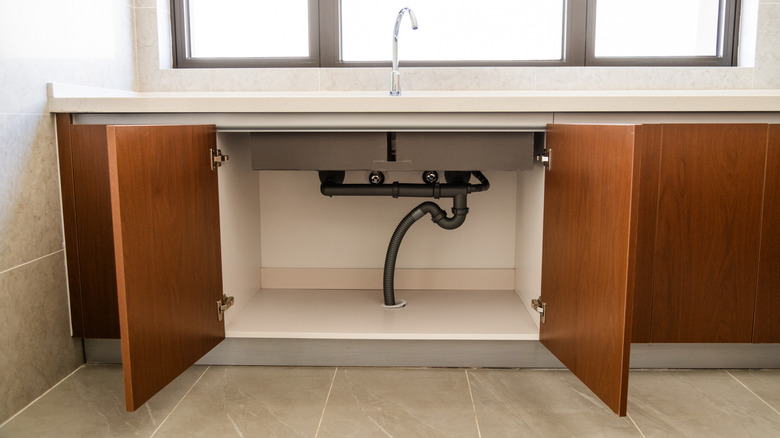
On the fun side, prepping your kitchen for winter might look like home-canning food or bringing outdoor plants inside. On the practical, less-fun (but just as important) side, don't overlook your kitchen sink pipes and plumbing when a cold snap rolls in. When temperatures hit below 20 degrees Fahrenheit and stay there for an extended period of time, there's a quick tip that home cooks can rely on to keep their kitchens in good working order all winter long: Simply open your under-the-sink cabinet doors at night, especially those attached to an outside wall.
As it freezes, water trapped inside your pipes hardens and expands, filling the pipe with intense pressure that can create a crack at your pipe's weakest point. Even a small crack can spell doom for plumbing, and this tip is extra important for older homes with weathered plumbing systems. Burst pipes aren't always covered by homeowners and renters insurance, either — and no one wants to deal with the costly water damage that may result to the floor or cabinetry when water starts leaking through the cracks.
Opening the cabinet doors allows the air from your radiators or central heating vents to circulate around the pipes under your sink. Blocked behind the doors, cold air can fill the space and get trapped, putting your pipes in peril — particularly if your kitchen sink sits against an outside-facing wall in your house or apartment building. Even if it feels warm at the kitchen table, the story could be very different within an outside-facing cabinet.
Before heading to bed, open the cabinets under the kitchen sink
To further prep your kitchen for a deep freeze, stock the freezer and fill the pantry with ready-to-eat canned foods; you might be holed up at home for a few days. If your kitchen pipes happen to run through the garage, attic, or any other exposed area that isn't warmed by your home's interior air, invest in heat tape or foam pipe insulation. Wrapping exposed pipes in a protective layer of insulation helps keep them warm and safe from bursting. The old trick of dripping your faucets can further help protect exposed lines — just allow a slow trickle of water to drip through the pipes overnight to keep water moving and stave off freezing.
In a similar vein, it's an old-school money-saving strategy to lower your thermostat by a few degrees before climbing into bed for the night. During a period of below-freezing temperatures, you should set your thermostat no lower than 55 degrees Fahrenheit. Your kitchen pipes will thank you for the consistent temperature. If you suspect that your pipes have indeed frozen — i.e., it's a blustery, frigid day and no water is coming out — keep the line open and run a hairdryer over the pipe to warm it up. Then, carefully inspect your under-the-sink cabinet floor for signs of moisture or water damage, which can indicate a crack.