

The Case For Mixing Dish Soap And Hydrogen Peroxide — And What You Need To Know Beforehand
We may receive a commission on purchases made from links.
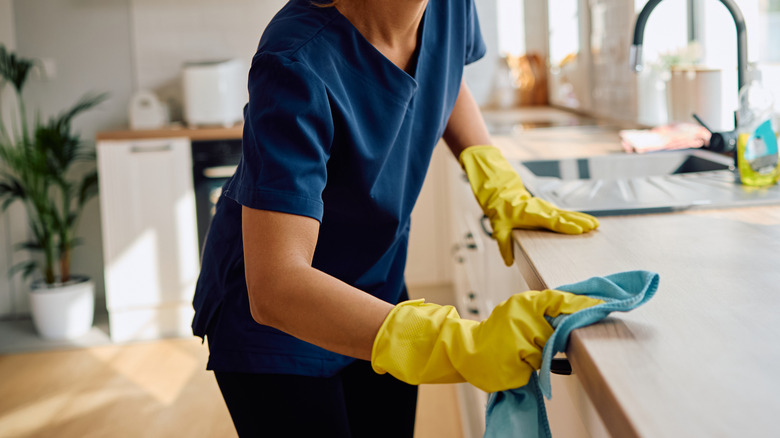
There's nothing more frustrating than shelling out for a cleaning product that doesn't get the job done. Often, making your own household cleaner from things you already have in your pantry is not just free, but the result is much more effective. One of the most capable examples? Mixing hydrogen peroxide and dish soap. This powerful duo is strong enough to fight the toughest grime on dishes, banish the most stubborn stains, and disinfect all the different spots in your kitchen.
The reason this makes such a great cleaning product is because of what each item brings to the table. Dish soap is what's known as a surfactant: It gets into and lifts out grease, grime, and dirt. Then, the hydrogen peroxide functions as a disinfectant, like a gentler kind of bleach. Together, the solution foams up and really gets into surfaces and materials to sanitize and clean.
You may have already put hydrogen peroxide to work eliminating water marks on your granite counters with baking soda, or any other tasks where you can see hydrogen peroxide's singular ability. When you combine it with dish soap, however, it can completely erase grime in the grout between your tiles, kick stains on the sink and countertops to the curb, lift residue off of dishes with baked-on crud, degrease the stove, and even send mildew and mold packing. Depending on what you're cleaning, you can either mix two parts hydrogen peroxide with one part dish soap and apply with a sponge or brush, or pour the mixture into a spray bottle.
Warnings for cleaning with hydrogen peroxide
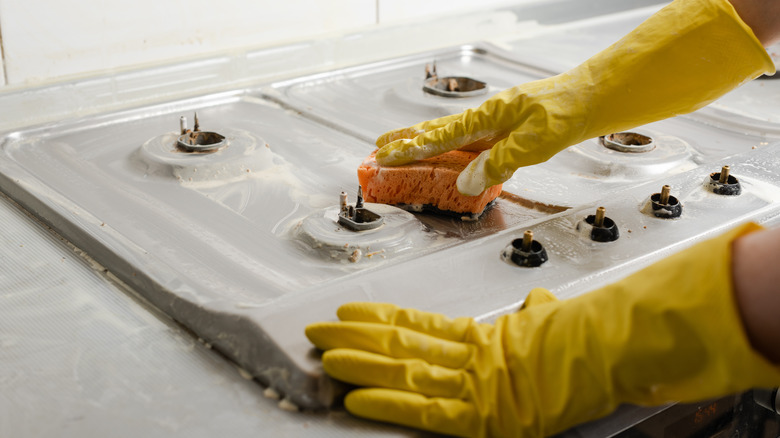
Hydrogen peroxide and dish soap create a versatile, powerful cleaning agent. But the cleaning solution has its limits, and even its risks. There are some things you need to know before you clean with hydrogen peroxide. Make sure you're using a 3% solution, like this Amazon Basics Hydrogen Peroxide — this will be an effective cleaner, and going much higher than 3% can irritate your respiratory system and skin. Because of that potential, to be on the safe side even when using a lower concentration, wear gloves and make the space you're in is well ventilated so you're not breathing in the hydrogen peroxide.
We know that it's safe to mix 3% hydrogen peroxide with dish soap, but there are many substances that are dangerous to mix to this chemical. Never combine it with vinegar, as this yields a harmful, corrosive peracetic acid. Blending it with common disinfectants like rubbing alcohol, bleach, or ammonia can also carry major risks from fire hazards to toxic fumes that have proven deadly.
Beyond avoiding the potential for injury, illness, or fire, you'll also want to be aware of this product's abilities. There are many great ways to use hydrogen peroxide when cleaning your kitchen, but it can be too harsh and damage some materials like quartz or marble, and even bleach wood or fabrics. Make sure you store hydrogen peroxide in a cool, dark, dry place, where it can last around six months once opened — after that, it loses its efficacy.