

Everything You Need To Know About Quick Breads
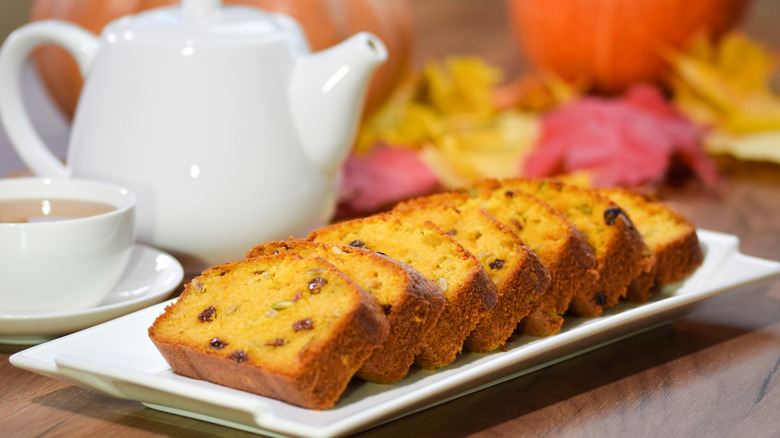
There's nothing like the smell of something fresh from the oven to make your home feel welcoming and lived-in. Your personal favorites might include cookies or "Mom's apple pie," but fresh-baked bread is right up there. Of course, we don't always have the time or skills to do regular bread. That's where quick breads come in, because they're easy and... quick.
I've made a lot of quick breads over the years. Although I trained as a chef, I've also baked commercially, run an in-store bakery, and acted as my own pastry chef when I operated my restaurants. Just as importantly, I'm also a home baker who's been turning out quick breads for well north of 40 years. During that time I've taught a lot of people to bake — including my own kids, and soon my grandkids — and quick breads are usually where I start.
Why? Well, to begin with, they're quick, easy, and pretty forgiving for the most part. That makes them a great confidence-builder for novice bakers, teaching them skills they can apply to other recipes. Even experienced bakers like me love to have a few foolproof, "minimal focus required" recipes to turn out in a hurry, and quick breads fit the bill. Whatever your skill or experience level, here's what to know about quick breads.
What are quick breads?
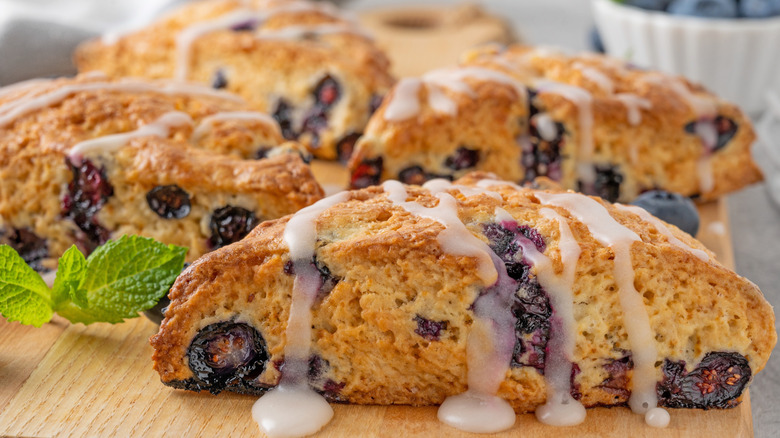
If we're going to talk about quick breads (spoiler: yes), we should probably start by settling what quick breads actually are. That's actually a bit trickier than you might expect, and it's easier to get there by defining what quick breads are not.
Most types of bread, in all their various shapes and sizes, are leavened with yeast, though a few flatbreads (like tortillas and matzoh) aren't leavened at all. Refined, packaged commercial yeast has only been available since the late Victorian era, so before that, making bread with yeast meant capturing wild yeasts from the air and using them to build a sourdough starter. Even after a starter is established, it still requires constant care and attention.
Quick breads take a different approach, relying on a chemical reaction — rather than yeast, which is a living organism — to generate tiny carbon dioxide bubbles to lighten your dough or batter. That chemical reaction comes from baking soda or baking powder, and that is the defining trait of quick breads. They're bread-like, and they get their rise from a chemical leavening.
A history of quick breads
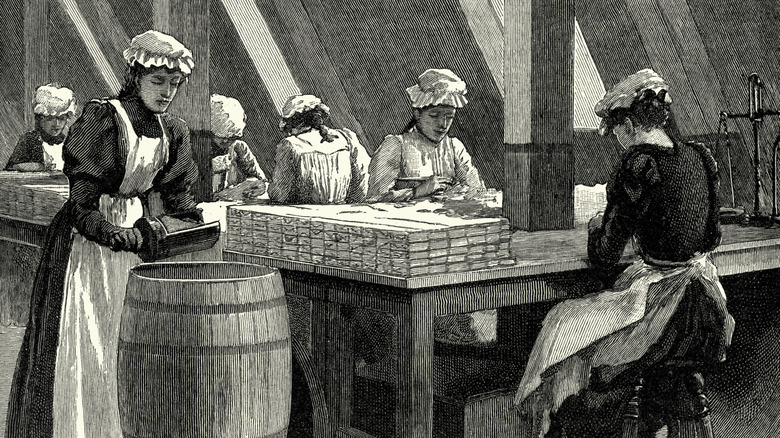
For most of human history, if you wanted to bake something without yeast, you had limited ways to make it light and appealing. You could brush or spread your dough with fat and layer it to make something like puff pastry or parathas. You could whip eggs to a froth and fold them into a batter, where their eggs will make it light and airy, or laboriously cream sugar and fat together to incorporate air.
By the Middle Ages, bakers had learned that heating and grinding deer antlers ("hartshorn") produced a powder that would react with acidic ingredients in baked goods to make them puff. The unfortunate side effect was lingering ammonia in any quick bread that wasn't super thin (think crackers). Potash, made from lye and wood ashes, was another primitive leavener that could be made at home, but it irritated the hapless baker's skin and also smelled nasty. But potash and hartshorn made quick breads possible, within their limitations.
It was in the 19th century that chemists and entrepreneurs realized that sodium bicarbonate was just the thing for baked goods. It made them light and airy just as well as hartshorn or potash, but without the bad smell (yay!). It was also straightforward to mine and to refine for human consumption. A company called Church & Dwight was a pioneer in the market, eventually naming their product Arm & Hammer. That opened the door for an explosion of new quick bread styles and recipes, a revolution that reached maximum convenience just a few years later with the arrival of baking powder, which (unlike soda) doesn't require an acidic ingredient to make it work.
Baking soda vs baking powder in quick breads
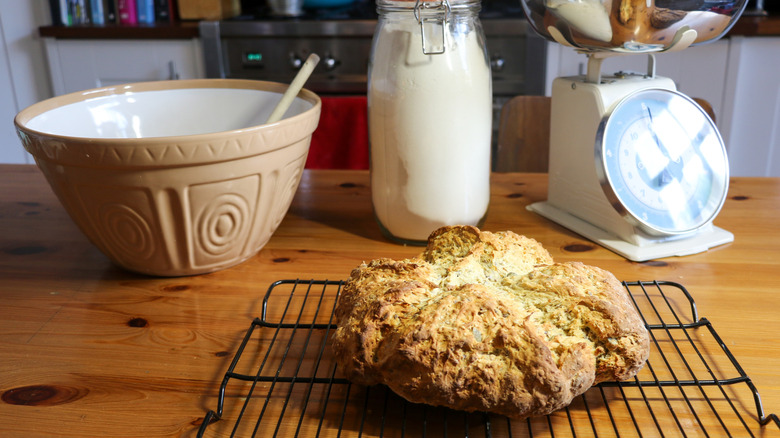
Baking soda is a basic (mildly alkaline) ingredient. When you mix it with a liquid and something acidic, it bubbles up (remember your childhood "volcano" experiment?). So your quick bread needs an acidic ingredient for it to react with, or you'll just have a soapy chemical taste and flat baked goods.
That's why recipes for quick breads, if they call for baking soda, include acidic ingredients such as buttermilk, soured milk, lemon juice, or molasses. Which is great if you happen to have those on hand, and if their flavors work well with the specific quick bread you want to make. But what if you don't have those acidic ingredients or just don't want the flavor profile they bring to your baked goods?
That's where baking powder comes in. Baking powder combines soda with an acidic ingredient in dry, powdery form and usually a neutral "buffer" (like cornstarch) to keep them from reacting prematurely. Some use a second acidic ingredient that's only activated by heat ("dual-acting baking powder"), so you have the luxury of mixing your batter and not putting it in the oven right away. Soda is more powerful, measure for measure, but you can substitute baking powder for baking soda (or vice versa) in your recipes as long as you make a few adjustments.
Guide to quick bread styles
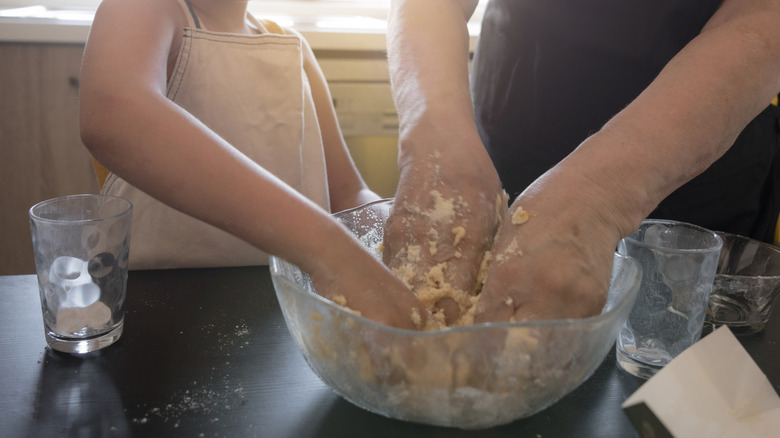
How many kinds of quick breads are there? Lots. So many. More than you'd think. Because although you're probably thinking in terms of banana or zucchini bread, or maybe Irish soda bread or beer bread, the term can be extended to almost anything "bread-esque" that uses chemical leavening instead of yeast. So aside from those examples, you should also think in terms of — to name just a few – muffins, scones, biscuits, cornbread, and even pancakes and waffles as well.
Instead of individual quick breads, it can be useful to think of them in terms of three broad styles: loose batters (pancakes & waffles), stiff batters (cornbread, muffins, drop biscuits), and doughs (rolled biscuits, soda breads). The biggest difference between them is how much liquid they call for, and how they're mixed. Loose batters are generally whisked. For stiff batters the wet and dry ingredients are mixed separately and folded together, while for doughs the wet is added to the dry and gently kneaded.
You can also differentiate quick breads based on their texture and sweetness, which (in turn) depend on their ingredients and how they're baked. Beer bread and soda bread are the most "bread-like," and don't aim for richness or sweetness, so they're relatively plain. Cake-like zucchini or banana bread is dense, but rich with sugar and eggs. So are muffins, but they're lighter than loaves (even if you use the same batter), because they're baked in small cups at higher heat. Heat and moisture provide leavening power in their own right (picture popovers or Yorkshire puddings), which works in muffins' favor.
Quick doesn't refer to baking time
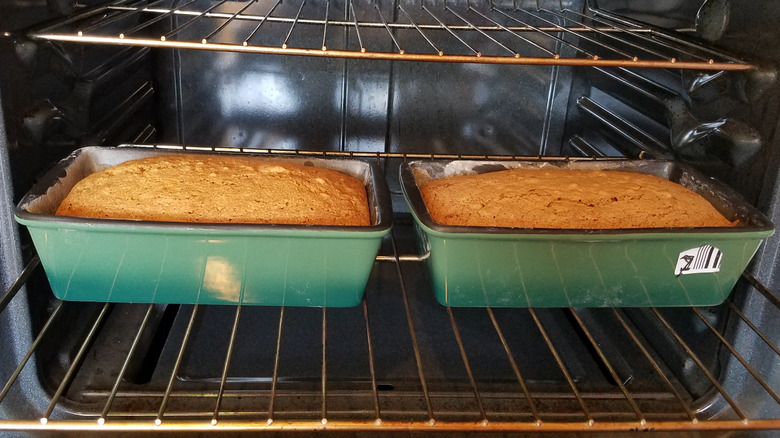
A lot of quick bread recipes are very quick indeed. If your kitchen is well organized, many will take you from "empty mixing bowl" to "treats on the table" in under 30 minutes. Flaky Southern-style biscuits, for example, can take just 12 to 15 minutes in the oven.
That's not always the case, though. This cinnamon-pear streusel bread needs a full hour in the oven. Zucchini bread may take even longer. So how are these still considered quick breads? It's because it's not about baking time, but how quickly the recipe comes together. If you look at a few recipes, you'll see that 15 to 20 minutes is the prep time for most quick breads. That's a lot faster than yeast-based baked goods, which also require kneading and some time to rise. And remember, yeasts are living organisms which — like us — just don't feel like working on some days.
The actual baking time for quick breads depends on a lot of factors, including some basic physics. It's all about balancing time, temperature, and ingredients to get the result you want. Wet batters take longer than dry ones, because that moisture needs to evaporate. Full-sized loaves take longer than small items like biscuits or quick breads, because their sheer size means it takes longer for the heat to penetrate to the center. That means lower temperatures and longer baking times, so the outside of your loaf isn't scorched and hard before the middle is done.
Why quick breads are great for novice bakers
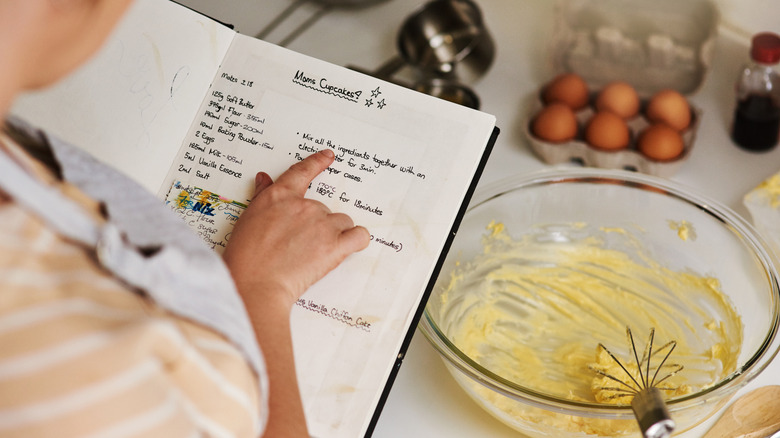
I've taught baking a lot, in classes as well as informally, and back at the beginning I mentioned that I usually start with quick breads. I think they're an ideal starting point for novice bakers, for several reasons.
For one, it avoids using yeast. As I mentioned before, yeast can be cranky and quirky because it's alive. What chemical leavenings lack in romance, they make up in predictability, and that's good for novices. It eliminates a variable that can bite you in the butt. Quick bread recipes are also (usually) designed to be quick and easy to mix and bake, which means they're useful confidence-builders for new bakers.
That, for me, is the Really Big Deal about quick breads: They teach a lot of baking fundamentals, without it being obvious. What will stand out for you, as a novice, is that things just... work? That's a real confidence-builder, and feeling confident encourages new bakers to spread their wings and experiment. Wanna change the flavorings? Go for it. Substitute a non-dairy milk or gluten-free flour? No problem. Go with melted butter instead of oil? Easy-peasy, and it adds flavor too. Change out the add-ins? Knock yourself out. It's hard to go wrong, and even if you do something regrettable, the end result is often still okay.
Mistakes people make with quick breads
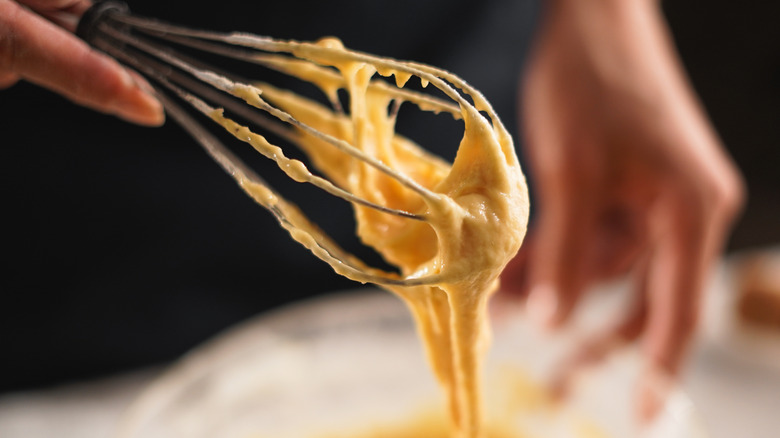
That said, I don't want to give you the impression that you can't go wrong with quick breads. They're easy, but not foolproof, and it's certainly possible to make mistakes. Here are a few to bear in mind:
First off, don't forget to test your baking powder or soda periodically, because it'll lose its leavening power over time. Also, be sure not to overmix. Most quick breads, from pancakes to muffins to beer bread, should be just barely mixed (as in, it's okay to see bits of unmoistened flour). It's hard not to give "just one more stir," but don't. Be sure you're always measuring correctly; if you scoop flour from the bag or bin with a cup, you're compacting it and using more than you think (this is why pro recipes go by weight). The accepted method for home bakers is to spoon flour into your cup, then level it.
Finally, watch out for excess liquid. Gluten forms when proteins in your flour are moistened and then mixed, and it makes for tough quick breads. Careless measuring, larger than usual eggs, or even add-ins that release too much juice (looking at you, berries!) can all do this to you. If you look for recipes from good-quality sources and avoid these common mistakes, you'll be well on your way to baking success.