

15 Food And Drinks Ernest Hemingway Loved
We may receive a commission on purchases made from links.
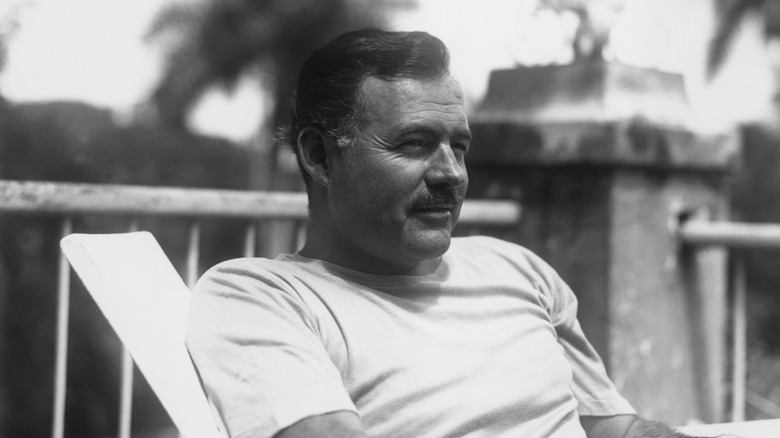
When you think of Ernest Hemingway, you probably think of the celebrated author's most famous books. He's arguably best known for his best-selling title "The Old Man and the Sea," which was published in the 1950s and scored him a Pulitzer Prize. The novel was set in Cuba, where Hemingway spent much of his life. But Hemingway didn't just love the country because it inspired him to write some of his best work. He also loved it for the food and the drink. That's also the reason he enjoyed spending time in France and Spain, and even at home in the U.S., too.
Hemingway was a major foodie, and he loved a tipple, too. But what, exactly, did this famous author spend his life eating and drinking? Luckily for us, he documented it well in his memoirs and articles. Keep reading to find out the food and drink Hemingway loved best, from seafood to cocktails to his own interesting take on peanut butter sandwiches.
Oysters
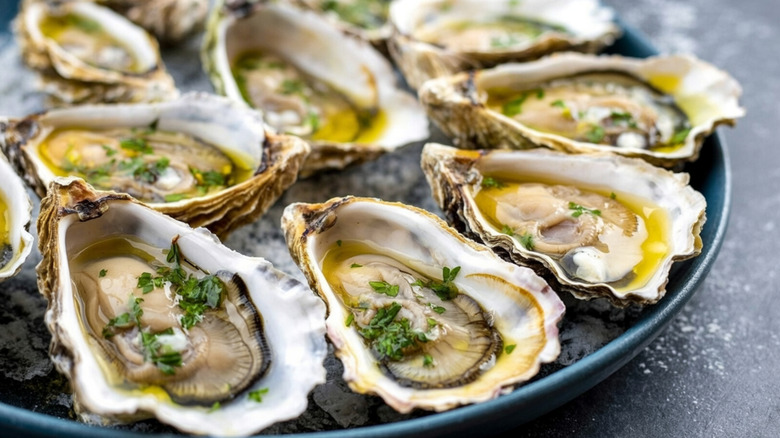
Hemingway made no secret of his fondness for oysters. In his memoir "A Moveable Feast," which covers his life in Paris during his twenties, he recalls a lunch with the author, journalist, and poet Ernest Walsh. He says the pair drank Pouilly-Fuissé (a French white wine), while they dined on Marennes and Portuguese oysters. Marennes oysters are harvested from the Marennes-Oléron basin in France and are known for their green color and tender texture, while Portuguese oysters are slightly cheaper, yet still full of flavor. That said, you won't be able to try the same Portuguese oysters as Hemingway today, as they have since been wiped out by disease.
Hemingway said that eating oysters made him feel good. He said that after slurping them down, he found himself motivated to start making plans. This might be just because he appreciated the taste, especially when paired with a cold white wine, but it also might be explained by science. Research suggests that, because they're so rich in zinc, oysters may help to maintain levels of dopamine, a neurotransmitter that plays an integral role in the brain's reward system. In short, dopamine gives us a happy boost. Fun fact: This dopamine connection might also be part of the reason why oysters are often labeled as an aphrodisiac.
Sancerre
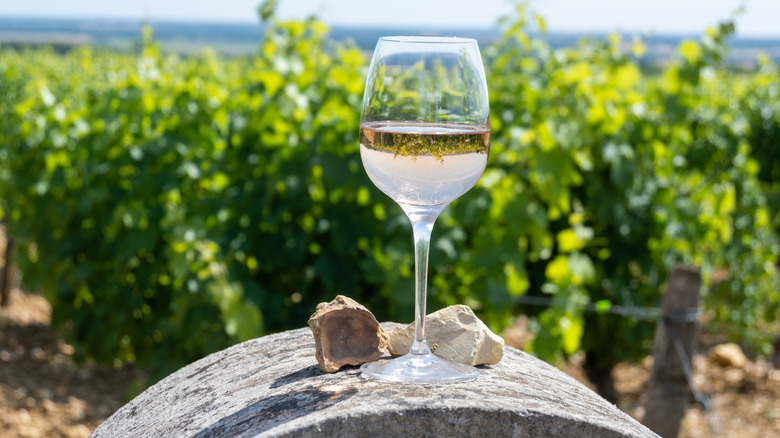
Hemingway ate oysters whenever he could while living in Paris. But it wasn't a very cheap habit. That's one of the reasons why the famous writer used to bet on horses. In the chapter "A False Spring" in "A Moveable Feast," he talks about coming back to Paris with his first wife, Hadley Richardson, and treating them to some oysters, Mexican crab, and glasses of Sancerre after having some good luck at the racetrack. His horse had come in, and it was time to indulge.
Hemingway's choice of Sancerre is notable. The drink is certainly suited to celebrating a win at the races; in fact, it's considered by some to be the greatest white wine in the world. The Sauvignon Blanc is produced in the French region of Sancerre, which sits beside the river Loire. People enjoy Sancerre because it's fresh, fruity, grassy, and crisp. It has an air of elegance and sophistication and has even been compared to Champagne in terms of status.
Mariscos
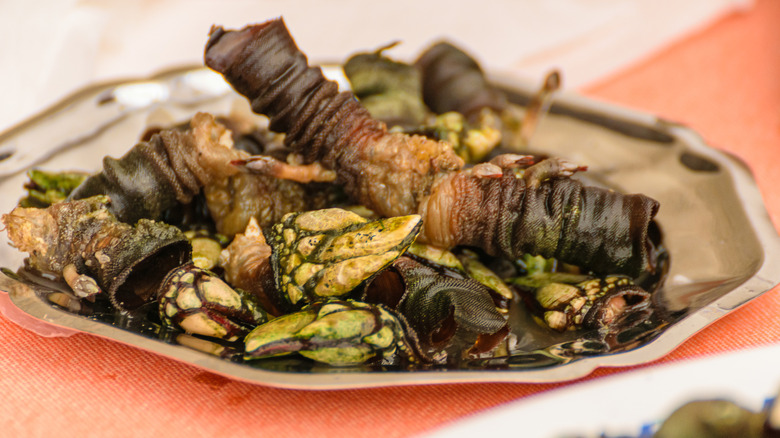
In "Death in the Afternoon," Hemingway departs from Paris to focus on Spain. Specifically, the non-fiction book homes in on Spanish bullfighting. The sport is incredibly divisive, but Hemingway was clear in his belief that the bullfight should be considered an art. The author not only discusses controversial cultural heritage in "Death in the Afternoon," but he also talks about a type of traditional Spanish food called mariscos.
Hemingway explains that people usually drink beer and eat mariscos, which basically means different types of shellfish, in a café after they've been to see a bullfight (or beforehand). The author expresses that he believes the best type of mariscos are percebes, which are goose barnacles. They might sound a little odd, but Hemingway was adamant that the stalk of the barnacles was both tender and full of flavor.
You can still sample percebes in Spain today, but be warned that they don't come cheap. In fact, you can expect to pay up to €200 (that's around $230 at the time of writing) for a kilo in Spain and Portugal.
Daiquiri
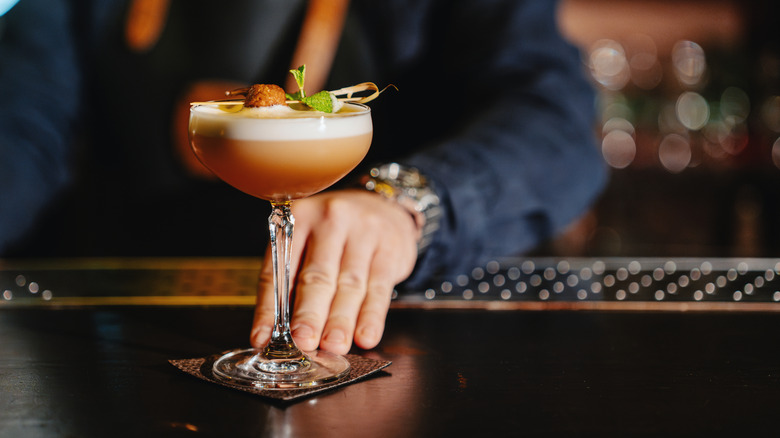
Back in the late 1800s, an American engineer named Jennings Stockton Cox Jr. allegedly invented the daiquiri cocktail for the first time while he was living in Daiquiri, Cuba (that's where the name comes from). That said, this drink only consists of three ingredients (rum, lime juice, and sugar syrup), so he probably wasn't the first to combine them, but still, he remains most commonly associated with its creation. However, another name that, arguably, is more likely to pop into your head when you think of a daiquiri is Hemingway.
The writer was a big fan of the drink, which he would always order when he was in Cuba. In fact, he allegedly once drank 16 double daiquiris in one sitting. Hemingway would usually drink them at a bar called El Floridita in Havana, which is also where the frozen daiquiri was served for the first time.
Hemingway has become so linked with this bar that it even offers its own Hemingway-themed tours. Customers who take the tour are driven around in a 1950s-style vintage car and taken to several of the writer's favorite spots, including El Floridita, of course.
New York strip steak
Hemingway is often associated with Ketchum, Idaho, for tragic reasons. It is, after all, the place where he died by suicide in 1961. But the writer had actually spent quite a lot of time in Ketchum in his younger years, and he seemed to have happy memories there, even noting that the landscape reminded him of Spain.
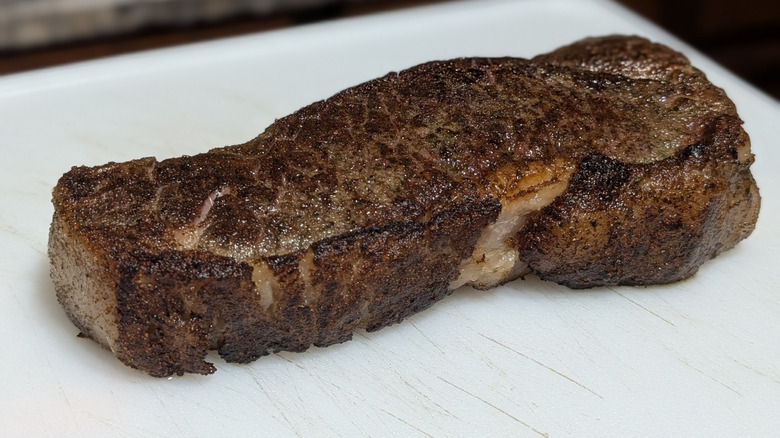
Hemingway also fancied the food in Ketchum, of course. One of his favorite restaurants was a French restaurant called Michel's Christiana, where he would usually order the New York strip steak with a side of baked potato and a Caesar salad. To wash it all down, he opted for a simple glass of Bordeaux wine. He chose to eat this meal on the last day of his life, on July 2, 1961.
Unlike El Floridita, Michel's Christiana doesn't openly acknowledge its Hemingway link. But it does still serve New York steak, and you can also opt for a side of Caesar salad, too.
Absinthe
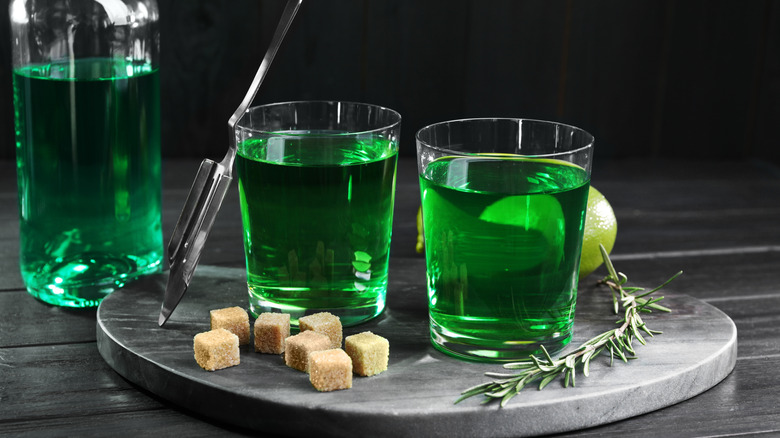
Hemingway loved Paris, and he also loved booze, so it makes sense that he crossed paths with absinthe at some point. According to drinks historian Phillip Greene, Hemingway enjoyed the odd glass of the strong liquor when in Paris, and he would also often dabble in spirits like brandy and gin while in the city, too.
Nicknamed "the green fairy," absinthe is made with different herbs and flowers, like fennel and wormwood, and was first invented in Switzerland by a French scientist. Over the course of the 19th century, it became incredibly popular in France. That's why, today, it's synonymous with Paris, where it's served in specialist bars across the city. As well as Hemingway, many artistic types liked to drink absinthe in Paris. Pablo Picasso even created a sculpture of absinthe in 1914, depicting the Parisian style of serving the drink, with a cube of sugar filtering through a spoon placed over the top.
Absinthe is unique; it's full of herbaceous, anise flavor, and it's certainly strong (it's over 50% ABV). Yet despite what you may have read, it's probably not going to give you hallucinations. People used to think that the thujone from the wormwood would cause mind-altering effects, but further research has confirmed that while absinthe will almost certainly cause you to feel drunk, it's unlikely to do much else.
Peanut butter and onion sandwiches
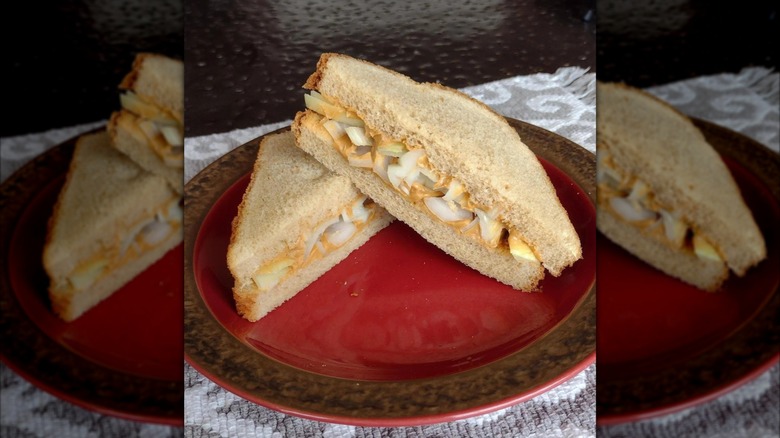
When it comes to peanut butter sandwiches, everyone has a preference. Some like a classic PB&J, while others prefer to add some sliced banana. Elizabeth Taylor loved her peanut butter sandwiches with bacon, and Hemingway? Well, Hemingway apparently made his peanut butter sandwiches with onions. It sounds odd, but the writer actually used to slap together bread, peanut butter, thick onion slices, olives, and mayonnaise and call it a snack. And it seems that the interesting concoction, now known as the Hemingway sandwich, has some modern-day fans.
One Redditor said they tried it with pickles instead of olives, and it was actually quite tasty. Another said they gave it a go and enjoyed the combination of the sweet and savory ingredients. They even said that they would probably keep it up as a regular snack. One person even suggested adding some sharp cheddar into the mix for an extra kick. Hemingway would be proud.
Hamburgers with wine
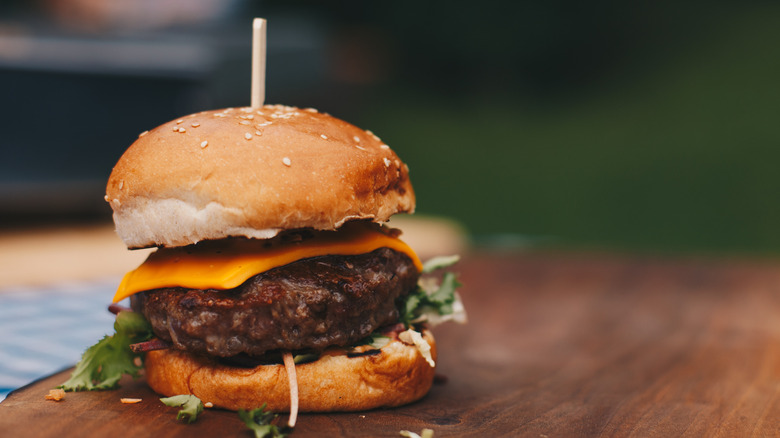
We've established that Hemingway really enjoyed his wine and often enjoyed a glass or two as an accompaniment to his favorite meals. But the writer also liked cooking with wine, too. One of his own signature burger recipes, titled Papa's Favorite Hamburger (Hemingway's nickname was Papa), lists ingredients like lean beef, cloves, little green onions, India relish, egg, capers, Beau Monde seasoning, Mei Yen powder, and a third of a cup of either dry red or white wine. We know what you're probably thinking: That's a heck of a lot of ingredients for a burger. But Hemingway liked to get creative, and his cooking was no different.
Papa's Favorite Hamburger was always served in the form of fat, chunky patties that were still slightly pink in the middle. He liked the outside texture to be nice and crispy, with a juicy, tender interior. He would usually enjoy the burgers with a simple side salad and maybe some grated cheese.
Eggs and bacon
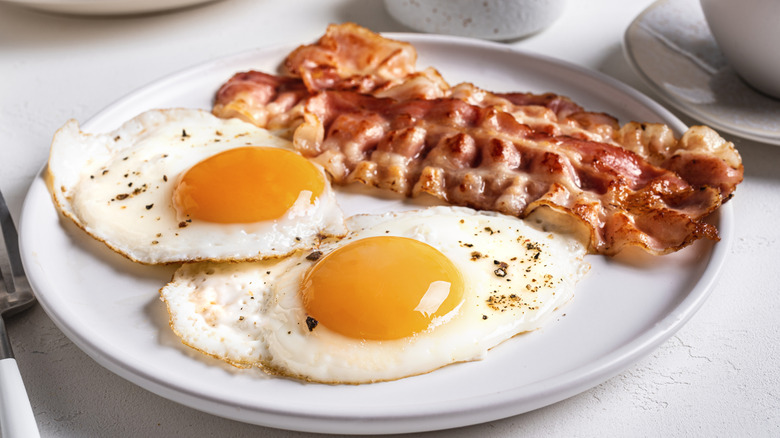
There are many things that separate Hemingway from the average American. His fame, his books, the aforementioned Pulitzer, and his Nobel Prize for Literature, to name just a few things. But in many ways, he wasn't all that different. As we've mentioned, like many people, the writer enjoyed hamburgers, New York steak, and relaxing with a cocktail. He also liked to start his day in a very popular way — with a generous portion of home-cooked eggs and bacon.
Hadley Richardson would reportedly prepare him his favorite breakfast every time he visited her in St. Louis, Missouri. It consisted of sunny-side-up eggs, Canadian bacon, and toast, with a glass of freshly squeezed orange juice on the side. The writer didn't always have his eggs with bacon, though. While staying in Hotel Florida in Madrid, he would apparently frequently indulge in eggs, ham, and coffee for his breakfast.
Martini
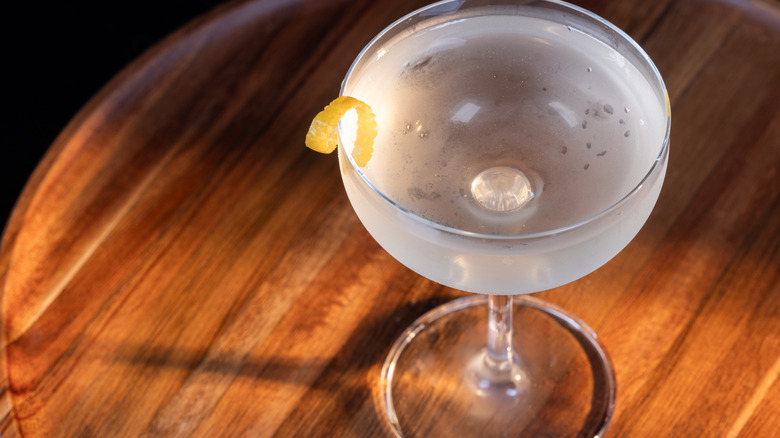
When in Cuba, Hemingway indulged in daiquiris, but that wasn't the only cocktail he drank. According to historians, he also liked Negronis, Americanos, and martinis. In fact, he loved martinis so much that he even had his own version of the drink called The Montgomery.
The Montgomery, which was named after the British colonel Sir Bernard Law Montgomery, was mostly gin. In fact, he specifically used the ratio 15 to 1 for gin and vermouth in his cocktails. It's this ratio that inspired the name; the colonel reportedly used it when preparing to send troops into battle.
Hemingway also liked his martinis served in a frozen glass with — wait for it — an onion on the side as a garnish. The writer's love of onions extended beyond peanut butter sandwiches and into his cocktails. Specifically, Hemingway's martinis called for Spanish cocktail onions, which are small, briny pearl onions that are usually skewered and layered across the top of the glass.
Fried trout
Hemingway had many passions in his life. There was writing, of course, as well as bullfighting, wine, cocktails, and travel. But he also preferred to keep things simple, and when he was younger, he would frequently enjoy spending time camping out and fishing. In fact, he caught his first fish when he was just four or five years old.
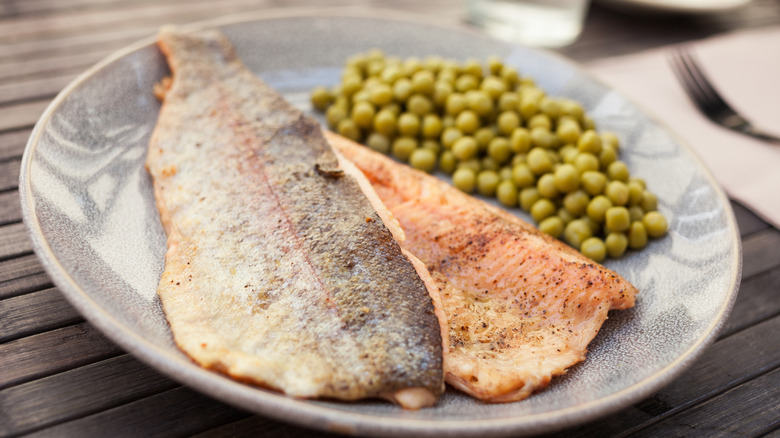
In a 1920 column that he wrote for the Toronto Star Weekly (before he was a world-famous writer), Hemingway takes his experience of the great outdoors and offers advice for any would-be campers. He explains the importance of being prepared with mosquito repellent and more covers than you think you'll need, because it's always colder in the bush than you expect. He also gives advice on fish and explains how to make one of his favorite dishes: Fried trout with bacon.
While Hemingway took an interest in big game fishing (and even wrestled tuna), he also appreciated keeping things simple by fly fishing for trout. So, it tracks that he was pretty good at cooking it, too. In his Toronto Star article, Hemingway warns the reader that if they were to fry trout over a roaring fire, it would burn the skin, but the inside would stay uncooked. Instead, he advises people to cook it over coals with the bacon for the very best results. He concludes the passage by saying that, when cooked properly, fried trout with bacon is his favorite meal of all time.
Pie
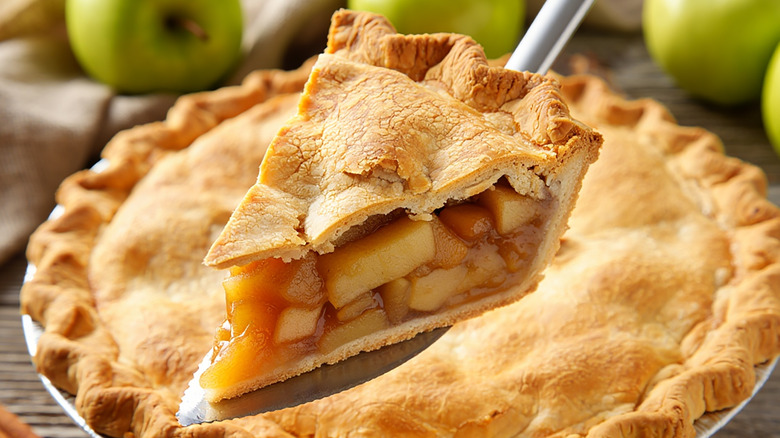
In the same Toronto Star Weekly column that he expressed his adoration for fried trout, Hemingway also raved about how easy it is to make a delicious pie while camping. He goes so far as to joke that men have been deceived by women about how easy it is to make pie. Needless to say, this was the 1920s. It's not a decade known for its mainstream progressive views of women — Hemingway was no exception to the rule and has been widely criticized for his misogynistic views.
Back to pie, made by men. Hemingway instructed his readers that to make a super tasty pie while out in the countryside, all they needed to do was combine flour, salt, lard, and cold water together to make a dough. This could then be rolled out with a bottle, filled with dried fruit, and then cooked over a fire. He said the pie would be so good, anybody the person happened to be camping with would either cry, or if they were French, maybe they would kiss them, too.
Roast beef
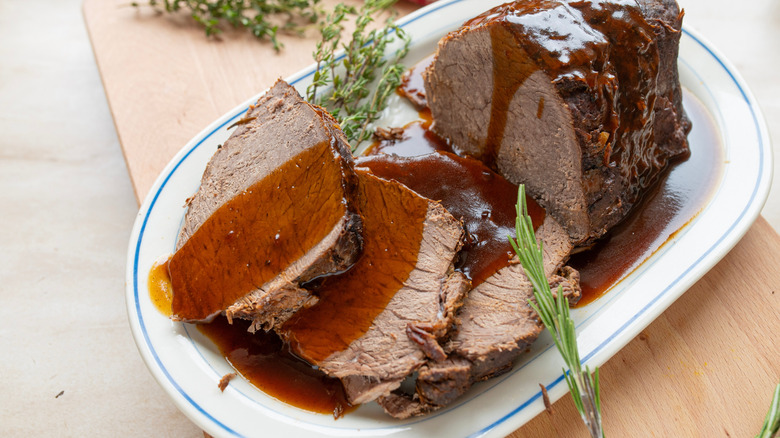
Hemingway used to travel with Richardson quite a lot. They lived together in Paris, and in 1922, they took a vacation to Chamby in the Swiss Alps. During their stay, the author started work on his third novel, " A Farewell to Arms," although it wouldn't actually be published until 1929. While they were in Switzerland, Hemingway, unsurprisingly, also enjoyed all of the food that was on offer to them.
According to the writer, he and Richardson were able to dine on a meal of roast beef, with sides like mashed cauliflower and fried potatoes, for just two dollars a day in Switzerland. He added that for no additional charge, the pair were also treated to a starter of soup and a dessert of berries with cream.
The writer loved the meal so much, he pondered why anyone would want to live in the U.S., when they had the option to eat in countries like Switzerland and Italy. Of course, not everyone had the choice to live and dine in Europe like Hemingway. But his question underscores the point he was trying to make: the beef and everything that came with it was really good.
Veal liver (foie de veau)
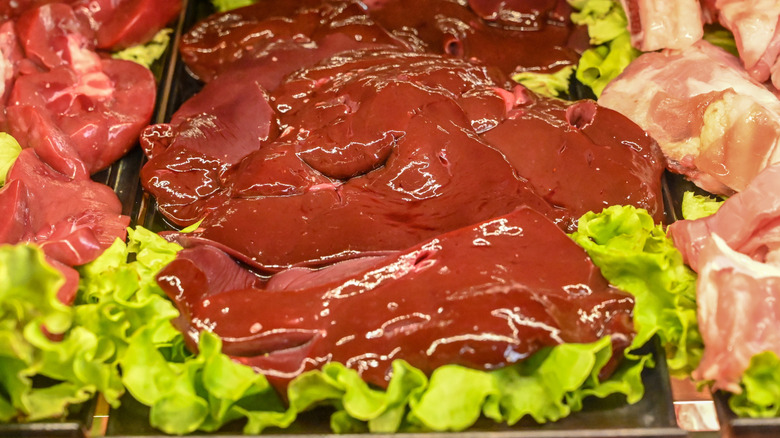
While in Paris, Richardson would cook for Hemingway regularly. Not just bacon and eggs, but also elaborate French meals, which she was taught to make by their housekeeper. One dish that Richardson would often make for her writer husband consisted of little radishes, endive salad, mashed potatoes, and foie de veau.
Foie de veau sounds incredibly elegant, but it's actually a traditional French dish made with organ meat. Specifically, it involves soaking a calf's liver in milk before frying it until medium-rare and serving it with a brandy sauce. While the couple's housekeeper was from the region of Brittany, foie de veau is often associated with the city of Lyon in the Auvergne-Rhône-Alpes region.
Hemingway seemed to have a taste for French veal; when he first arrived in Paris and was staying at a hotel, he would order veal cutlets, alongside more of his favorites like roast beef and steak, and other dishes like lamb, mutton, potatoes, and creamed spinach.
Chinese cuisine
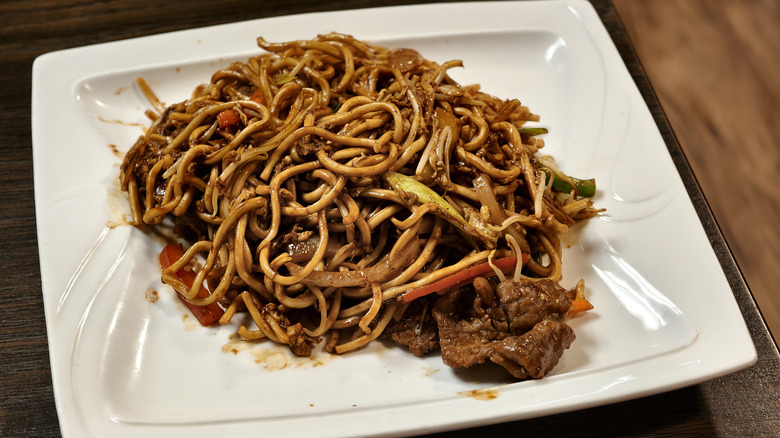
Hemingway wasn't really fussy when it came to cuisine. He enjoyed French food, Spanish food, American food — you name it, he probably enjoyed it. But it seemed he had a special place in his heart for Chinese food. When he was a young reporter in Kansas City, he once spent an entire winter eating his way through the seven-page menu of a local Chinese restaurant. When he was in Havana, he would frequently visit restaurants in the city's Chinatown.
In fact, he loved the Chinese food in Cuba so much that he missed it a lot when he was away. In the 1940s, after returning to Cuba from Italy, Hemingway's fourth wife, Mary Welsh, decided to celebrate his birthday with a feast of Chinese food. She made everything from winter melon soup to slippery chicken and almonds, and even made a selection of Chinese stir-fry dishes for the author.