

12 Mistakes Everyone Makes With Silicone Baking Mats
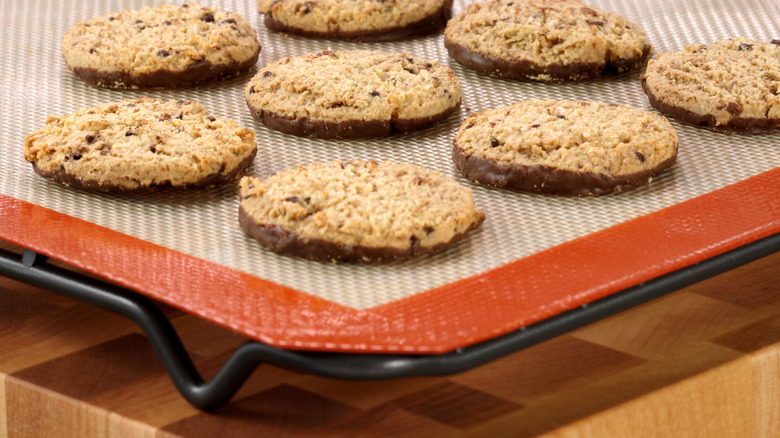
Trying to reduce the amount of waste you produce in the kitchen? Then you might want to invest in a silicone baking mat, especially if you're doing a lot of baking. Instead of using parchment paper (which comes with its own set of potential mistakes to make), which you can use a maximum of a few times before you have to throw it out, you can keep using the same silicone baking mat over and over again. They're also great when you want to keep a really even, consistent temperature while baking your pastries, since they're known for distributing heat well.
Even though silicone baking mats can often come in handy, they're not foolproof, and you may be making more than a few mistakes with them. These mistakes can potentially damage your silicone baking mat and ruin whatever you're cooking in the process. We've outlined some of the most common mistakes here, and by avoiding them yourself, you can ensure that your silicone baking mats stay in good condition for years to come (and that whatever you bake on them is as delicious as possible). Once you learn how to properly use this useful kitchen tool, you might just find that it becomes a baking essential.
Using them at too high a temperature
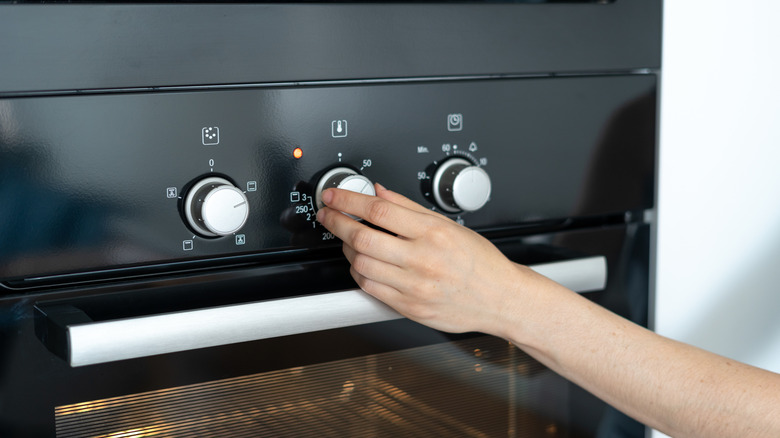
Silicone baking mats are designed to be used in the oven, of course, which means that they can withstand high temperatures without melting or smoking. However, that doesn't mean that they can take an unlimited amount of heat. Good-quality baking mats can generally be used at temperatures around 450 to 580 degrees Fahrenheit. Before you purchase and use a silicone baking mat, you should check the maximum temperature you can use it under to ensure that you don't damage the mat (and that it's a good match for whatever you plan on cooking on it).
At high enough temperatures, silicone baking mats can become excessively brittle and could even release harmful fumes — probably not what you're looking for when you're just trying to bake some cookies. Keep in mind that you never want to use your baking mat under the broiler or near any kind of open flame. Instead, use an aluminum baking pan for broiling.
Cutting food on your silicone baking mat
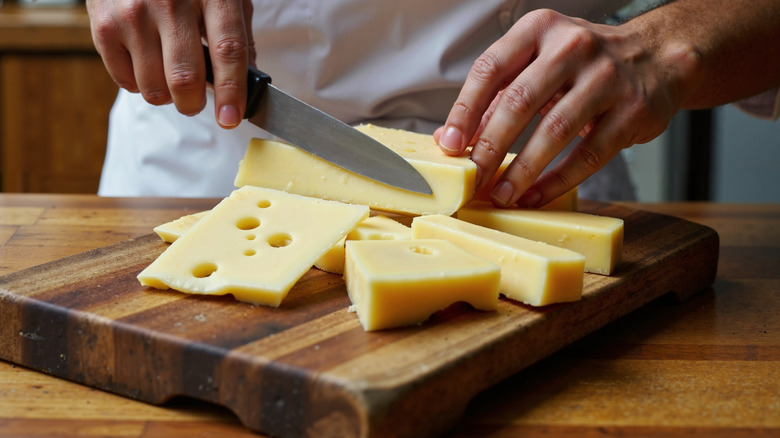
Since you're already using your silicone baking mat as a food preparation surface, you may assume that you can simply cut your food on it, too. Before you pop some vegetables into the oven to roast, for example, you may want to use that silicone mat as a cutting board. However, it's definitely a mistake to do so — at least, if you want to be able to keep using the mat for its intended purpose.
Even though silicone is a relatively strong material, it cannot hold up to the sharpness of a knife, particularly one that's sharp enough to cut through meat and vegetables. Therefore, if you drag a knife across the surface of your silicone baking mat, it's likely to puncture its surface. This could make it less nonstick (which is probably a huge reason you're using the mat in the first place), and those wounds make it easier for germs and bacteria to collect in the grooves of your mat. Use a standard cutting board instead to prevent these issues (and read up on some of our favorite tips for using a cutting board).
Utilizing silicone baking mats when you want your food to be well-browned
There are so many excellent reasons to use a silicone baking mat. Not only can it help you reduce the amount of waste you produce in your kitchen, but it also offers a nonstick surface that allows you to use less oil or fat in your cooking. Plus, that nonstick coating makes for a much easier cleaning process after you have finished your meal. But that doesn't mean that there aren't some drawbacks to using silicone baking mats instead of a standard metal baking sheet. One of the biggest disadvantages of using this cooking tool is the lack of browning compared to the results you get when cooking directly on a metal surface.
Metal is better at conducting heat than silicone, which is why you get such beautiful browning when you choose a metal baking sheet. On the other hand, silicone acts as an insulator, which means that you might not achieve the same level of browning. Consider this drawback when you're making food that should be well-browned, like roasted vegetables.
Using steel wool or abrasive scrubbers
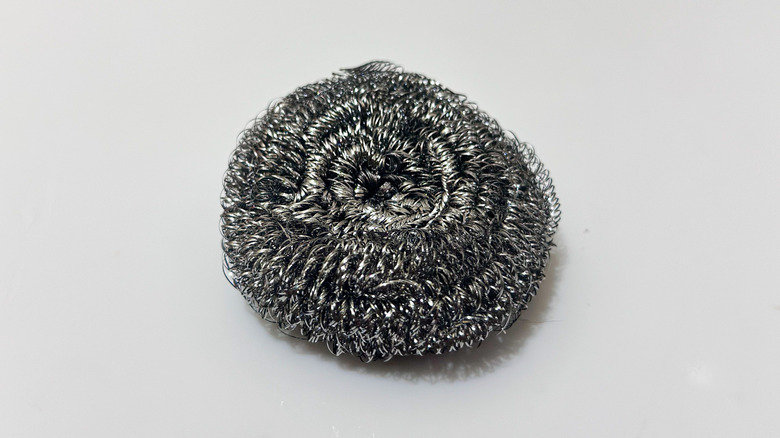
Of course, it's important to learn how to use a silicone baking mat properly to avoid any significant mistakes that are possible to make during the cooking process. But that doesn't mean the potential to make mistakes with this kitchen tool is over once you've finished cooking — the way you clean your mat can also lead to some serious mistakes. One of the biggest mistakes you can make with your silicone baking mat, for example, is using steel wool or other kinds of abrasive scrubbers to clean the mat.
Abrasive scrubbing tools can cause tiny nicks and tears on the surface of the mat. Over time, this can make the mat less nonstick, which basically negates the purpose of using one in the first place. Therefore, the next time you wash your silicone baking mat, be sure to do so with a soft scrubber along with a gentle (but grease-cutting) detergent.
Thinking silicone mats are great for baking cookies
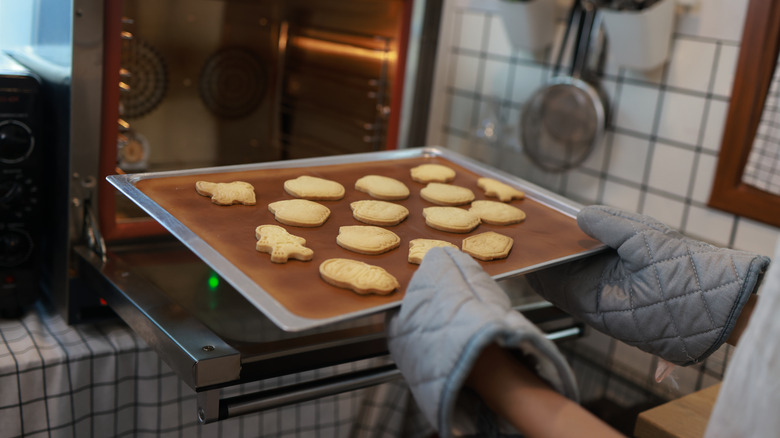
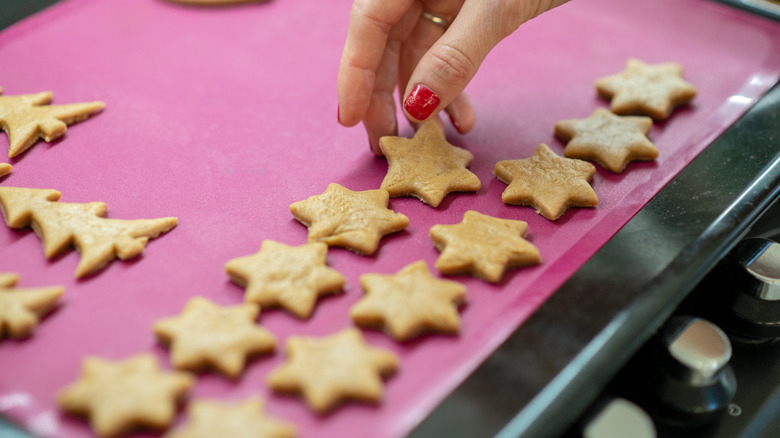
If you love to make homemade cookies, then you might think it's a great idea to use baking mats for your next batch. After all, they'll prevent the cookies from sticking to the baking sheet, right? Well, yes, technically, but that doesn't mean that it's a particularly good idea to use a silicone mat for baking cookies.
There are a few different issues that silicone mats can cause when you're baking cookies. First of all, they can cause the cookies to spread too much, leaving them thin and brittle instead of thick and chewy. Silicone baking mats can also render your cookies too greasy. Yes, cookies should have a decent amount of fat to them, but you don't want them to be downright wet with oil, which can unfortunately be the case when you use a silicone baking mat. This kitchen tool can also make your cookies overbrowned. All of these negative results can occur because of the way the silicone conducts heat. This can especially be a problem if you allow the cookies to cool on the silicone instead of moving them to a wire rack.
Not using a baking sheet under your silicone mat
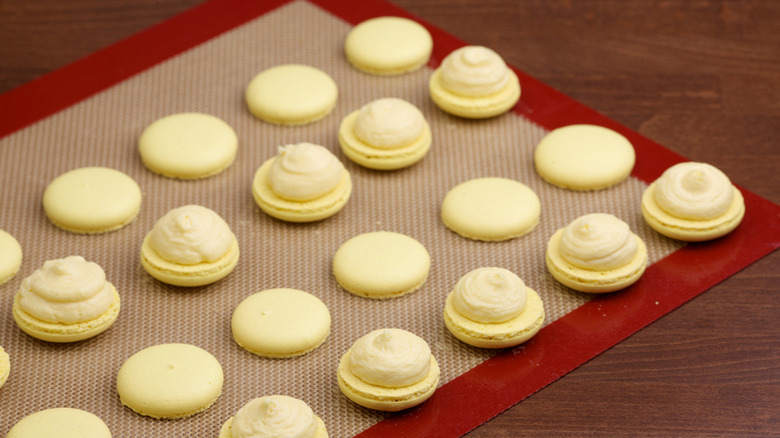
There are some silicone baking mats out there that are quite sturdy — so sturdy, in fact, that you may assume that you can use them without a baking sheet underneath. Unfortunately, though, using a silicone baking mat without a baking sheet underneath is a mistake. Even the sturdiest of silicone baking mats are, ultimately, made with silicone, so they're lacking in structure compared to a metal sheet. This means that they can fold and bend, especially when they're loaded up with food and heated.
This can lead to liquid dripping off the mat into your oven, causing a large mess. Additionally, not having a baking sheet underneath makes it a lot easier for food to fall off the mat when you're putting it into and taking it out of the oven, which can make it easier to get burned. Luckily, though, since you're using a baking mat, your baking sheet shouldn't get dirty while you're using it in this manner — it just gives that silicone baking mat more structure.
Touching a silicone baking mat that's just come out of the oven with bare hands
You already know that you need to use caution when you're removing metal and glass from the oven. These materials are likely to be quite hot, especially if they've been in the oven for a while, which means that they can easily cause burns. This is probably why you use an oven mitt when you're taking these vessels out of the oven. Some people may assume that that's not necessary when you're using silicone, since it doesn't conduct heat in quite the same way as metal. This couldn't be further from the truth, though.
It's definitely a big mistake to touch a silicone baking mat that's just come out of the oven with your bare hands. Unless it has only been in the oven for a few seconds, it's almost certainly going to burn you. Therefore, just like you would with any other vessel coming out of the oven, make sure you handle your silicone baking mats with care when they're hot.
Assuming you have to grease a silicone baking mat
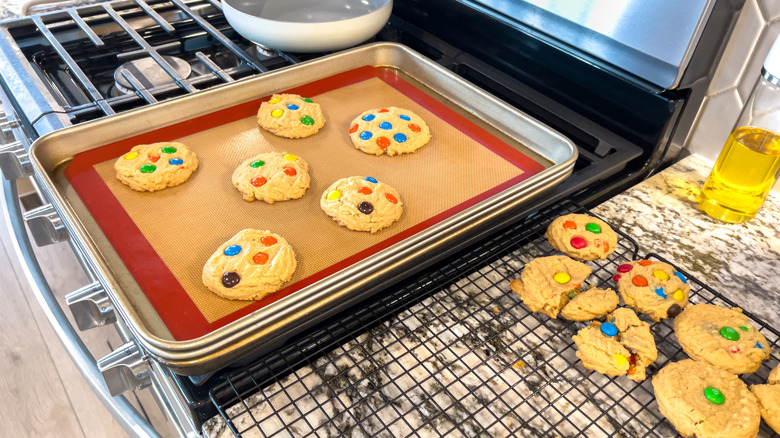
When you're working with glass or metal baking dishes or sheets, you generally have to grease the dish to prevent sticking. This prevents your food from sticking and making a mess that's ultimately difficult to clean and could require an extended soak time. This is one of the main appeals of using a silicone baking mat, though: Most of the time, you don't have to grease it at all, since it already has nonstick properties. This makes cleanup a lot simpler and reduces the amount of time you have to spend scrubbing your dishes.
Of course, there are some times when you may want to grease your silicone baking mat. If you're cooking a particularly low-fat recipe, for instance, adding some butter or cooking spray to the mat may be a good idea. Additionally, greasing may be helpful if you're using some sort of mold on your cooking mat.
Folding your silicone baking mat
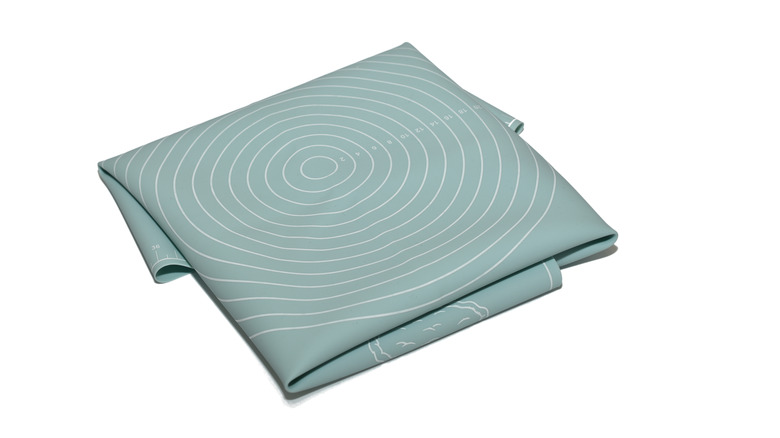
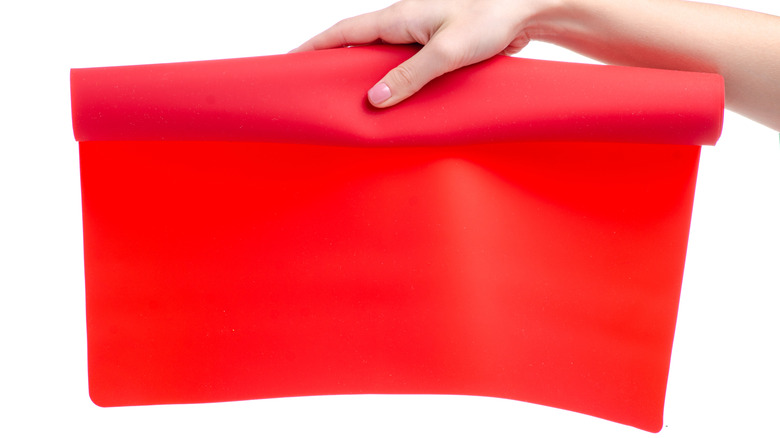
Silicone baking mats are easily bendable, so when you're trying to figure out how to store them in your kitchen cabinet, you may be tempted to fold them into smaller sizes to more easily tuck them away. Technically, they will fold, but it's still a mistake to store your baking mats this way. Over time, folding them can cause tears and other forms of damage that make them less effective.
So, how should you store your baking mats instead? If you have enough room, you can store them flat. If you have several of them, you can simply stack them on top of one another, potentially putting other items on top if you're trying to maximize storage space. Alternatively, you can roll them if you want to limit them to a smaller area of the cabinet. Both of these methods will ensure that your silicone baking mats stay in solid shape for years to come.
Washing your silicone baking mat in the dishwasher
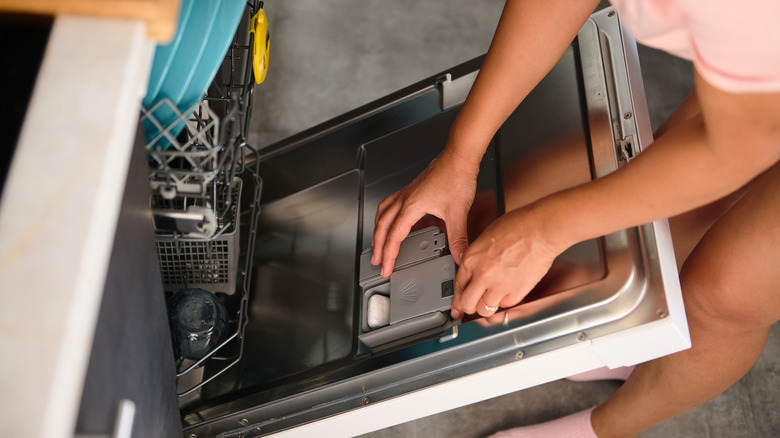
When you buy a new silicone baking mat, you might notice that the packaging informs you that you can, in fact, put your mat in the dishwasher. But, unfortunately, they can absorb the aroma of the detergent you use, which isn't ideal when it comes to basically any kind of dish you may be making. Therefore, it's a better idea to handwash your baking mat. Luckily, this is very easy to do, considering that these mats are already nonstick — you're not going to have to spend hours scrubbing them to get leftover crusty pieces of food off their surfaces.
The proper washing process is simple: Just take some dishwashing liquid that's designed to cut through grease, and scrub it into the baking mat with a soft sponge until any greasy residue is removed. Then, dry your mat and put it back in your cabinet for storage.
Not using your silicone baking mat for kneading dough
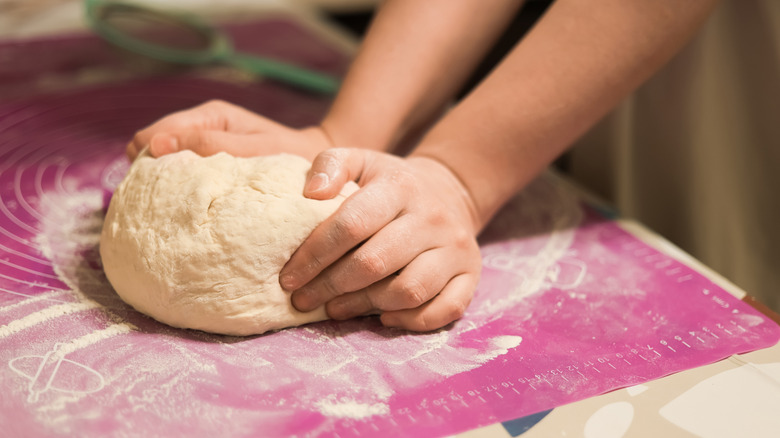
If you're someone who likes to make a lot of food from scratch, then there's a good chance that you're making dough on a somewhat regular basis. Whether you're whipping up a quick loaf of dough, making fresh pasta from scratch, or trying to make your own pizza dough, you need a clean, flat surface for kneading your dough. Sure, you could just use your bare kitchen countertop, but depending on what kind of countertops you have, you may not want to work directly on that surface.
That's where your silicone baking mat comes into play. Since it's nonstick, it actually makes for the ideal bread-kneading surface. Because you don't have to worry about the dough sticking to the baking mat quite as much as you would with, say, a wooden board, you may not have to use as much flour in the kneading process. Give it a try the next time you make anything dough-based, and you may never go back to your previous kneading surface again.
Neglecting to deep clean your silicone baking mat
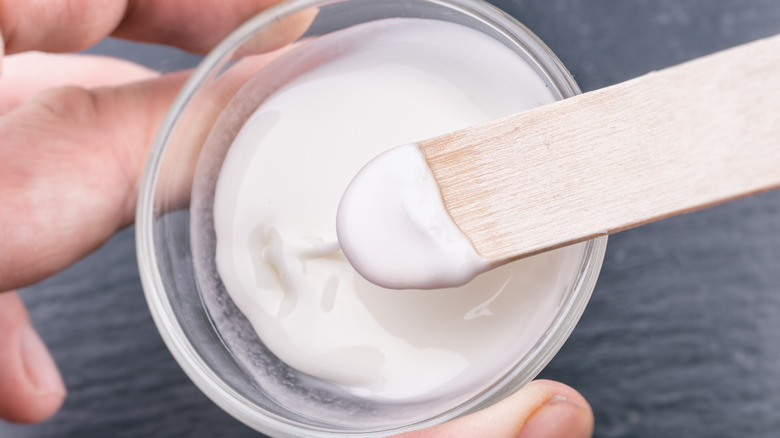
We have already discussed that you can easily wash your silicone baking mat by hand by using nothing more than some dishwashing detergent and a good sponge. But what about those times when you just cannot seem to get the greasy residue off the mat? In those moments, you may want to go for a deep clean.
There are a few different ways to deep clean your silicone baking mat. Using hot lemon water is a solid method, as it helps remove any leftover oil on the mat and can even help to lighten stains. If you're not quite as worried about stains, then you can always scrub the mat with a paste made from water and baking soda. You can also heat the mat in the oven before washing it as normal to help remove any residual slipperiness left on the surface. Whatever method you choose, a regular deep-clean of your baking mat can keep it from getting too sticky and oily over time.