

10 Classic Comforting Soups From Around The US Worth Trying
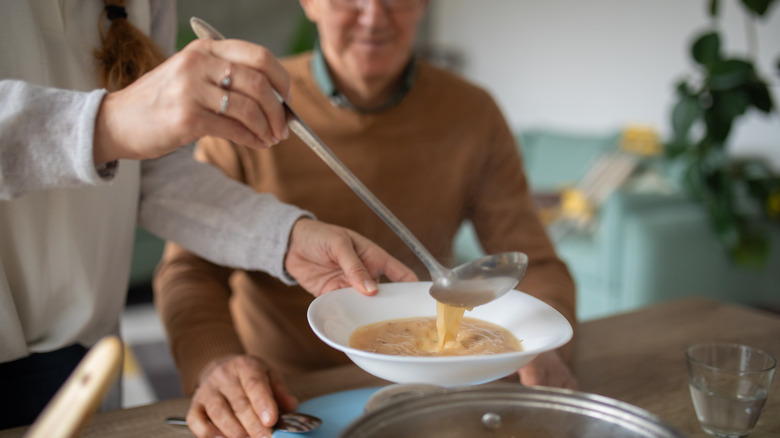
Soup is one of those dishes that unifies people. It's hearty, warming, comforting, and endlessly versatile. According to Campbell's, around 95% of Americans say they love soup. Interestingly, Millennials seem to love it the most, closely followed by Gen-Zers and Baby Boomers. And perhaps even more interestingly, around one in 10 Americans has eaten soup naked. To each their own, we say.
But the biggest problem with soup? It's deciding what type to have, of course. The truth is, the options really are endless when it comes to soup. Sure, there's your classic tomato and chicken noodle varieties, but if you're in the mood for something different, there are many, many dishes out there to choose from. Below, we've gathered a few of the best comforting soups from across the U.S. Whether you prefer your soup fishy, swimming with noodles, dense with vegetables, or laden with cheese, there's likely something for you.
Clam chowder
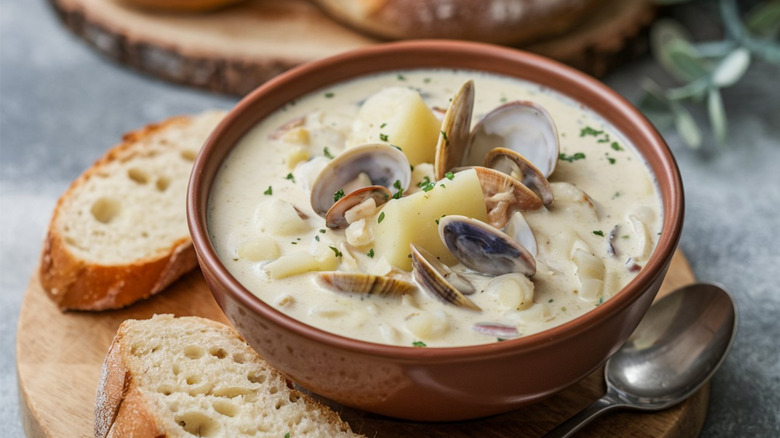
Clam chowder is a popular American soup, beloved everywhere from New England to Florida to North Carolina. Each region has its own twist on the dish. Rhode Island clam chowder is a clear broth, made without milk or cream, for example, while Manhattan clam chowder brings tomatoes into the mix. Thick, white, and creamy, New England clam chowder is one of the most famous versions of the American soup.
While clam chowder is now seen as a distinctly American dish, it didn't start off that way. Chowders were being made in French and English fishing villages in the 16th and 17th centuries, and it was these communities that likely brought the soup to America. The clam addition, though, may have been influenced by Native Americans, who had been harvesting the shellfish from the East Coast for generations.
By the 1800s, Americans had fallen head over heels for clam chowder. And that's still the case today. Perhaps one of the best things about it is how personal it is — there are regional differences, sure, but many home cooks also like to add their own spin. Recipe developer Jennine Rye, for example, makes her New England chowder with a dash of sherry for some nutty depth. Some like to swap the clams for white button mushrooms, while others like to boost the umami with a little miso paste. Whichever version you choose, this soup promises to be hearty, nourishing, and full of flavor.
Broccoli cheddar soup
Broccoli has had many enemies in its long life. Most of them are young children, who struggle with its strong odor and mushy texture when overcooked. But not all people who hate broccoli are kids. In 1990, President H. W. Bush enforced a broccoli ban on Air Force One, declaring that now that he was in charge, he would use his power to prevent broccoli from taking up space on his plate.
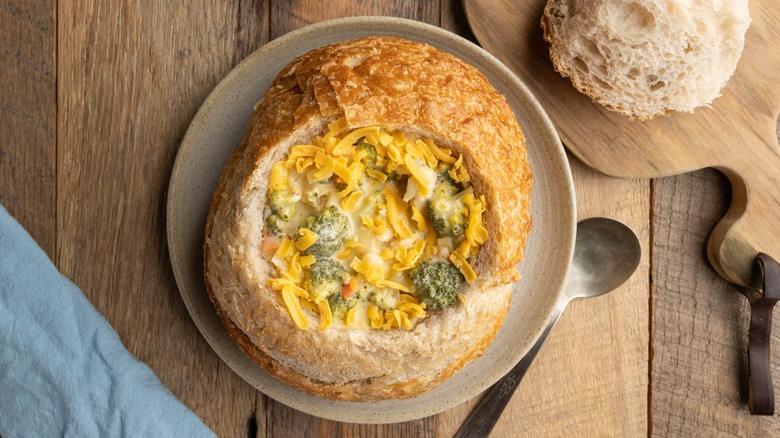
But soup giant Campbell's wasn't prepared to accept Bush's stance, and it came out swinging in support of the cruciferous vegetable. The company launched a recipe contest named "Get President George Bush to Eat Broccoli" and a new product: Condensed Cream of Broccoli soup. To the likely surprise of the president, it was so popular that Campbell's launched even more broccoli soups. And among them was Broccoli cheese. Yep, we have Campbell's to thank for the cheesy, warming, comforting soup dish that is broccoli cheddar soup.
Campbell's still sells its famous Broccoli Cheese soup, but the soup brand has competition. Now, you can grab the cozy dish from Panera Bread, Walmart, Sam's Club, and many more retailers and restaurant chains (in 2025, we ranked Jason's Deli's broccoli cheese soup as one of the best fast food soups to buy). And, of course, if you've got the time and the will, you can also make your own delicious broccoli cheddar soup from scratch, too.
Saimin
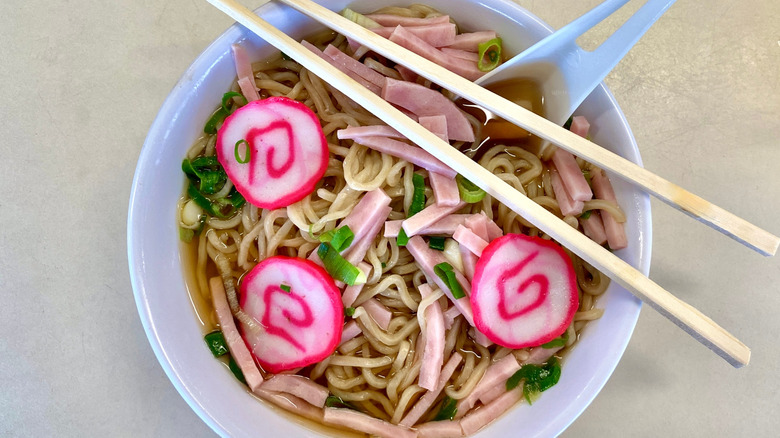
If you love Japanese-style ramen, there's a very good chance you'll love saimin. The Hawaiian noodle soup is equally nourishing and flavorful, made with ingredients like clear dashi broth, egg wheat noodles, ham or Spam cut into thin sticks, shrimp, sliced fish cakes, and green onions. It's also possible to make a plant-based saimin by opting for swaps like canned plant-based meat and mushroom dashi.
Saimin has some interesting roots. Its name is actually of Chinese origin, but its creation was influenced by many different cultures. In the late nineteenth century, plantation workers of various backgrounds were living in Hawaii. There were people from Japan, China, Portugal, and the Philippines, and when they gathered to eat lunch, they would share their traditional foods. This eventually led to the development of saimin, their own unique and distinctly Hawaiian dish.
Saimin is beloved by many who grew up in Hawaii, but its popularity is starting to grow. From Los Angeles to New York, you can also now find this flavorful soup in Hawaiian-themed eateries across the U.S.
Wohanpi soup
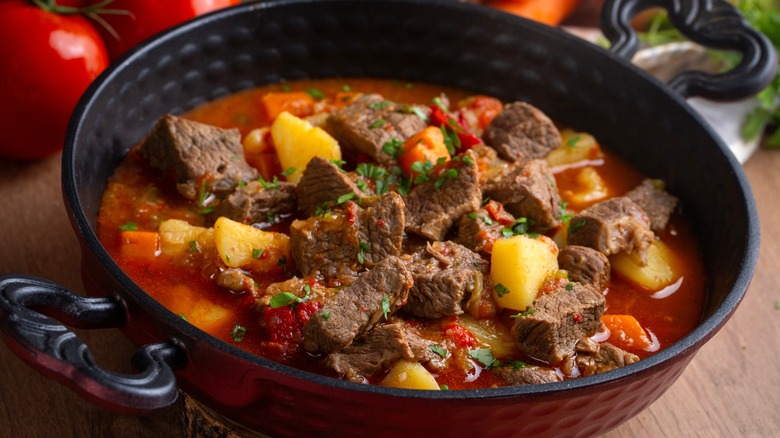
Indigenous Americans are to thank for some of America's most beloved dishes. Take succotash, for example, or cornbread. The Lakota people, many of whom now live in the Dakotas, Wisconsin, and Minnesota, created wasna, a type of preserved bison meat with dried chokecherries and tallow. It's a very similar idea to the classic jerky snack many Americans know and love today. As well as wasna, the Lakota people have many traditional dishes — among them is wohanpi soup.
This dish, which is still enjoyed widely today, was traditionally made with bison meat, but modern versions often call for beef. It tracks that the Lakota people opted for bison: Before colonization, the animals were abundant in the Great Plains. In fact, according to WWF, there could have been as many as 60 million bison prior to European settlement. In an attempt to control Native Americans, in the 1800s, the US government committed to wiping out bison in America. They have since rebounded slightly (though nowhere close to pre-colonization times), but by the end of the 19th century, there were just over 500 bison left on the plains.
Alongside bison (or beef), wohanpi soup is usually made with prairie turnips, wild potatoes, and carrots. Some add Worcestershire sauce for depth of flavor, as well as a little salt and pepper, too. Those who have tried wohanpi soup say it is incredibly comforting, warming, and full of flavor. And for those who grew up eating it, incredibly nostalgic, too.
Senate bean soup
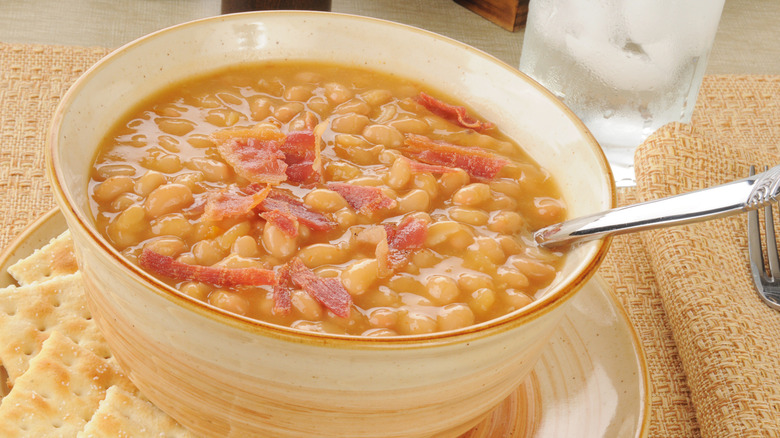
If you're elected to the U.S. Senate, you know you're heading towards a future of uncertainties. You'll likely help draft bills and vote on legislation, but there's no guarantee things will always go your way. You also don't know how long you'll keep the job — every six years, Senators must run for reelection. One thing that is certain, though, is that if you're eating in the U.S. Senate Dining Room, bean soup will be on the menu.
In fact, bean soup has been on the menu in Senate restaurants for more than 100 years. It's not clear exactly why it's been served for so long, but there are a few theories. One is that Senator Knute Nelson of Minnesota loved it so much that he asked in 1903 if he could eat it every single day.
If you want to see what all the fuss is about, Senate bean soup is easy to make from scratch. The recipe consists of dried navy beans, mashed potatoes, onions, celery, garlic, parsley, and ham (or maybe chopped vegan sausages, if you're opting to make a plant-based version). Those who have made it agree with Nelson — this is a hearty, flavor-packed soup that is incredibly comforting, cozy, and ideal for chilly fall and winter days.
Swamp soup
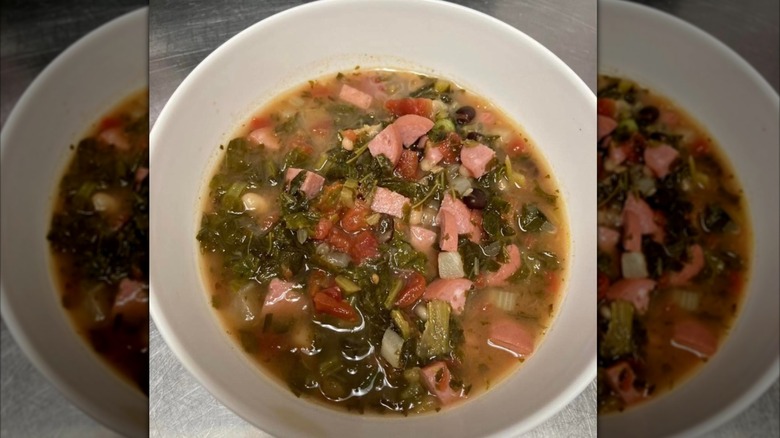
Swamps are fascinating to many people, and it's not hard to see why. They're a moist mix of land and water, usually filled with trees and duckweed, and they often host wildlife like alligators, frogs, and fish. In Alabama, there are several swamps, like the Ebenezer Wetlands in Shelby County, which are rife with fungi and plants. Interesting, sure. But appetizing? Not exactly. Not everyone agrees, though. In this Southern state, many grew up eating a delicacy called swamp soup.
But you can relax, there isn't really much about this dish that is actually that swampy. The name likely comes from the color, which is a mix of brown and green. In fact, many say this dish is a hearty Southern classic that goes especially well with cornbread. To make it, all you need is some smoked southern sausage, like Conecuh (although plant-based sausages will work, too), sweet onions, broth, seasoned turnip greens, great northern beans, navy beans, and hot sauce. Rich, swampy goodness.
Wild rice soup
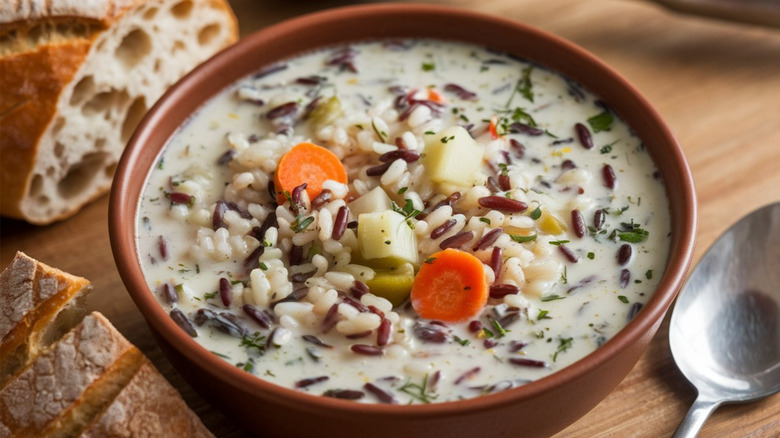
Wild rice has long sustained the people of Minnesota. The edible grain, which comes from aquatic grass (yes, it's not real rice), has been eaten and harvested by the Ojibwe people for generations, and it was also a favorite of European settlers in the region. In the 20th century, more and more people started to harvest wild rice from Minnesota, and the industry started to boom.
In the 1970s, Minnesota wild rice was having a major moment, and chefs were cashing in. Among them was Keith Kersten, who was working in a Minneapolis restaurant called the Orion Room. He wanted to find a way to prevent the waste of the valuable and sought-after ingredient, so he created wild rice soup by combining the grain with a creamy, thick sauce and ham. That dish was comforting, a little nutty thanks to the wild rice, and full of earthy flavor, so it's no surprise it was a major hit. Everyone wanted the recipe (which Kersten guarded carefully).
Decades later, Americans still love wild rice soup. And again, this is a dish where everyone seems to have their own version or recipe. Some make it with seasonal produce and coconut milk or kick up the heat with spicy sausages, while others omit the ham to make it vegan. However you choose to make it, one thing is guaranteed: Wild rice soup is a flavorful way to warm up your insides on a chilly day.
Kanuchi
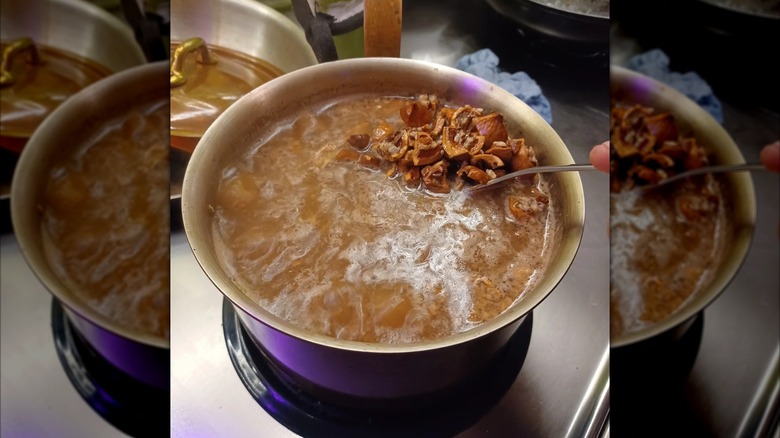
The Cherokee people have many traditional dishes that are beloved across the U.S. Case in point: Fry bread. Another case in point: Succotash. But this indigenous group is also responsible for creating kanuchi, a hearty soup that's perfect for the colder months of the year. The soup is particularly unique because it's made with hickory nuts, which are similar to walnuts, as they're brown and a little sweet, but not as readily available.
To make kanuchi, the hickory nuts are boiled and strained, before the remaining liquid is mixed with maple syrup and served with hominy or sweet potato. Those who have tried this nutty soup say it is incredibly creamy, a little sweet, and similar to coffee. If you don't have hickory nuts on hand (they are usually only available at farmers' markets or online specialist food marketplaces), it's also possible to achieve a similar rich flavor using pecans instead.
Corn hominy soup
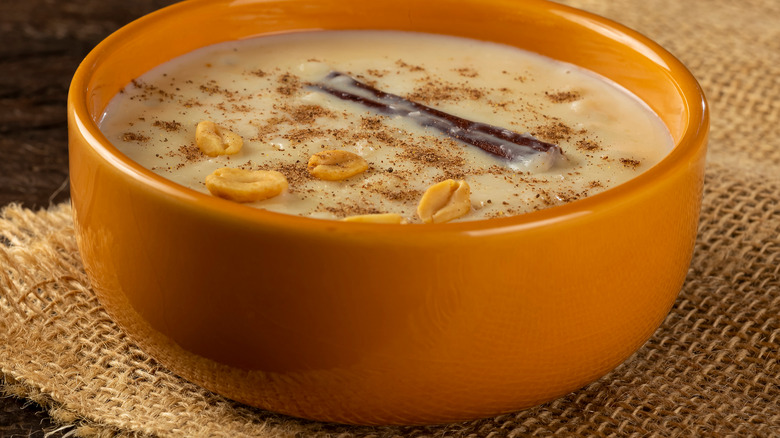
Hominy is incredibly versatile. First eaten by Indigenous Americans (the word hominy comes from the language of the Powhatan people of Virginia), it's basically dried corn that has been soaked and dehulled. It can be used to make grits, bread, cornbread, or, as you may have guessed, soup.
There is a Mexican version of corn hominy soup, known as pozole, but there are many different iterations and recipes from different American groups and cultures. One recipe for Native American corn hominy soup, for example, calls for pork loin, hominy, potatoes, and kidney beans. Another recipe shared by a social media user on Facebook comes from the Haudenosaunee people and combines corn hominy with red beans and bacon.
A further recipe from the Mohawk people combines canned hominy with kidney beans, pork loin, two different types of bouillon, rutabaga, carrots, and celery. Bottom line: Corn hominy soup is endlessly customizable, and, regardless of your tastes, there's likely a recipe out there for you (so long as you like hominy, which is kind of a requirement).
Beer cheese soup
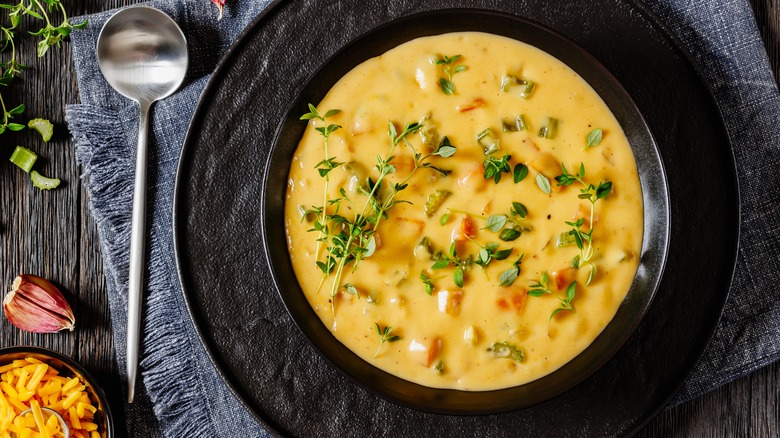
It's probably no surprise that a dish called beer cheese soup comes from Wisconsin. It's nicknamed "the cheese state" for a reason — it's one of the biggest suppliers of cheese in the entire country. That's largely thanks to its German and Swiss heritage; many European settlers brought their cheesemaking traditions with them when they moved across the Atlantic. And, of course, they also brought another staple: Beer. Hence, beer cheese soup.
But there is a little more to beer cheese soup than just beer and cheese. Recipes vary, but it also involves ingredients like bacon, carrots, onions, a blend of herbs and spices, milk, and popcorn. Yes, popcorn. Apparently, this is a Wisconsin tradition. If you want to sample beer cheese soup, you'll find it served in most eateries across the state, but you can also make it from scratch. One of the best ways to serve it? In a large bread bowl, of course. Fun fact: You can still enjoy beer cheese soup if you're dairy-free, just swap the dairy out for vegan alternatives.